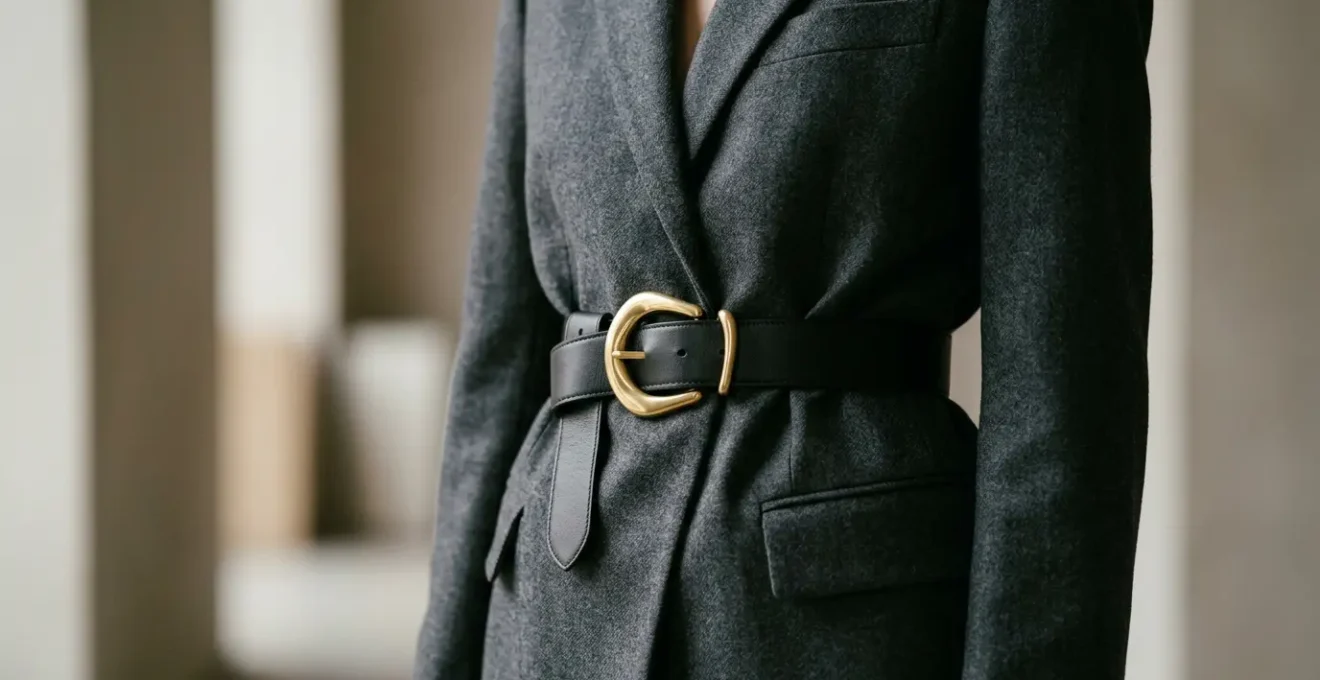
A logo belt’s elegance is not determined by the logo’s size, but by its function as a piece of sculptural, architectural hardware.
- True style lies in using the belt to create architectural shape and structure in a silhouette, not just to display a brand.
- Tangible quality—identified by the buckle’s weight, finish, and sound—is the definitive marker that separates a refined accessory from a cheap imitation.
Recommendation: Shift your focus from « brand flashing » to mastering the belt as a sophisticated tool for silhouette engineering and personal expression.
The logo belt walks a fine line between a chic statement and a sartorial misstep. For the discerning fashion enthusiast, the fear is real: how does one embrace a beloved brand without looking like a walking billboard? The common advice—to opt for smaller logos or simply « wear it with confidence »—is well-intentioned but misses the point entirely. It treats the logo as a problem to be minimized rather than an element to be mastered. This perspective is fundamentally flawed.
The secret to elevating the logo belt lies in a radical shift in perception. Stop seeing it as a brand signifier and start treating it as a piece of architectural hardware. Its purpose is not merely to hold up trousers but to act as a structural anchor, a point of metallic contrast that can sculpt fabric, define a waistline, and balance an entire look. The distinction between « tacky » and « classy » has less to do with the visibility of the logo and more to do with the wearer’s understanding of proportion, material quality, and silhouette construction.
This guide moves beyond the superficial to explore the physics of style. We will deconstruct how to use a belt to re-engineer a garment, what makes a buckle feel substantial and luxurious, and why the most stylish individuals understand that a belt is a tool for expression, not a declaration of worth. It’s time to move the conversation from brand anxiety to design intelligence.
Summary: The Art of Styling a Statement Logo Belt
- The Belt Tuck: How to Shorten a Blazer Without Sewing?
- Wide vs. Skinny: Which Belt Width Creates an Hourglass Illusion?
- Gucci Marmont: How to Spot a Fake Buckle by Checking the Weight?
- Rolled or Hung: Which Storage Method Prevents Cracking Leather?
- Do Shoes and Belts Still Need to Match in Modern Menswear?
- Why True Parisian Style Avoids Visible Logos at All Costs?
- The Cinched Waist: How to Belt a Blazer Without creating Bulk at the Back?
- Why the « Je Ne Sais Quoi » Rely More on Attitude Than Brands?
The Belt Tuck: How to Shorten a Blazer Without Sewing?
One of the most sophisticated ways to wield a statement belt is to use it as a tailoring tool. The « belt tuck » is an advanced technique that transforms an oversized or boxy blazer into a bespoke piece with a dramatic, peplum-like effect. This is not simply cinching; it is about creating a deliberate structural drape. To achieve this, place the belt at your natural waist over the blazer. Then, gently pull the fabric from above the belt upwards, allowing it to blouse over slightly. This creates a blouson effect that effectively « shortens » the blazer’s visual length and tailors its volume without a single stitch.
The magic is in the fold. The excess fabric bunches and cascades, turning a simple garment into a piece of wearable architecture. The buckle, in this context, acts as the keystone, the focal point from which all the new lines of the garment radiate. This technique works best with blazers made from fluid materials like wool crepe or linen blends, as they drape more elegantly than stiff, thick wools.
As the illustration demonstrates, the interplay between the rigid hardware of the buckle and the soft texture of the fabric is what creates visual interest. It’s a masterclass in contrasts. The key is to ensure the tuck looks intentional, not sloppy. Adjust the folds until they create a balanced, sculptural shape, proving the belt is not just an accessory, but a transformative piece of functional hardware.
Wide vs. Skinny: Which Belt Width Creates an Hourglass Illusion?
The width of a belt is not an arbitrary choice; it is a critical decision in the sartorial physics of proportion. Understanding how different widths interact with your body and outfit is fundamental to creating a flattering silhouette. Belts are a dominant force in the accessory world; in fact, recent analysis shows they hold a staggering market share of over 60.2%, making this choice more relevant than ever. A wider belt (1.5 inches or more) makes a bold statement and is incredibly effective at cinching the waist of dresses or long coats. It covers more surface area, creating a dramatic focal point and a powerful hourglass illusion by visually carving out the midsection.
However, a wide belt can sometimes overwhelm a petite frame or shorten the torso. This is where the skinny belt (under 1 inch) demonstrates its subtle power. A skinny belt offers a more delicate definition. It is perfect for nipping the waist of a fine-knit sweater, securing high-waisted trousers, or adding a hint of polish without bisecting the body. It suggests a waistline rather than commanding it, making it a versatile choice for those who prefer a less constricted look or have a shorter torso. The choice is not about which is « better, » but which tool is right for the desired structural effect.
Ultimately, the goal is to create balance. If you’re wearing a voluminous garment like a shirtdress or an oversized blazer, a wide belt provides the necessary structure to rein it in. If your outfit is already tailored and sleek, a skinny belt adds a finishing touch without competing for attention. Think of it as a sculptor choosing a chisel: you need the right size for the job.
Gucci Marmont: How to Spot a Fake Buckle by Checking the Weight?
In the world of luxury, the line between a statement piece and a tacky accessory is often drawn by authenticity. A counterfeit logo belt, no matter how convincing at first glance, will always lack the tangible quality of the real article. The weight of the buckle is one of the most revealing tells. Genuine luxury buckles, like the iconic Gucci Marmont, are crafted from solid brass, giving them a substantial, satisfying heft. Fakes, on the other hand, typically use cheaper zinc alloys that are plated to look like brass. The difference is immediately noticeable when you hold them; the fake feels light, hollow, and cheap.
This physical sensation is the first step in separating an investment piece from a fleeting trend. But authentication goes deeper, engaging multiple senses. The sound a buckle makes when tapped, the precision of its edges, and the quality of the leather strap are all part of a holistic assessment. A true luxury item is an exercise in meticulous craftsmanship, and learning to recognize these details is the ultimate mark of a discerning eye. To systematically verify an accessory, one must become a detective of detail.
Expert-Level Authentication Checklist for Luxury Logo Belts
- Weight Test: Authentic buckles are made from solid brass (heavy and substantial), while fakes use plated zinc alloy (noticeably lighter and hollow-feeling).
- Sound Test: Tap the buckle gently; genuine solid brass produces a muted, low-frequency ‘clink’, while counterfeit metal creates a tinny, high-pitched sound.
- Shape & Dimension: Authentic buckles feature smooth, dimensional, well-defined edges; fakes appear flatter with less detailed relief work.
- Leather Quality Assessment: Check the leather’s natural smell (authentic has a subtle, organic leather scent), flexibility (should bend without creasing), edge finishing (hand-painted, sealed edges), and hole precision (laser-cut, perfectly circular).
- Stitching Inspection: Genuine belts use thread that blends seamlessly with the leather color, with tight, even stitches; replicas often show contrasting thread colors and sloppy, uneven stitching prone to unraveling. This entire checklist is a summary of expert advice found in comprehensive authentication guides for luxury goods.
By internalizing these checkpoints, you arm yourself against the proliferation of fakes that dilute the market. An authentic belt is not just about the logo; it’s about the integrity of the materials and the honor of the craftsmanship.
Rolled or Hung: Which Storage Method Prevents Cracking Leather?
A luxury leather belt is an investment, and like any investment, it requires proper care to maintain its value and integrity. The most common mistake owners make is improper storage, which can lead to irreversible cracking, creasing, and warping. While rolling a belt and placing it in a drawer might seem like a tidy solution, it is the primary culprit behind long-term damage. The tight coil puts constant stress on the leather fibers and sealant along the edges, eventually causing them to break down and crack. To preserve the life of your accessory, a complete rethinking of storage is necessary.
The consensus among leather care professionals is unequivocal. As the experts at Beltley Leather Care state in their definitive guide:
The best way to store leather belts is hanging them by the buckle on a dedicated belt rack inside a closet — it prevents creases, allows airflow, and keeps the leather straight.
– Beltley Leather Care Experts, What Is the Best Way to Store Leather Belts? (2025)
Hanging allows the belt to relax under its own weight, keeping the leather smooth and straight. It also promotes air circulation, which is crucial for preventing mold and mildew, especially in humid climates. For optimal preservation, experts recommend maintaining a stable environment with a humidity level between 40-50%. Exposing leather to environments that are too dry or too damp will cause it to either become brittle or degrade. Proper storage is not just about neatness; it’s an essential act of preservation.
Do Shoes and Belts Still Need to Match in Modern Menswear?
The age-old menswear rule—that one’s belt must exactly match one’s shoes—is one of the most persistent platitudes in fashion. While it offers a simple, failsafe formula for a coordinated look, it can also feel rigid and dated in the context of modern style. Today, the focus has shifted from « matching » to « coordinating. » This nuanced approach prioritizes harmony in texture, finish, and tone over a simple color-for-color duplication. For instance, pairing a walnut-brown leather belt with cognac-colored brogues can create a rich, sophisticated palette that is far more interesting than if both were the exact same shade.
The new rule is about creating a cohesive aesthetic. You can coordinate a suede belt with suede loafers, a high-gloss belt with patent leather dress shoes, or a woven leather belt with casual espadrilles. The goal is to create a visual conversation between your accessories. However, some combinations remain challenging. As menswear contributor Andrew notes for Bespoke Post, the black-and-brown pairing is still a treacherous territory:
Mixing brown and black is still (mostly) off-limits. If it’s incredibly subtle — like if you’re wearing black leather shoes and your belt is so dark a shade of brown that, at first glance, it seems to match — then you get a pass, but it’s not something you should aim for.
– Andrew (Menswear Style Contributor), The New Rules of Matching Your Belt to Your Shoes (2023)
This advice underscores that while rules can be bent, they are often rooted in sound aesthetic principles. The contrast between most blacks and browns is simply too jarring for a polished look.
Ultimately, modern menswear favors thoughtful coordination over rigid matching. It’s about demonstrating an understanding of how colors and textures work together to build a sophisticated and personal look. The freedom from the old rule is not a license for chaos, but an invitation to a higher level of sartorial artistry.
Why True Parisian Style Avoids Visible Logos at All Costs?
While the luxury market is saturated with bold, statement-making logos, there exists a powerful counter-current epitomized by true Parisian style: the art of « quiet luxury. » For the archetypal Parisian, style is not about what you are wearing, but how you wear it. It’s a philosophy rooted in an appreciation for quality, cut, and silhouette over overt branding. A visible logo is often seen as a distraction, a « try-hard » gesture that detracts from the overall harmony of an outfit. The focus is on creating an aura of effortless elegance, where the clothes serve the wearer, not the other way around.
This stands in stark contrast to global trends. The immense popularity of certain logo-centric items, such as the iconic Gucci belt, highlights this cultural divide. In 2024, data showed that this single accessory experienced a daily social media increase of over 18%, a testament to its status as a global phenomenon. Yet, this is precisely the kind of ubiquity that classic Parisian style seeks to avoid. True chic is about individuality and a sense of discovery; wearing the same « it » item as everyone else is the antithesis of this ideal. Instead, a Parisian might opt for a vintage, unbranded leather belt with a unique, beautifully aged buckle.
The aversion to logos is not about a rejection of luxury brands themselves. Parisians are devoted clients of heritage houses like Chanel, Hermès, and Saint Laurent. The difference lies in the selection. They gravitate towards pieces where the craftsmanship, material, and design are the stars, not the logo. It is a quiet confidence that says, « My style speaks for itself; it does not need a brand to validate it. » This approach cultivates a timeless and deeply personal aesthetic that is immune to the fleeting whims of trends.
The Cinched Waist: How to Belt a Blazer Without creating Bulk at the Back?
Cinching a blazer at the waist is a classic styling move, but it often comes with an undesirable side effect: an awkward, bulky bunching of fabric at the back. This happens when the belt simply squeezes the blazer’s existing volume, creating a lumpy, unflattering silhouette. To achieve a sleek, tailored look, one must actively manage the fabric, treating the belt not as a tourniquet but as a tool to create clean, architectural lines. The solution is a simple but transformative technique often used by stylists.
First, put on the blazer but do not fasten the belt yet. Reach behind you and create a single, clean vertical fold in the center of the blazer’s back. To do this, pinch the excess fabric at the waist level from both sides and bring it together in the middle, creating a pleat. Smooth it down so it lies flat against your back. Now, hold this fold in place with one hand while you bring the belt around your waist and fasten it at the front. The belt will secure the hidden fold, leaving the front and sides of the blazer perfectly smooth while containing all the excess volume in one controlled, neat line at the back.
This method ensures the blazer is cinched tightly to define your waist without creating unsightly lumps. The front view is of a perfectly tailored garment, while the back features a deliberate, sharp pleat that looks like a considered design detail. It transforms a bulky problem into an elegant solution, reinforcing the idea of the belt as a piece of sculptural hardware that actively shapes a garment, rather than just constricting it.
Key Takeaways
- Treat the Belt as Hardware: Shift your perspective from seeing a logo to seeing a piece of architectural hardware designed to sculpt fabric and define your silhouette.
- Quality is Tangible: True luxury is felt, not just seen. Learn to identify authentic craftsmanship through the buckle’s weight, sound, and finish, not just the brand name.
- Master Proportions, Not Rules: Forget rigid rules like « matching. » Instead, learn the sartorial physics of how belt width and texture coordinate with your outfit to create a balanced, intentional look.
Why the « Je Ne Sais Quoi » Rely More on Attitude Than Brands?
In the final analysis, the conversation around logo belts transcends fashion and touches upon the very essence of personal style. The global luxury belt market is a formidable industry, with a projected value of $4.82 billion in 2024. This figure represents a collective desire for the status and craftsmanship that these accessories symbolize. Yet, the most stylish individuals—those who possess that elusive « je ne sais quoi »—understand a fundamental truth: a brand can be bought, but style cannot. True style is an attitude, a form of self-expression where clothing and accessories are tools, not crutches.
The person who radiates genuine elegance does not rely on a logo to announce their worth or taste. Their confidence comes from within. They choose a belt not because of the brand it represents, but because its specific color, texture, or buckle shape is the perfect element to complete their sartorial vision for that day. The belt serves their narrative; they do not serve the brand’s. This is the ultimate power move in fashion: to use iconic pieces on your own terms, stripping them of their prescribed status and imbuing them with your own personal meaning.
A logo belt can be a beautiful, well-crafted object. Worn with this mindset, it becomes a testament to an appreciation for design, not a plea for validation. It is the difference between saying « Look at my belt » and « Look at me. » The « je ne sais quoi » is this quiet confidence, the understanding that the most compelling accessory is one’s own personality. The belt is just the finishing touch.
Ultimately, transforming your approach to accessories is about empowerment. By viewing every piece as a tool for personal expression, you move from being a consumer of brands to the curator of your own unique style. The next step is to apply this mindset to your own wardrobe.