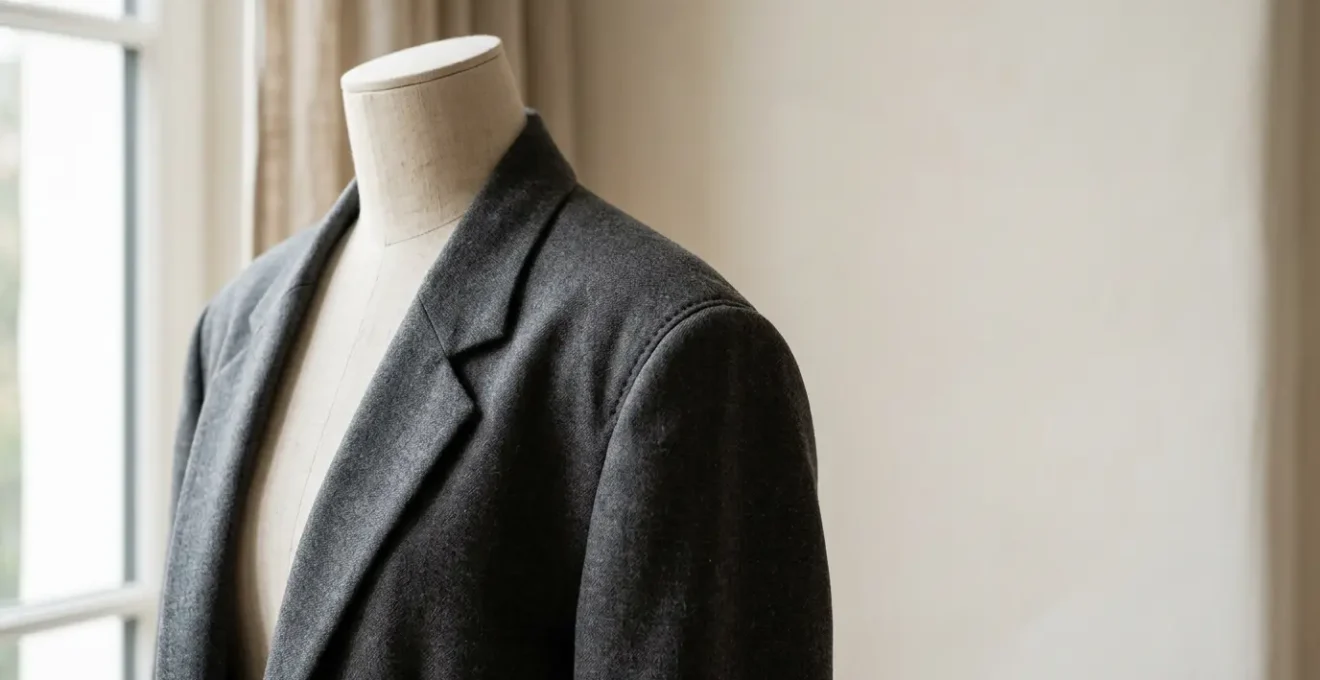
The fear of looking swamped in an oversized blazer is valid, but the solution isn’t just sizing down. The key difference between « chic oversized » and « just plain big » lies in mastering the technical principles of fit. It’s about understanding fabric drape, armhole construction, and how to create an intentional silhouette—not just wearing your dad’s suit. This guide deconstructs the look from a technical designer’s perspective.
You’ve seen it all over your social media feeds: the effortlessly cool, perfectly draped oversized blazer. It looks powerful, modern, and chic. But when you try to replicate the look, the reflection staring back feels less « fashion editor » and more like a child playing dress-up in a parent’s closet. The shoulders slump, the fabric creates a boxy silhouette, and you feel completely lost in a sea of wool. It’s a common frustration that turns many away from one of today’s most versatile trends.
The standard advice— »just size up » or « cinch it with a belt »—is overly simplistic and often leads to the very problem you’re trying to avoid: unflattering bulk. But what if the secret isn’t in the size tag at all, but in the blazer’s very architecture? As a fit technical designer, I can tell you that the line between intentionally oversized and accidentally sloppy is drawn with a tailor’s precision. It’s about understanding the physics of fabric and the geometry of fit.
The goal is to create modern, controlled volume, not to be consumed by your clothing. It’s a game of millimeters, not meters. The shoulder seam’s placement is just one piece of the puzzle. The true art lies in how the fabric drapes from that seam, how the armhole is constructed to allow movement, and how you style the piece to create a « fit anchor » that grounds the entire look.
This guide will move beyond the generic tips and break down the specific technical checkpoints you need to master. We will analyze everything from bottom pairings and fabric choice to professional styling and the crucial fit details for different body types, giving you the confidence to finally nail the oversized trend.
Contents: A Technical Guide to Mastering Modern Volume
- Biker Shorts or Wide Leg: What to Wear Under an Oversized Blazer?
- The Cinched Waist: How to Belt a Blazer Without creating Bulk at the Back?
- The Rubber Band Trick: Keeping Sleeves Rolled Up All Day?
- Stiff vs. Slouchy: Which Fabric Avoids the « Boxy » Effect?
- Is Oversized Appropriate for a Job Interview in 2024?
- The « Hug Test »: How to Know if Your Blazer is Too Tight in 3 Seconds?
- The Trench Coat: How to Style It Without Looking Like Inspector Gadget?
- How to Choose a Structured Blazer That Fits Broad Shoulders Without Tailoring?
Biker Shorts or Wide Leg: What to Wear Under an Oversized Blazer?
The first rule of managing intentional volume is establishing a fit anchor. This is a point of reference in your outfit that is slim or fitted, preventing the oversized piece from overwhelming your frame. The choice of what to wear underneath your blazer is the most effective way to create this anchor. The key is to create a sleek, uninterrupted line that contrasts with the blazer’s volume. A powerful technique for this is the « column of color » method.
This involves creating a monochromatic base with your top and bottom, which visually elongates your silhouette and serves as a clean canvas for the blazer. Your choice of bottom within this column then defines the overall aesthetic, from sporty to elegant.
- Select a monochromatic base: Choose a single color like black, camel, or white for your top (e.g., a fitted bodysuit or turtleneck) and bottom to create a continuous vertical line.
- Choose your bottom silhouette: For a sporty-chic vibe, pair your base with biker shorts. This creates a strong contrast in proportion that feels modern and intentional. For a more elegant, elongated look, opt for wide-leg pants.
- Layer textures intentionally: A smooth wool blazer pairs beautifully with the athletic texture of biker shorts. If you choose silk wide-leg pants, consider leather accessories to add another layer of textural contrast.
- Ground the look with strategic footwear: Footwear is critical. Chunky sneakers reinforce the streetwear energy of biker shorts, while pointed-toe heels peeking out from under wide-leg pants balance the blazer’s volume with refined sophistication.
As the visual demonstrates, the shoe choice is not an afterthought; it completes the proportional story. A pointed heel extends the leg line, while a substantial sneaker grounds the look, providing a solid base for the blazer’s volume. In every case, ensuring at least one element of your base layer is perfectly fitted is non-negotiable to prevent the entire silhouette from becoming shapeless.
The Cinched Waist: How to Belt a Blazer Without creating Bulk at the Back?
Belting an oversized blazer is one of the most common styling suggestions, and for good reason—it instantly introduces shape and definition. As the team at Your Local It Girl notes in their guide on styling oversized blazers, the right technique is transformative. They advise, « Start with a belt to cinch your waist and add shape. It turns a boxy blazer into a chic outfit that hugs your curves just right. » However, this is where many go wrong. Simply tightening a belt around a bulky blazer often creates a bunch of unflattering fabric folds at the back.
The secret to a clean, defined waist without the posterior bulk is a simple folding technique used by stylists and tailors. It’s about managing the excess fabric *before* you apply the belt. The « Tailor’s Fold » ensures a perfectly flat back and a sharply defined waist from the front.
- Identify your waistline: Put the blazer on, leaving it unbuttoned. Find the narrowest part of your torso—this is your natural waist and where the belt will sit.
- Create a single vertical pleat: Reach behind your back and gather all the excess fabric at the center. Fold it into a single, sharp vertical pleat.
- Secure the pleat: Hold the pleat firmly in place with one hand. With your other hand, wrap the belt around your front and begin to fasten it.
- Tighten the belt: Pull the belt just tight enough to secure the pleat against your back. The fold should remain perfectly centered and vertical.
- Adjust the front drape: Smooth out the front panels of the blazer so they fall naturally without pulling or creasing. The result is a clean, tailored back with all the shaping visible from the front.
The Rubber Band Trick: Keeping Sleeves Rolled Up All Day?
While the « rubber band trick » (using a hair tie to hold up sleeves) is a popular hack, it often creates tight, unnatural bunching and can lose its hold. For a more polished and durable result that speaks to intentional styling, a structured cuff is superior. Exposing the wrists acts as another fit anchor, breaking up the volume of the sleeve and adding a sense of effortless polish. It’s a small detail that prevents you from looking like you’re drowning in fabric.
Instead of a simple push-up, which works best for very slouchy, unstructured blazers, a methodical fold provides structural integrity that lasts all day. The most effective method is often called the « Master Sleeve Roll » or « J.Crew Cuff, » which creates a layered, substantial look that feels deliberate.
- Start with an unbuttoned cuff: Extend your arm straight out and unbutton the cuff of the blazer sleeve.
- Create the anchor fold: Fold the entire cuff upward from the hem, bringing the edge all the way up to just below your elbow. This long single fold is the foundation.
- Fold back down: Now, take the bottom edge of the section you just folded (the new, lower fold) and fold it back down toward your wrist, stopping about halfway.
- Expose the cuff: This action leaves the original cuff hem peeking out at the top of the roll. Adjust this « peek » so that about 1-2 inches of the cuff’s edge is visible, creating a clean, layered effect.
- Final adjustment: The result is a secure, stylish roll that won’t fall down. It has more substance and intention than a simple scrunch.
Stiff vs. Slouchy: Which Fabric Avoids the « Boxy » Effect?
The single most important factor in whether an oversized blazer looks chic or cheap is the fabric. It’s not about the material itself, but about its drape—a technical term for how a fabric hangs and falls under its own weight. A stiff fabric with poor drape (like a bonded polyester) will stand away from the body, creating sharp, unflattering angles and the dreaded « boxy » effect. In contrast, a fabric with excellent drape, even if it’s heavy, will follow the body’s contours and create fluid, graceful lines.
For an oversized silhouette, you want fabrics that have both weight and fluidity. Materials like wool crepe, Tencel, heavy silk, and high-quality linen blends are ideal. They have enough substance to feel luxurious but enough natural springiness to move with you. The goal is a fabric that creates soft volume, not rigid architecture.
You don’t need to be a fabric expert to assess drape. You can perform a quick, practical test in the fitting room to determine if a blazer will hang beautifully or create a box. This simple evaluation gives you the power to choose wisely.
Your Action Plan: The 5-Second Drape Test
- Isolate the fabric: Hold one corner of the blazer’s front panel between your thumb and index finger. Hold it up at shoulder height.
- Observe the fall: Let the fabric hang freely without any manipulation. Watch how it falls under its own weight.
- Count the folds: Does the fabric form multiple soft, fluid folds? That’s a sign of high drape, which is excellent for an oversized fit. If it forms only a few stiff, rigid creases, it has low drape and will likely look boxy.
- Test the movement: Gently shake the fabric. A fabric with good drape will flow and ripple, settling smoothly. A stiff fabric will hold its shape and move rigidly.
- Balance weight and drape: A heavy fabric with good drape (like wool crepe) creates luxurious volume. A lightweight but stiff fabric can create unflattering, tent-like angles. You want a harmonious balance.
Is Oversized Appropriate for a Job Interview in 2024?
The landscape of professional attire has shifted significantly. While traditional suiting remains a staple, the modern workplace—especially in creative and tech industries—allows for more personal expression. The blazer, in all its forms, is more relevant than ever. In fact, the global women’s blazer market is projected to reach $96.51 billion by 2033, showing its enduring power as a professional garment. The question is no longer *if* a blazer is appropriate, but *which style* of blazer is.
An oversized blazer can absolutely be appropriate for a job interview in 2024, provided it reads as an intentional, polished, and confident choice—not a lazy or sloppy one. The key is to remove any doubt about your professionalism by ensuring every other element of your outfit is impeccable. Your blazer is the fashion statement; everything else is the professional anchor.
To ensure your oversized blazer projects authority and not apathy, follow this intentionality checklist:
- Fabric Quality is Paramount: Opt for a structured oversized blazer in a premium fabric like worsted wool or a high-quality crepe. Avoid shiny, thin polyester blends that look inexpensive and lack structure.
- Impeccable Grooming: Your hair should be polished (a sleek bun, a professional blowout), your makeup refined, and your nails clean and manicured. These details signal that you are meticulous.
- Structured Accessories: Pair the blazer with a high-quality, structured leather bag—like a classic tote or a portfolio—and polished, closed-toe shoes. Avoid slouchy bags or overly casual footwear.
- A Fitted Foundation: Wear a perfectly fitted base layer underneath. A slim-fit turtleneck, a tailored shell top, or a simple silk camisole anchors the volume of the blazer.
- Perfectly Pressed: The blazer must be completely wrinkle-free. A freshly pressed garment signals attention to detail, a highly valued professional trait.
The « Hug Test »: How to Know if Your Blazer is Too Tight in 3 Seconds?
Whether you’re buying a classic tailored blazer or an oversized one, comfort and mobility are non-negotiable. A blazer that is too tight across the shoulders or back is restrictive and will look ill-fitting no matter its style. As the experts at Busbee Style aptly put it, you need to move in it: « Give yourself a hug, lift your arms over your head, or do whatever you need to figure out if the shoulders are too tight. If your shoulders feel restricted or the fabric is pulling a lot, try another size up. »
This intuitive « hug test » is a great starting point. For a more systematic assessment that a technical designer would use, you can perform the « Driver’s Test. » This quick series of movements mimics everyday actions and immediately reveals any fit issues across the upper body, especially in the shoulders and back.
- Sit in a chair: Begin by sitting down with your back straight and both feet flat on the floor, simulating a desk or driving position.
- Grab the « steering wheel »: Extend both arms forward as if you were grabbing a steering wheel, with your elbows slightly bent.
- Assess shoulder comfort: Do you feel any pinching or sharp restriction across your shoulder blades? The fit should allow for easy forward reach without strain.
- Check for pulling: Look for visible strain lines across your upper back. If the fabric pulls taut or creates an ‘X’ shape near the button when closed, the blazer is too small through the body or back.
- Test your range of motion: Move your arms in a slow, circular motion. You should have a full and comfortable range of movement without the blazer’s shoulders riding up your neck or the fabric pulling uncomfortably.
The Trench Coat: How to Style It Without Looking Like Inspector Gadget?
The principles of managing intentional volume extend beyond blazers. They can be used to transform another wardrobe classic that often overwhelms the wearer: the trench coat. The traditional, stiff trench can easily feel bulky and shapeless, creating the dreaded « Inspector Gadget » effect. The key to modernizing it is the same as with a blazer: create fit anchors by strategically revealing parts of your silhouette.
The solution is the « Three Points of Visibility » rule. By ensuring your ankles, wrists, and neckline are visible, you break up the coat’s monolithic volume and remind the eye of the frame underneath. This prevents the coat from swallowing you whole and creates a look that is both relaxed and defined.
This approach works best with trench coats made from more fluid fabrics, like Tencel or soft cotton blends, which have a better drape than traditional stiff gabardine.
- Point 1: Visible Ankles: Wear cropped pants, roll the hem of your jeans, or choose a dress or skirt with a hemline that hits above the ankle bone. Exposing this sliver of skin creates a visual break and lightens the entire look.
- Point 2: Visible Wrists: Just as with a blazer, push up the sleeves to a 3/4 length or roll the cuffs. This simple act prevents the silhouette from looking heavy and adds an air of nonchalant elegance.
- Point 3: Visible Neckline: Wear the trench open at the top or unbuttoned down to your collarbones. This creates a V-shape that visually elongates the neck and defines your upper body.
An alternative styling trick is to leave the front of the coat open and tie the belt loosely in the back. This cinches the waist to create shape from behind while allowing the front panels to flow freely, achieving a relaxed yet polished editorial aesthetic.
Key Takeaways
- The shoulder seam on a proper oversized blazer should be intentionally dropped past your natural shoulder, but the fit through the armhole and back is what prevents it from looking sloppy.
- Fabric drape is non-negotiable. Always choose fluid, weighty fabrics like wool crepe or Tencel that hang close to the body to avoid a « boxy » silhouette.
- Every oversized look needs a « fit anchor. » Whether it’s a defined waist, a visible ankle, or a slim base layer, one part of your outfit must be fitted to ground the volume.
How to Choose a Structured Blazer That Fits Broad Shoulders Without Tailoring?
For those with broad shoulders, finding any blazer that fits well off-the-rack can be a challenge, let alone an oversized one. The common experience is finding a size that fits your shoulders but is too large everywhere else, or one that fits your torso but is painfully tight across the back. This issue is so prevalent that over 90% of premium menswear retailers report shoulder fit as the #1 alteration request. But extensive tailoring isn’t always necessary if you know what to look for in the blazer’s construction.
The secret often lies not in the width of the shoulder seam, but in the shape and depth of the armscye—the technical term for the armhole. This is where a garment’s mobility is determined.
Case Study: The Armscye Solution for Broad Shoulders
For individuals with broader shoulders, the critical fit issue is often a high, tight armhole, not just the shoulder width. Blazers constructed with a lower or deeper armscye provide significantly more room and mobility across the upper back and shoulders, even when the shoulder seam sits correctly at the anatomical shoulder point. This design allows fabric to drape naturally without pulling or creating tension, maintaining a structured silhouette without restriction. When shopping, look for descriptions like « relaxed armholes » or a « deeper armscye, » often found in brands catering to athletic or curvy fits. Additionally, blazers with princess seams—long, vertical seams running from the shoulder down the front—create shaping that defines the waist without constricting the shoulders, preventing the « linebacker » effect that straight side seams can cause.
By shifting your focus from the shoulder seam’s endpoint to the armhole’s cut, you can find a blazer that accommodates your frame while providing a flattering, structured shape right off the rack. This technical insight is the key to unlocking a perfect fit without the need for a tailor.
Now, armed with a technical designer’s eye, you can confidently navigate the racks and choose a blazer that delivers intentional volume, not just excess size. Start applying these fit principles on your next shopping trip to find your perfect oversized piece.