French Beauty
French beauty is not about achieving perfection—it is about cultivating healthy skin that requires minimal intervention. While global beauty trends often emphasize dramatic transformations and multi-step routines, the French approach takes a fundamentally different path. It prioritizes prevention over correction, gentle formulations over aggressive treatments, and a philosophy where skincare seamlessly blends with overall well-being.
This approach has produced some of the world’s most trusted skincare innovations: micellar water, thermal spring treatments, and pharmacy brands that dermatologists worldwide now recommend. But French beauty extends beyond products. It encompasses wellness rituals like thalassotherapy, the art of choosing a signature scent, and even understanding how lifestyle choices—from digital habits to daily movement—directly impact skin health.
Whether you are curious about why French dermatologists prescribe water sprays, how to decode ingredient labels for sensitive skin, or what makes niche perfumery worth exploring, this resource covers the essential pillars of the French beauty philosophy.
The Foundation: What Makes French Beauty Different?
At its core, French beauty operates on a principle that feels almost counterintuitive in today’s maximalist beauty culture: doing less, but doing it correctly. Rather than layering ten products hoping one will work, the French approach emphasizes understanding your skin’s actual needs and addressing them with precisely formulated solutions.
This philosophy emerged partly from France’s unique healthcare system, where dermatologists have long worked alongside pharmacists to develop accessible, science-backed skincare. Brands like Avène, La Roche-Posay, and Bioderma were born not in luxury laboratories but in thermal spa towns, where mineral-rich waters had been treating skin conditions for centuries.
The result is a beauty culture that views skincare as preventive health rather than cosmetic enhancement. A French woman in her twenties already thinks about maintaining her skin barrier, not because she fears aging, but because healthy skin simply functions better—it stays hydrated longer, reacts less to environmental stressors, and requires less makeup to look radiant.
Wellness Rituals: Self-Care Beyond the Bathroom Shelf
French beauty has always recognized that skin health cannot be separated from overall well-being. This explains why practices that might seem unrelated to skincare—like creating a hammam experience at home or practicing flânerie (the art of aimless wandering)—are considered integral to looking and feeling your best.
The Mind-Skin Connection
Stress directly impacts skin health through cortisol production, which can trigger inflammation, breakouts, and accelerated aging. French wellness traditions address this through sensory rituals: choosing between lavender and eucalyptus oils based on your nervous system’s needs, or understanding why removing your phone from the bedroom can improve your complexion.
These are not pseudoscientific claims. Research consistently shows that sleep quality affects skin barrier function, while chronic stress disrupts the skin’s microbiome. The French simply integrated this knowledge into daily rituals long before wellness became a global industry.
Body Treatments That Work
Thalassotherapy—using seawater, algae, and marine elements for therapeutic purposes—is actually prescribed by French doctors for certain conditions. Dry brushing for lymphatic stimulation has been practiced in French spas for decades. These techniques share a common thread: they work with the body’s natural systems rather than imposing external solutions.
- Thalassotherapy centers are recognized medical establishments in France
- Dry brushing takes approximately five minutes and supports lymphatic drainage
- Home hammam rituals can replicate spa benefits with proper technique
Active Ingredients: Understanding What Goes on Your Skin
The French pharmacy approach to skincare is inherently educational. Rather than marketing miracle transformations, brands focus on explaining exactly what each ingredient does—and equally important, what it cannot do. This transparency has created generations of consumers who read ingredient lists like nutritional labels.
The Retinoid Question
Retinol remains the gold standard for addressing fine lines and texture, but it is not suitable for everyone. French dermatologists have long prescribed alternatives like bakuchiol for patients with sensitive or reactive skin, particularly those over forty whose skin barrier may be compromised. Understanding which molecule suits your specific situation prevents the common cycle of irritation and abandonment.
Mixing Active Ingredients Safely
Can you combine vitamin C and niacinamide in your morning routine? The French skincare philosophy answers this question not with blanket rules but with nuanced understanding. Some combinations enhance efficacy; others cause irritation or simply cancel each other out. Key principles include:
- Introduce one new active ingredient at a time
- Wait two weeks before assessing results
- Pay attention to how your skin feels, not just how it looks
- Consult a dermatologist for prescription-strength ingredients
This approach also applies to understanding preservatives. The trend toward preservative-free skincare can actually be dangerous, as unpreserved products become breeding grounds for bacteria. French formulations prioritize safety-tested preservatives over marketing claims.
Thermal Water: France’s Liquid Gold
Perhaps nothing exemplifies French beauty innovation quite like thermal water. What began as hydrotherapy treatments in volcanic spa towns evolved into a skincare category used by millions worldwide. But not all thermal waters are created equal, and using them correctly requires understanding their unique mineral compositions.
Composition Matters
Avène water is particularly low in minerals, making it ideal for hypersensitive and allergic skin. La Roche-Posay water contains selenium, known for its soothing and antioxidant properties. Vichy water is highly mineralized, better suited for normal to combination skin seeking radiance. Choosing the wrong thermal water for your skin type can actually cause problems rather than solve them.
Application Technique
Here is a fact that surprises many newcomers to French beauty: letting thermal water air-dry on your face can actually dehydrate your skin. As the water evaporates, it pulls moisture from the skin’s surface. The correct technique involves misting, waiting thirty seconds, then gently blotting with a tissue before the water fully evaporates.
Thermal water also plays a role in healing. Dermatologists recommend it following laser treatments and chemical peels, where it can speed recovery time by up to thirty percent. Even on long-haul flights, a thermal water mist helps combat the dehydrating effects of cabin air.
The Art of Cleansing: Micellar Water and Double Cleansing
Micellar water—invented in France as a gentle alternative to harsh tap water—has become a global phenomenon. Yet many users misunderstand how it works and whether their specific formula requires rinsing.
How Micelles Actually Work
Micelles are tiny spheres of cleansing molecules suspended in soft water. The hydrophobic (oil-attracting) cores act like magnets, lifting makeup, sebum, and impurities without aggressive rubbing. This explains why micellar water removes even waterproof mascara when given enough contact time—the micelles need seconds to bind with oil-based products.
To Rinse or Not to Rinse
Despite being marketed as no-rinse products, many micellar waters leave surfactant residue that can irritate sensitive skin over time. For acne-prone skin, this residue may clog pores. The French compromise? Use micellar water as the first step in a double-cleanse routine, followed by a gentle wash-off cleanser.
Oil-infused micellar waters work more effectively on heavy makeup but require rinsing. Standard formulas suit daily light cleansing. For post-workout situations where washing is not immediately possible, micellar water provides a practical interim solution.
Navigating Sensitive and Reactive Skin
French pharmacy brands built their reputations on formulating for problematic skin. This expertise translates into a sophisticated understanding of what hypoallergenic actually means—and why the term alone guarantees nothing.
Label Reading for Reactive Skin
Certain ingredients trigger reactions in specific conditions. Linalool and limonene, both naturally derived from plants, are common eczema triggers. PEG compounds and synthetic fragrances frequently irritate rosacea-prone skin. Paraben-free formulas often substitute preservatives that may be equally or more sensitizing.
A proper patch test—applied to the inner forearm for forty-eight hours—remains the only reliable way to predict how your skin will react. French dermatologists teach this practice as standard protocol before introducing any new product.
- Check for fragrance (parfum) even in unscented products
- Avoid essential oils if you have eczema or rosacea
- Remember that natural does not mean non-reactive
- Adult hypoallergenic products are not pH-balanced for infant skin
French Perfumery: Choosing and Wearing Scent
No exploration of French beauty is complete without addressing perfumery—an art form France has dominated for centuries. Yet even fragrance comes with practical knowledge that transforms how you select and wear scent.
Understanding Concentration and Longevity
Eau de toilette typically lasts four to six hours; extrait de parfum can last twelve hours or more. But concentration is not the only factor. Skin chemistry, weather, and even your diet affect how fragrance develops on your body. That winter oud perfume causing headaches in summer? Its heavy base notes become cloying in heat.
Building a Signature Scent
The French approach to fragrance rejects following trends. Instead, it emphasizes finding a scent that becomes uniquely yours. This might involve:
- Testing on skin, never paper strips alone
- Wearing a sample for a full day before purchasing
- Considering how the scent layers with your natural chemistry
- Applying to pulse points for projection or clothing for longevity
Scent layering—combining complementary fragrances—requires understanding note families. Citrus pairs safely with florals; gourmand notes (vanilla, caramel) can overwhelm when combined. Niche perfumery offers more complex compositions but demands more confident selection.
French beauty ultimately teaches a skill that transcends products: the ability to understand your own skin, body, and preferences deeply enough to make informed choices. Whether you are selecting a thermal water for post-procedure healing, decoding an ingredient list for your reactive skin, or finding a fragrance that does not smell like everyone else, the principle remains consistent—knowledge creates confidence, and confidence creates genuine beauty.
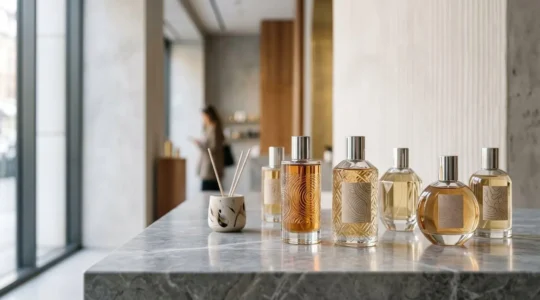
How to Choose a Perfume That Doesn’t Smell Like Everyone Else in the Office?
In summary: Stop searching for a single “perfect note” and start thinking like a fragrance architect by understanding a scent’s structure. Master the difference between Eau de Toilette, Eau de Parfum, and Extrait to control your fragrance’s longevity and projection….
Read more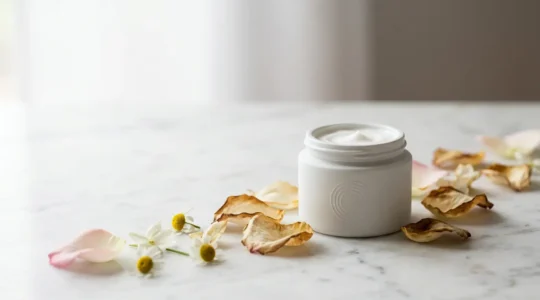
Why “Hypoallergenic” Doesn’t Guarantee You Won’t Have a Reaction?
The “hypoallergenic” label on your skincare is a marketing term, not a regulated safety guarantee. “Natural” scents like linalool become potent allergens when exposed to air during a product’s shelf life. “Paraben-free” formulas often use replacement preservatives that can be…
Read more
Why Rinsing Your “No-Rinse” Micellar Water Changes Everything
The “no-rinse” label on your micellar water is a marketing convenience, not a dermatological recommendation; failing to rinse leaves behind a film of chemical residue that can cause chronic skin issues. Surfactants, the ‘micelle’ cleansing agents, are not meant for…
Read more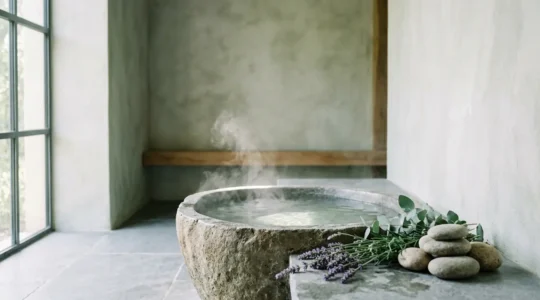
Why do French dermatologists prescribe water spray for eczema?
The secret to calming eczema with thermal water isn’t the spray itself, but the *technique*—it must be treated as a precise dermatological tool, not just a refreshing mist. It works by delivering bioavailable minerals that actively reduce skin inflammation, going…
Read more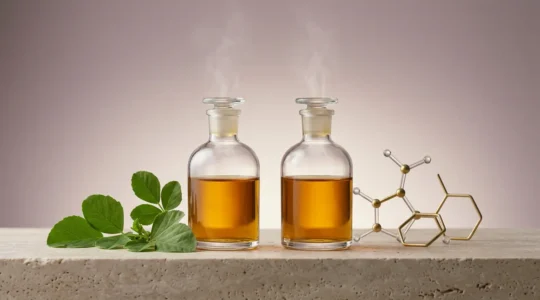
Retinol vs. Bakuchiol: Which Molecule Suits Sensitive Skin Over 40?
The “Retinol vs. Bakuchiol” debate is asking the wrong question; the key to youthful, calm skin over 40 is not choosing one ingredient, but mastering the principles of your entire skincare routine to manage your skin’s unique “irritation threshold.” Irritation…
Read more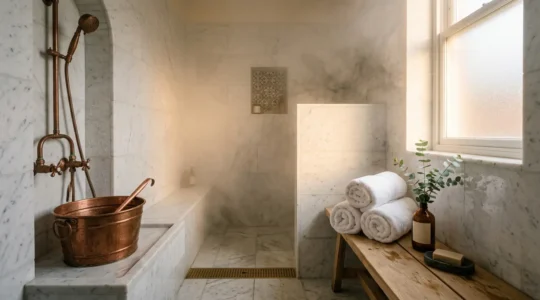
How to Create a Hammam Experience in Your Small Bathroom?
In summary: Transform your bath into a therapeutic ritual by understanding the science behind relaxation, not just aesthetics. Use a two-phase scent protocol: eucalyptus for purification during steam, and lavender for restoration afterward. Eliminate blue light from your evening routine…
Read more