Fashion & Culture
Fashion is never just about clothes. It is a living archive of human expression, encoding social hierarchies, geographic identities, technological innovations, and moral values into every stitch, fragrance, and silhouette. When you choose a garment, you participate in conversations that span centuries and continents—whether you realize it or not.
This intersection of style and society is what we call fashion and culture. Understanding it transforms how you see a simple dress, a bottle of perfume, or a trending aesthetic. Suddenly, a Breton stripe shirt carries the weight of naval history. A jasmine note in your fragrance connects you to fields in Grasse harvested at dawn. The clean girl aesthetic reveals assumptions about class and access. Fashion becomes a lens for understanding the world.
In the sections that follow, we explore how geography shapes style identity, what separates true craftsmanship from marketing mythology, how different cultures approach beauty, and why the clothes on your back carry ethical implications you may never have considered. Each topic opens doors to deeper explorations available throughout this section.
How Place and History Shape Fashion Identity
Geography is fashion’s silent author. The clothes people wear and the style codes they follow often trace back to specific streets, neighborhoods, and historical moments. Understanding these connections reveals why certain places became synonymous with particular aesthetics.
The Parisian Neighborhoods as Style Laboratories
Paris offers perhaps the clearest example of how urban geography creates distinct fashion dialects. The Left Bank’s Saint-Germain-des-Prés neighborhood cultivated an intellectual, effortless aesthetic tied to existentialist philosophy and literary cafés. Cross the Seine to the Right Bank, and the dress codes shift toward polished luxury near the Champs-Élysées or eclectic creativity in the Marais.
These distinctions are not arbitrary. Baron Haussmann’s nineteenth-century redesign of Paris created grand boulevards that enabled new forms of retail—the department store, the shopping arcade—which fundamentally changed how people encountered and purchased clothing. The Marais, initially bypassed by modernization, preserved medieval streets that later attracted artists and eventually became a hub for contemporary fashion.
Fashion Districts as Cultural Museums
Major fashion capitals often hide remarkable cultural institutions within their commercial zones. These secret museums and dedicated fashion exhibitions provide context that transforms shopping from consumption into education. Institutions like the Musée Galliera or the Musée des Arts Décoratifs offer rotating exhibitions that place contemporary trends within historical continuums.
Understanding this geographic and historical foundation helps explain why certain items—a trench coat, a striped marinière—carry cultural weight beyond their fabric composition.
The Craftsmanship Behind Luxury
The word luxury has been diluted through overuse, but true craftsmanship remains genuinely rare. Understanding the techniques, time investments, and human expertise behind exceptional fashion helps distinguish marketing claims from material reality.
What Defines Haute Couture
Haute couture is not merely expensive clothing—it is a legally protected designation in France with specific criteria. A house must employ a minimum number of full-time artisans, present collections twice yearly, and produce made-to-measure garments using predominantly hand-executed techniques. These requirements explain why only a handful of houses hold the official designation.
The economics initially seem absurd: why invest two hundred hours embroidering a single sleeve? Why charge fifty thousand euros for a dress? The answer involves understanding haute couture as a research laboratory. Techniques developed for runway spectacles eventually filter down to ready-to-wear and mass market—a process that justifies the investment for fashion houses seeking innovation credibility.
Artisanal Textiles and the Human Touch
Beyond Parisian ateliers, artisanal traditions worldwide produce textiles no machine can replicate. Hand-woven fabrics contain deliberate imperfections that paradoxically prove their value—slight variations in tension that create unique textures. Block printing leaves subtle registration differences visible when you examine the fabric’s reverse side. Authentic mud cloth requires approximately two weeks to produce a single yard.
Key markers of genuine artisanal textiles include:
- Visible slight irregularities in pattern alignment
- Variation in dye intensity across the surface
- Different appearance on front versus back of fabric
- Natural fiber smell distinct from synthetic treatments
Recognizing these markers helps you distinguish fair trade purchases that actually compensate artisans from mass-produced imitations using heritage aesthetics without heritage practices.
Beauty Philosophies Across Cultures
Beauty standards and skincare approaches vary dramatically across cultures, reflecting deeper values about aging, naturalness, and the relationship between effort and appearance. These differences offer more than product recommendations—they reveal cultural philosophies.
The Glass Skin Versus Healthy Glow Divide
Korean beauty culture emphasizes glass skin—a poreless, luminous complexion achieved through elaborate multi-step routines. The goal is skin so clear it appears almost artificial in its perfection. French beauty philosophy, by contrast, celebrates the healthy glow approach: skin that looks alive, with character, perhaps even embracing fine lines as evidence of a life well-lived.
Neither approach is objectively superior. K-beauty treats skincare as a dedicated ritual with measurable goals. French pharmacy culture treats skincare as maintenance—effective products applied efficiently without elaborate ceremony. Asian markets have pioneered sun protection innovations years ahead of European adoption, driven by cultural priorities around preventing aging signs.
Makeup Philosophies: Structure Versus Freshness
American makeup culture often emphasizes transformation through contouring—sculpting bone structure, defining features, creating dramatic change. French makeup philosophy tends toward enhancement: the bonne mine approach of looking naturally healthy rather than visibly made up.
These differences extend to cosmetic procedures. Cultural attitudes toward plastic surgery, injectable treatments, and visible intervention vary enormously. Some cultures celebrate transformation while others prize the appearance of untouched naturalness—even when that appearance requires significant intervention to achieve.
The Invisible Art of Perfumery
Fragrance represents fashion’s most intangible dimension—style you cannot see but can unmistakably sense. The perfume industry balances artistic tradition with technological innovation in ways most consumers never perceive.
Why Origin Determines Value
A kilogram of jasmine absolute from Grasse can cost twenty times more than equivalent jasmine from Egypt. This price differential reflects not snobbery but measurable differences: soil composition, microclimate, harvest timing, and extraction expertise accumulated over generations. Grasse’s perfumery knowledge was recognized as Intangible Cultural Heritage, acknowledging that human skill—not just raw materials—creates exceptional scent.
Master perfumers typically train for approximately a decade, developing olfactory memory capable of identifying and manipulating thousands of distinct aromatic molecules. This expertise allows them to balance natural ingredients with synthetics—because certain beloved scents, like fresh rain or clean laundry, literally do not exist in nature and can only be created through chemistry.
Extraction Methods Shape the Final Scent
Traditional enfleurage—using fat to absorb fragrance from delicate petals—produces different aromatic profiles than modern CO2 extraction or steam distillation. Technology has not replaced tradition but expanded possibilities. The same rose, processed differently, yields detectably different perfumes.
Street Style and the Democratization of Fashion
Fashion communication has transformed radically through digital platforms, shifting influence from editors and designers toward photographers, bloggers, and everyday people photographed outside runway shows.
How Street Photography Changed Everything
The emergence of street style blogs fundamentally altered fashion’s power structure. Photographers stationed outside fashion week venues transformed attendees into content—and suddenly, peacocking (dressing specifically to attract photographer attention) became a calculated career strategy. Being photographed generated visibility that could launch modeling contracts, consulting relationships, or influencer careers.
This shift democratized fashion commentary while creating new pressures. Trends now emerge from street documentation and social media virality rather than exclusively from designer dictates. The clean girl aesthetic spreads through platforms rather than magazines—though critics question whether such aesthetics truly represent accessibility or merely repackage expensive minimalism.
Navigating Trends Thoughtfully
Understanding trend mechanics helps you engage more thoughtfully with seasonal shifts. Some questions worth considering:
- Is this trend genuinely new or a recycled silhouette with updated marketing?
- Does this style require specific body types or expensive basics to execute?
- Will this garment remain wearable beyond its trend peak?
- What cultural influences shaped this aesthetic, and are they credited?
The line between inspiration and plagiarism—particularly regarding indigenous patterns and traditional techniques—represents an ongoing cultural conversation without easy resolution.
The Ethics of What We Wear
Every garment carries invisible histories: hands that sewed it, water that processed its fibers, chemicals that dyed its threads, wages paid or withheld. Understanding these realities transforms shopping from simple consumption into ethical participation.
Sustainability Claims Require Scrutiny
Marketing language around sustainability often obscures more than it reveals. Recycled bottle fabrics sound virtuous but may shed microplastics and prove difficult to recycle further. Plant dyes appeal to natural instincts but fade faster and sometimes require mordants with their own environmental impacts.
Certifications help but require interpretation:
- GOTS (Global Organic Textile Standard) addresses farming practices and some processing
- OEKO-TEX certifies finished products for harmful substances but does not guarantee organic farming
- Traceability claims vary enormously—some brands track cotton to specific farms while others cannot identify their fabric mills
A pair of jeans marketed as green may still consume thousands of liters of water. Compostable clothing claims require specific industrial composting conditions unavailable to most consumers.
Human Costs Behind Price Tags
The distinction between minimum wage and living wage matters enormously. A factory may comply with local minimum wage laws while paying workers amounts insufficient for basic needs. The mathematics of a five-dollar t-shirt make ethical production virtually impossible—someone along the supply chain absorbs the cost through inadequate compensation.
Tools now exist to investigate brand practices from your phone, and template emails help consumers ask difficult questions about factory conditions. Direct purchasing from artisan cooperatives can improve maker compensation—though verifying these claims requires diligence.
Fashion and culture intertwine at every level, from the neighborhoods where styles emerge to the invisible labor producing our wardrobes. Understanding these connections transforms passive consumption into active participation—helping you dress with awareness of the histories, geographies, and human realities woven into every garment you own.

Who Really Made Your Clothes? A Guide to Uncovering Factory Conditions With Your Phone
Relying on “ethical” labels isn’t enough; true change comes from demanding economic transparency and holding brands directly accountable. The math behind a $5 t-shirt proves it’s impossible for it to be made ethically, as labor costs are the first to…
Read more
Why “Made from Recycled Bottles” Is Not Always the Eco-Hero You Think
The “eco-friendly” label on your clothing often hides a more complex and less sustainable reality. Recycled materials can still shed microplastics, and “compostable” garments often require industrial facilities that don’t exist for consumers. Labels like OEKO-TEX test for harmful substances…
Read more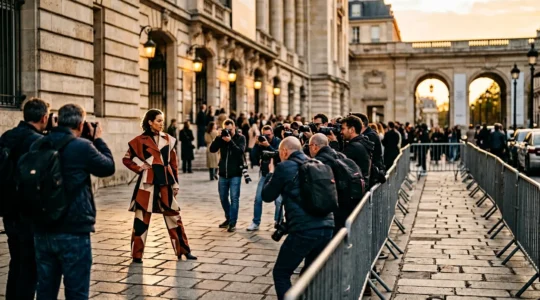
Why “Peacocking” at Fashion Week Is a Calculated Business Move
Dressing for Fashion Week street style is no longer about personal expression; it’s a high-stakes marketing operation with measurable returns. A single viral outfit isn’t just a “look,” it’s an asset that can generate millions in Media Impact Value (MIV),…
Read more
How Luxury Brands Use “Heritage” to Justify Price Increases?
The “heritage” that justifies a luxury brand’s high price is often less about history and more about sophisticated marketing engineering. Brands actively construct, resurrect, and weaponize historical narratives to create a “Heritage Premium” that goes far beyond material costs. Strategies…
Read more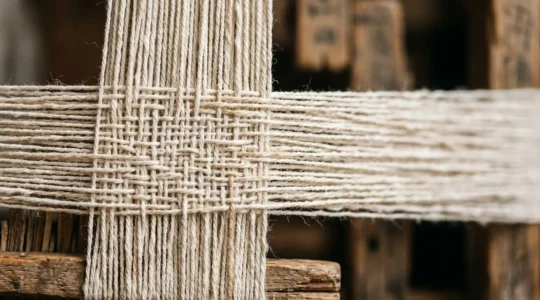
Why Hand-Woven Textiles Have Imperfections That Machines Can’t Copy
Contrary to the belief that a snag or uneven dye is a defect, these ‘imperfections’ are the very signature of a textile’s authenticity and value. They act as forensic markers, proving an object was made by a human hand, not…
Read more
Why Does a Jasmine from Grasse Cost 20 Times More Than One from Egypt?
The steep price of a Grasse perfume isn’t a luxury markup; it’s a direct reflection of a high-risk, low-yield agricultural and scientific supply chain. The switch from traditional enfleurage to high-tech CO2 extraction preserves fragile scents at a molecular level,…
Read more
K-Beauty vs. French Pharmacy: Which Approach Is Better for Anti-Aging?
The real choice isn’t about products, but about aligning with a cultural philosophy on aging that resonates with you. Korean Beauty pursues flawless, perfected skin through meticulous prevention and an innovative, multi-layered ritual aiming for an idealized aesthetic like “glass…
Read more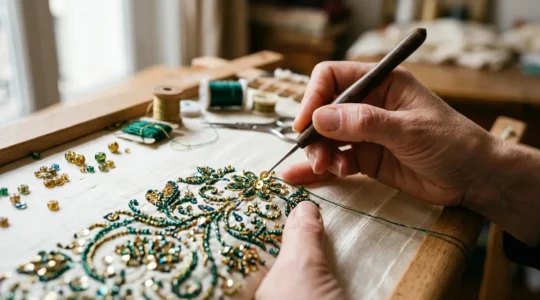
What Actually Justifies the €50,000 Price Tag of a Haute Couture Dress?
A €50,000 haute couture dress is not an overpriced garment; it’s a meticulously engineered financial instrument that powers the global luxury market. It acts as a ‘loss-leader laboratory’, funding the research and development for mainstream fashion trends. It subsidizes the…
Read more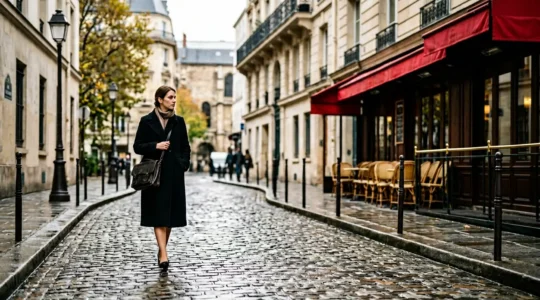
Why Saint-Germain-des-Prés Is the Undisputed Intellectual Heart of Parisian Style
Saint-Germain’s “intellectual chic” isn’t a fashion trend; it’s a direct result of the neighborhood’s urban design and cultural history. Right Bank style is performative, born from Haussmann’s wide boulevards designed for public display. Left Bank style is introspective, rooted in…
Read more