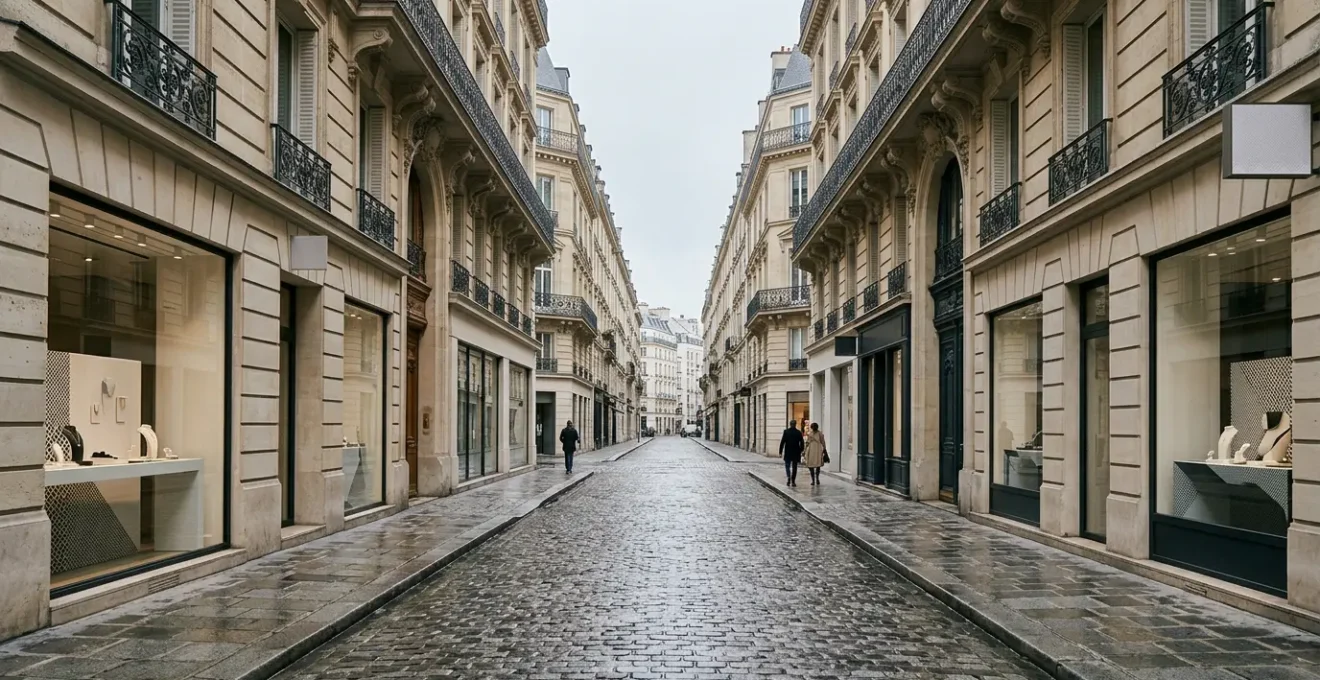
Acquiring timeless jewelry on Faubourg Saint-Honoré is less about shopping and more about a strategic asset acquisition within a secure, high-discretion ecosystem.
- Proximity to political power (the Élysée Palace) engineers an environment of unparalleled discretion, crucial for high-value transactions.
- Historic flagship boutiques offer « legacy value, » a narrative component that enhances an asset’s long-term worth beyond its material value.
Recommendation: Treat every interaction on this street not as a one-time transaction, but as a deliberate step in building a long-term, trusted relationship with a heritage brand.
For the discerning investor, acquiring a high-value asset like a piece of timeless jewelry or a complicated watch is a process governed by more than just aesthetics and price. It is an exercise in risk mitigation, value preservation, and strategic positioning. While many global luxury hubs offer glittering showcases, they often cater to the tourist or the trend-follower. The question for a serious collector is different: where does one find not just a product, but a secure environment that protects and enhances the value of the acquisition from the moment of purchase?
Many will point to the obvious luxury capitals, suggesting that brand consistency makes the point of purchase irrelevant. They might advise focusing solely on the item’s specifications or the latest market trends. This perspective, however, overlooks a critical, intangible asset: the ecosystem in which the transaction takes place. The real key to a secure luxury investment lies not in what you buy, but in *where* and *how* you buy it. This is where the Faubourg Saint-Honoré distinguishes itself not merely as a shopping street, but as a fortified ecosystem of discretion and legacy.
This analysis will deconstruct the unique value proposition of the Faubourg Saint-Honoré for the asset-focused investor. We will explore how its proximity to political power shapes its service culture, why its historic flagships are more than just stores, and how every element, from the way you are greeted to the place you have tea, becomes part of a larger investment strategy. Forget the simple shopping trip; this is a masterclass in acquiring asset-grade luxury within its most protected habitat.
This article delves into the strategic nuances that make Faubourg Saint-Honoré a superior choice for the serious investor. The following sections break down the key operational and environmental factors, from boutique etiquette to the very definition of value in luxury goods.
Summary: The Strategic Investor’s Guide to Faubourg Saint-Honoré
- How to Dress to Get Excellent Service in Ultra-Luxury Boutiques?
- Hermès at 24 Faubourg: Why Is This Specific Address Mythical?
- Tea Time at Le Bristol or The Ritz: Which Experience Justifies the €80 Cost?
- The Waitlist Myth: How to Actually Walk Out with a Birkin?
- Faubourg-Saint-Honoré vs. Avenue Montaigne: Where is the Service Better?
- Flagship Boutique vs. Department Store: Where to Buy Your First Chanel Bag?
- Solid Gold vs. Vermeil: Is the Price Difference Justified for a Cuff?
- How to Verify the Authenticity of a Vintage Chanel Bag in 3 Steps?
How to Dress to Get Excellent Service in Ultra-Luxury Boutiques?
In the ultra-luxury environment of Faubourg Saint-Honoré, your attire is not a fashion statement; it is your opening statement in a high-stakes negotiation. Sales advisors are trained to be gatekeepers of brand heritage, and their primary function is to identify serious collectors from fleeting tourists. Dressing appropriately is the first step in signaling that you are the former. This is not about displaying wealth, but about demonstrating respect for the craftsmanship and the discreet culture of the boutique. Polished, neat attire is the uniform of this ecosystem.
The objective is to project an aura of quiet confidence and belonging. This communicates that you are not intimidated by the environment and are there for a serious purpose. Your appearance should be an extension of a mindset focused on investment and appreciation, not consumption. Think of it as dressing for a board meeting where the subject is a multi-generational asset. The key is subtlety and quality over loud branding. A well-tailored blazer, quality leather shoes, and a classic timepiece speak a language of permanence that these advisors are trained to recognize.
The way you carry yourself is as important as the clothes you wear. Your behavior should reflect the serene and refined atmosphere. Handling products with visible care, maintaining eye contact, and engaging in knowledgeable conversation are all part of the code. This non-verbal communication establishes you as a peer who values the art and history of the maison, paving the way for a relationship built on mutual respect and, ultimately, access to the most coveted pieces.
To navigate this initial interaction successfully, consider these fundamental rules of etiquette:
- Opt for polished, neat attire instead of casual clothes – avoid sneakers, t-shirts, or ripped jeans that can undermine the upscale atmosphere.
- Maintain moderate voice levels and behave quietly to preserve the refined environment and show appreciation for the luxury setting.
- Handle all items and products with visible care, including your personal belongings like phones, to communicate respect and seriousness.
- Make eye contact with sales advisors and maintain confident posture throughout your visit to project ease in the luxury environment.
- Treat the experience as an immersion in craftsmanship rather than a transaction, allowing time to appreciate details and build rapport.
Ultimately, your presentation is the key that unlocks the door to a higher tier of service, transforming a simple sales interaction into the beginning of a strategic partnership with the brand.
Hermès at 24 Faubourg: Why Is This Specific Address Mythical?
The Hermès flagship at 24 rue du Faubourg Saint-Honoré is not just a store; it is the heart of the brand’s legacy and a physical manifestation of its value system. For an investor, acquiring an asset from this specific location adds an intangible but powerful layer of provenance. The address itself becomes part of the item’s history. Established by Thierry Hermès’s son in 1880, this location has been a continuous site of Hermès craftsmanship for over 140 years. This uninterrupted history is a rarity in modern retail and a powerful symbol of stability and enduring value, core tenets of any sound investment.
The building’s evolution mirrors the brand’s strategic growth. Initially a workshop and boutique, it expanded by acquiring neighboring properties in 1978 and 2007, transforming into a sprawling, multi-building experience. At over 1,700 m², it is the largest Hermès store globally, a testament to its central importance. When the workshops were moved to Pantin in 1992, the space was reimagined to create a cathedral of luxury, cementing its status as a destination. Buying here means you are participating in this long, storied history. Your purchase certificate will bear an address that is synonymous with the pinnacle of luxury craftsmanship.
This « legacy value » is a tangible asset. In the world of high-end collectibles, provenance can significantly impact future auction prices. An item from « 24 Faubourg » carries more weight than one from a mall boutique. It signals a purchase made at the source, a pilgrimage to the brand’s Mecca. This narrative enhances the emotional connection to the piece and its perceived authenticity, making it a more desirable asset on the secondary market. It is the difference between owning a piece of a brand and owning a piece of its history.
Therefore, for the strategic investor, choosing to buy at 24 Faubourg is a deliberate act of value enhancement, embedding the asset within a historical narrative that will appreciate alongside its material worth.
Tea Time at Le Bristol or The Ritz: Which Experience Justifies the €80 Cost?
After a significant acquisition, the immediate aftermath is a critical period for reflection and evaluation. Stepping away from the high-pressure sales floor into a calm, secure environment is not an indulgence; it’s a strategic necessity. The €80 tea time at a « Palace » hotel like Le Bristol or The Ritz is an investment in a private, neutral space to debrief and appreciate your new asset. The choice between these two institutions, however, depends entirely on the strategic objective of the moment. They offer two distinct atmospheres tailored to different investor needs.
Le Bristol, located steps from the boutiques on Faubourg Saint-Honoré, is the epitome of presidential discretion. Its quiet, formal atmosphere is favored by diplomats, CEOs, and the world of understated power. This is the ideal environment for a discreet, post-purchase analysis of a six-figure jewelry decision. The service is reserved and flawlessly efficient, ensuring absolute privacy. Here, the focus is on quiet contemplation and strategic assessment, far from prying eyes. It is the preferred choice for an investor who values privacy and a low-key power aesthetic above all else.
The Ritz Paris on Place Vendôme, in contrast, offers a dive into artistic glamour and literary history. The atmosphere is more theatrical, imbued with the spirits of past patrons like Hemingway and Coco Chanel. A tea time here is less about a private debrief and more about celebrating an acquisition as part of an immersion in a timeless luxury lifestyle. It’s perfect for the investor who sees the cultural narrative as part of the asset’s value. The experience is an education in classic elegance, making it ideal for celebrating a purchase that connects to a broader cultural heritage.
The following table breaks down the strategic value of each experience for an investor:
| Aspect | Le Bristol (Presidential Discretion) | The Ritz (Artistic Glamour) |
|---|---|---|
| Location | Adjacent to Faubourg Saint-Honoré, steps from Hermès flagship | Place Vendôme, near historic jewelry houses |
| Atmosphere | Quiet, political power aesthetic – favored by diplomats and CEOs | Literary and artistic heritage – ghosts of Hemingway and Chanel |
| Ideal For | Discreet post-purchase debrief for six-figure jewelry decisions | Celebrating timeless luxury with historical romance |
| Clientele | Political elite, international business executives, understated wealth | Art collectors, cultural influencers, classic elegance seekers |
| Service Style | Formal, reserved, utmost discretion | Refined yet theatrical, emphasizing tradition |
| Strategic Value | Perfect for evaluating purchases away from sales floor pressure | Ideal for immersion in luxury lifestyle education |
In the end, the cost is not for pastries and tea, but for securing a controlled environment that aligns with your investment philosophy—be it one of discreet power or one of cultural celebration.
The Waitlist Myth: How to Actually Walk Out with a Birkin?
The Hermès Birkin bag is the ultimate asset-grade accessory, and the notion of a « waitlist » to acquire one is one of the most persistent myths in luxury. For the strategic investor, understanding the real mechanism of acquisition is paramount. There is no public, formal list you can join. Access is granted through an informal, internal system managed by sales associates, and it is based on two core principles: relationship and demonstrated loyalty. Simply having the funds is not enough; you must prove you are a serious collector and a valuable client to the maison.
The most direct path to a Birkin is building a strong, personal relationship with a single sales associate (SA). This SA becomes your internal advocate. They need to see you as a genuine appreciator of the Hermès universe, not just a one-time trophy hunter. This is achieved by building a consistent purchase history across the brand’s diverse métiers. Investing in Hermès jewelry, watches, home goods, and ready-to-wear signals that your interest is in the brand’s holistic craftsmanship. This diversification positions you as a serious patron, not someone looking to immediately flip the bag on the secondary market.
Store managers hold discretionary power and can occasionally bypass standard protocols for their most esteemed clients. This makes the relationship-building process not just beneficial, but essential. Your SA is your gateway to this upper echelon of clienteling. Patience and genuine appreciation are your greatest assets in this long-term play. It’s a marathon, not a sprint, and every purchase is a stepping stone that builds your profile within the Hermès ecosystem.
Case Study: The Reality of Birkin Acquisition Strategy
Securing a Hermès Birkin, which can range from an entry-level Birkin 30 starting around $10,000 to over $200,000 for exotic materials, demands a strategic approach. There is no formal public waitlist; sales associates maintain an informal priority system based on purchase history and client relationships. Positioning yourself as a serious spender and collector across different Hermès métiers (jewelry, watches, furniture) is the most effective strategy. Having an established, positive relationship with a specific sales associate is the primary way to gain access to Birkin inventory and the possibility of a special order, as store managers may use their discretion to reward their most loyal clients.
Walking out with a Birkin is the culmination of a carefully executed, long-term strategy of engagement with the brand, transforming the purchase from a simple transaction into the pinnacle achievement of a dedicated collector.
Faubourg-Saint-Honoré vs. Avenue Montaigne: Where is the Service Better?
For the luxury investor, « better service » is not about superficial friendliness; it’s about the philosophy that underpins the client interaction. Paris’s two main luxury arteries, Faubourg Saint-Honoré and Avenue Montaigne, offer distinct service models shaped by their unique environments. The choice between them depends on whether your goal is to acquire a timeless asset with historical weight or a fashion-forward piece within a glamorous, high-energy setting.
Faubourg Saint-Honoré operates under the quiet influence of its most important neighbor: the Élysée Palace. This « Presidential Adjacency » cultivates a culture of absolute discretion and legacy. Sales associates here are not just salespeople; they act as « Legacy Guardians. » They are trained for diplomatic-level discretion, accustomed to serving a clientele of political figures and old-money families who value privacy above all. The service is formal, reserved, and unhurried. The entire interaction is designed to build a slow, deliberate relationship, framing the purchase as a long-term investment in the brand’s heritage.
Avenue Montaigne, as part of the glamorous « Golden Triangle, » offers a different energy. Claire, a retail expert at Zapptax, notes, « Avenue Montaigne is luxury Paris in full focus… the whole avenue feels built for serious shopping, unhurried, high-touch, and unapologetically glamorous. » Here, sales associates often act as « Fashion Advisors. » The service is polished, attentive, and more theatrical, focused on styling and seasonal trends. It’s an impeccable showcase of the brand’s current vision, ideal for a client seeking a flagship experience centered on the latest collections. The pace is faster, driven by the energy of high-end tourism and a focus on the now.
This comparison highlights the fundamental difference in their strategic value for an investor:
| Characteristic | Faubourg Saint-Honoré | Avenue Montaigne |
|---|---|---|
| Service Philosophy | Legacy Guardians – SAs act as brand history custodians | Fashion Advisors – trend-focused styling consultation |
| Proximity Influence | Adjacent to Élysée Palace – trained for diplomatic discretion | Part of Golden Triangle – high-energy flagship tourism |
| Service Style | Formal, reserved, understated – ultimate discretion for political clientele | Polished, attentive, theatrical – showcase luxury experience |
| Shopping Pace | Unhurried journey – encourages slow, deliberate relationship-building | Fast-paced buzz – energetic seasonal collection focus |
| Best For | Timeless investment pieces, heritage brand appreciation | Fashion-forward seasonal collections, flagship brand experience |
| Optimal Visit Time | Early morning for quietest, most personal service | Weekday late morning to early afternoon for calmer service |
For acquiring a timeless, asset-grade piece where discretion and legacy are paramount, the ecosystem of Faubourg Saint-Honoré is unequivocally superior. For experiencing the vibrant, fashion-forward pulse of a brand, Avenue Montaigne excels.
Flagship Boutique vs. Department Store: Where to Buy Your First Chanel Bag?
For a first-time investor in a brand like Chanel, the point of purchase is a critical strategic decision that will shape your future relationship with the maison. The choice is typically between a historic flagship boutique, like the one on Rue Cambon, and a high-end department store, such as Le Bon Marché. While both sell authentic products, they offer vastly different experiences and long-term benefits. The fact that only 23% of luxury goods transactions in 2020 took place online underscores the enduring importance of the physical retail experience in this sector.
The flagship boutique offers an unparalleled « pilgrimage » experience. Buying your first Chanel bag at 31 Rue Cambon connects your asset directly to the history of Coco Chanel herself. This narrative becomes an intrinsic part of the item’s value. More importantly, it establishes a direct purchase history with the brand. This is the key to unlocking future benefits, such as superior after-sales service, easier repairs, and, crucially, invitations to private sales and exclusive brand events. A flagship purchase signals a higher level of commitment and is the first step toward becoming a valued client with access to limited editions unavailable elsewhere.
On the other hand, a prestigious department store can be a less intimidating entry point for a novice investor. The environment is often more relaxed, and you have the opportunity to build a relationship with a multi-brand personal shopper. This single point of contact can be a powerful asset, as they can facilitate access to coveted items across a portfolio of different luxury brands, helping you diversify your collection. It is a practical strategy for building a broad network within the luxury world from a single, trusted relationship.
Here are the strategic advantages of each option to consider for your first major purchase:
- Flagship Advantage 1: The Rue Cambon flagship offers a ‘pilgrimage’ experience connecting your purchase to Coco Chanel’s history, making the story part of the item’s intrinsic value.
- Flagship Advantage 2: Establishing purchase history at the flagship leads to better after-sales service, easier repairs, and crucially, invitations to private sales and exclusive brand events.
- Department Store Advantage: For first-time buyers, high-end department stores like Le Bon Marché can be less intimidating and allow building a relationship with a multi-brand advisor.
- Department Store Strategic Benefit: A single advisor can facilitate access to coveted items across different brands in the future, creating a diversified luxury portfolio.
- Long-term Consideration: Flagship purchases create stronger brand loyalty signals and unlock access to limited editions unavailable to department store clients.
For the serious, long-term investor focused on a single brand, the flagship is the superior choice. For the diversified collector, a department store relationship offers broader strategic flexibility.
Solid Gold vs. Vermeil: Is the Price Difference Justified for a Cuff?
When acquiring a piece of jewelry as a long-term asset, the choice of material is the most fundamental decision. The distinction between solid gold and vermeil (gold-plated silver) is not merely a matter of price; it is a profound difference in philosophy, durability, and intrinsic value. For an investor, the significant price difference for a solid gold cuff is not just justified—it is essential. A survey found that 43% of affluent luxury consumers see buying these items as a reward for success; choosing solid gold is the ultimate expression of this sentiment, opting for permanence over illusion.
Solid gold is an elemental asset. Its value is inherent and tied to a global commodity market. It possesses a satisfying weight and density that cannot be replicated. Most importantly, it is a noble metal that does not tarnish and will last for generations. A solid gold cuff can be polished, repaired, and passed down as a true heirloom. Its beauty evolves over time, developing a soft patina that tells the story of its life. This capacity for graceful aging is a hallmark of a true investment piece. You are acquiring not just an object of beauty, but a store of value.
Vermeil, while offering the look of gold at a fraction of the cost, is fundamentally a temporary solution. It consists of a thin layer of gold electroplated over a base of sterling silver. With wear, this gold layer will inevitably rub off, exposing the silver beneath and requiring costly re-plating to restore its appearance. It lacks the permanence and integrity of solid gold. While suitable for trend-driven fashion jewelry, it is not an appropriate choice for a piece intended to be a timeless asset. The initial cost saving is a false economy, as the piece will degrade over time rather than hold or increase its value.
For any serious investor, the answer is clear. The premium for solid gold is an investment in permanence, intrinsic value, and the creation of a future heirloom. Vermeil offers a fleeting aesthetic, while solid gold offers a legacy.
Key Takeaways
- Faubourg Saint-Honoré’s value proposition is its ecosystem of discretion, engineered by its proximity to political power.
- Acquiring assets from historic flagships like Hermès at 24 Faubourg adds « legacy value » that enhances long-term worth.
- Building a strong, diversified purchase history and a personal relationship with a sales associate is the only viable strategy for acquiring top-tier assets like a Birkin.
How to Verify the Authenticity of a Vintage Chanel Bag in 3 Steps?
As an investor, your responsibility extends beyond the initial acquisition to the protection of your assets, especially when venturing into the secondary or vintage market. A vintage Chanel bag can be a superb investment, but the risk of sophisticated counterfeits is significant. A professional-level verification process is non-negotiable. Relying solely on a serial number is a rookie mistake, as these are often replicated. A rigorous, multi-point inspection focusing on manufacturing tells—the small details counterfeiters get wrong—is essential to protect your capital.
The authentication process should be systematic, moving from the most difficult-to-replicate features to a final, expert judgment. Start with the hardware. Chanel has used different hardware manufacturers and stamping styles throughout its history. For example, examining the stamping on the back of the CC lock and the brand of the zipper (Eclair, Lampo, DMC, etc.) can help date the bag and is a detail that counterfeiters, focused on the external look, often fail to replicate accurately. The weight, finish, and sound of the hardware are also key indicators of authenticity.
Next, scrutinize the craftsmanship, specifically the quilting. An authentic Chanel bag is a work of precision. The signature diamond quilting should be perfectly aligned, even when the bag is closed and the flap covers the front pocket. Most importantly, the stitch count is a critical hallmark of quality. A genuine Chanel bag typically has a high stitch count, between 10 and 12 stitches per edge of each diamond. Lower stitch counts often indicate a rushed, lower-quality manufacturing process typical of fakes. Finally, for any high-value vintage piece, the process must conclude with a third-party expert verdict. This is not a cost, but a small insurance premium on a large investment, providing 100% peace of mind and an official certificate of authenticity that will be vital for future resale.
Action plan: Professional 3-Step Vintage Chanel Authentication
- Hardware DNA Check: Examine the hardware’s era-specific characteristics. Focus on the stamping on the back of the CC lock and the zipper brand (e.g., Eclair, Lampo), as these are harder for counterfeiters to replicate than serial numbers.
- Quilting and Stitch Count Test: Verify that the diamond quilts align perfectly across the bag. Count the stitches; authentic Chanel bags should have a high density, typically 10-12 stitches per edge of the diamond, a hallmark of quality.
- Expert Third-Party Verdict: For any high-value vintage piece, always use a professional authentication service as the final step. Frame this as a small insurance cost to protect a large investment and achieve complete peace of mind.
By shifting your focus from superficial markers to the deep-seated signatures of true craftsmanship, you can navigate the vintage market with confidence and secure assets that will stand the test of time.