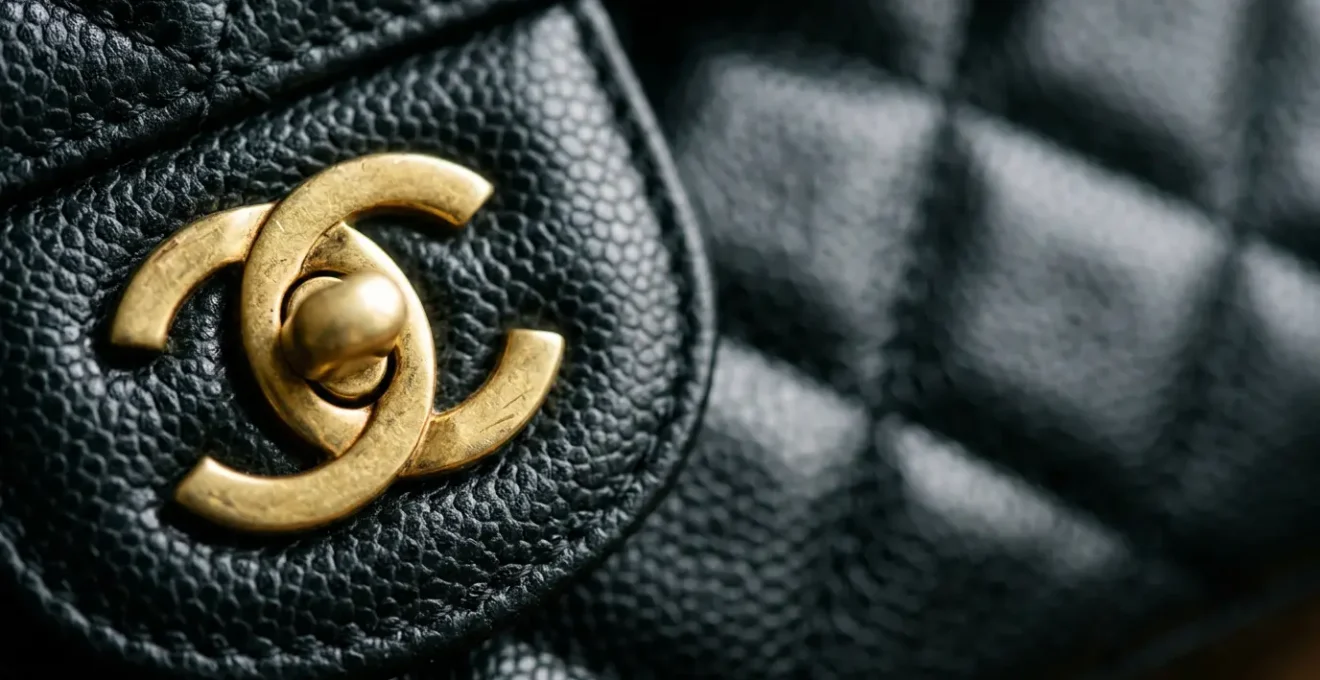
Authenticating a vintage Chanel bag is less about checklists and more about adopting an investor’s mindset to assess its true, holistic value.
- Investment potential is determined by a bag’s value retention and cost-per-wear, not just its price tag.
- Original, untouched condition—including natural patina—is far more valuable than a « restored » or repainted bag.
Recommendation: Before inspecting serial numbers, train your senses to detect the weight, sound, and scent of authentic craftsmanship—details that superfakes cannot replicate.
The moment you decide to buy your first vintage Chanel bag is exhilarating. It’s a milestone, an investment in timeless style. But that excitement is often shadowed by a daunting fear: what if it’s a fake? You’ve likely read the standard advice—check the serial number, count the quilting stitches, examine the logo. These are valid starting points, but in a world of increasingly sophisticated « superfakes, » they are no longer enough. Relying on a simple checklist is like trying to navigate a city with only a list of street names but no map. You see the pieces, but you miss the bigger picture.
As a professional authenticator, I can tell you that verifying a luxury piece isn’t a mechanical process. It’s an art and a science, a holistic assessment that goes far beyond what a quick online guide can teach. The true value of a vintage bag lies not just in its authenticity, but in its condition, its history, and its investment potential. A bag can be technically « real » but have its value decimated by a clumsy restoration, or be an authentic model that has simply fallen out of favor.
This guide will take you beyond the superficial checks. We will explore the fundamental principles of value that determine a smart investment. We’ll delve into the nuances of condition, explaining why a bag with a story etched into its leather can be worth more than one that has been artificially ‘perfected’. Most importantly, we’ll train your senses to recognize the subtle cues of quality and craftsmanship that counterfeiters consistently fail to replicate. By the end, you won’t just know how to spot a fake; you’ll know how to identify a truly great investment.
This article will guide you through the key considerations for making an intelligent vintage luxury purchase, from comparing investment value to spotting the details that separate authentic craftsmanship from convincing forgeries.
Summary: An Authenticator’s Guide to Verifying a Vintage Chanel Bag’s True Value
- Lady Dior or Classic Flap: Which Bag Retains More Value After 5 Years?
- How to Remove a Pen Mark from Vintage Leather Without Ruining the Patina?
- Why Are Vintage Bags from Japan Often in Better Condition?
- The 90s Bag Revival: Which Forgotten Models Are Back in Style?
- Original vs. Repainted: Why a « Restored » Bag Might Be Worth 40% Less?
- The « Superfake » Trap: 3 Details Counterfeiters Still Can’t Replicate
- Gucci Marmont: How to Spot a Fake Buckle by Checking the Weight?
- Why Your ‘Everyday Bag’ Should Cost More Than Your Evening Clutch?
Lady Dior or Classic Flap: Which Bag Retains More Value After 5 Years?
The first step in thinking like an investor is to understand that not all luxury bags are created equal in the resale market. While both the Chanel Classic Flap and the Lady Dior are icons, their investment trajectories differ significantly. Your choice should be informed by data, not just aesthetic preference. The Chanel Classic Flap is a financial powerhouse in the pre-owned world, consistently outperforming many traditional assets.
Its strength lies in Chanel’s aggressive and regular price increases, which directly fuel its secondary market value. In fact, an analysis of the market shows that Chanel bags retain up to 92% of their original value, making them one of the safest bets in luxury resale. The Classic Flap, in particular, is a star performer. As one report from luxury market analysts highlights:
Chanel’s Classic Flap bag has doubled in price since 2014, delivering a 100% return that outpaces many blue-chip investments.
– Luxe Retail & Lending, The Investment Value of Designer Handbags: Which Brands Hold Their Worth
The Lady Dior, while still a strong investment, operates on a slightly different logic. Its value is deeply tied to its couture heritage and its status as a piece of fashion history, famously championed by Princess Diana. While it boasts a very respectable value retention of around 78%, it doesn’t experience the same rapid, market-driving price hikes as the Chanel Classic Flap. Therefore, for a new collector focused purely on maximizing financial return over a five-year period, the Chanel Classic Flap presents a statistically stronger case. Its market liquidity and consistent appreciation make it the more strategic choice for a first major investment.
How to Remove a Pen Mark from Vintage Leather Without Ruining the Patina?
This question is a trap that many new collectors fall into. The correct answer, from an authenticator’s and investor’s perspective, is: you don’t. The obsession with removing every tiny flaw is one of the quickest ways to destroy the value of a vintage piece. The most desirable vintage bags are those with their original skin intact, complete with a developing patina—the gentle sheen, subtle darkening, and soft texture that leather acquires over time with care and use. This patina is a testament to the bag’s history and the quality of its material; it cannot be faked.
Attempting to remove a pen mark or a small stain with harsh chemicals or abrasive techniques will almost certainly damage this delicate surface. You might remove the mark, but you will also strip the original finish, creating a dull, lifeless patch that is far more noticeable and value-damaging than the original imperfection. A professional restoration can sometimes mitigate this, but it must be disclosed upon resale and, as we’ll see later, significantly impacts the bag’s investment grade.
This is a close-up of a vintage leather surface, showcasing the beautiful, natural patina that collectors prize. Notice the subtle variations in color and texture that tell the story of the bag’s life.
As you can see, the leather’s character comes from these micro-creases and the way light plays across its gently worn surface. The goal of a collector is to preserve this authentic aging process, not erase it. A small, honest mark on a bag with beautiful, original patina is infinitely preferable to a bag that has been aggressively « cleaned » and stripped of its soul. Your focus should be on conditioning the leather to keep it supple and preventing further damage, rather than striving for an unnatural, brand-new appearance.
Why Are Vintage Bags from Japan Often in Better Condition?
When sourcing vintage luxury, geography matters. Experienced collectors and dealers know that Japan is a treasure trove for pre-owned bags in exceptional condition. This isn’t a coincidence; it’s the result of a powerful combination of cultural values, strict market regulations, and a deep-seated appreciation for craftsmanship. This trifecta creates an environment where luxury goods are treated with a level of care that is rare elsewhere.
Firstly, there is a cultural reverence for longevity and quality. As noted by industry observers, this respect for the items themselves translates directly into their state of preservation. As one Tokyo-based publication explains, « There is a real appreciation for fine craftsmanship and consumers generally tend to to treat their luxury pieces with care, resulting in an abundance of mint-condition bags at fair prices. » This meticulous care from the original owner means bags entering the second-hand market often show minimal signs of wear.
Secondly, the Japanese market has an almost zero-tolerance policy for counterfeits, backed by stringent laws and highly professional authentication practices. This creates a much safer buying environment compared to peer-to-peer platforms where fakes are rampant. This professional oversight is a key reason for the market’s reliability.
Case Study: Japan’s Rigorous Authentication and Grading System
Tokyo’s vintage luxury market operates on a rigorous grading system where bags are meticulously authenticated and condition-graded by professional specialists. Major consignment shops employ multi-step verification processes, often displaying bags with museum-like precision. The pristine condition of these pieces reflects Japan’s strict counterfeit laws and cultural reverence for luxury goods. This systematic approach to authentication and preservation makes Japanese vintage sources highly reliable for investors seeking investment-grade pieces with documented provenance and minimal wear, often at fair market prices.
For a new collector, sourcing from a reputable Japanese vintage dealer can be a strategic move. It significantly reduces the risk of acquiring a counterfeit and often guarantees a product in a superior state of preservation, which is fundamental to its future resale value. You are not just buying a bag; you are buying into a system of trust and quality control.
The 90s Bag Revival: Which Forgotten Models Are Back in Style?
Part of being a smart investor is anticipating trends. In the vintage world, this means recognizing which past-era styles are poised for a comeback. Currently, the 1990s, under the design direction of Karl Lagerfeld at Chanel, are experiencing a massive renaissance. Forgotten or overlooked models from this decade are now becoming highly sought-after collector’s items, with their value appreciating rapidly.
The key driver behind this trend is a combination of nostalgia and a recognition of superior craftsmanship. A critical detail for collectors is that Chanel bags made before roughly 2008 featured hardware plated in 24-karat gold. This practice was discontinued, making these older pieces tangibly more luxurious and, therefore, more desirable. The difference in the weight, color, and luster of the gold is something you can often see and feel. This historical detail is a major factor in the valuation of vintage pieces from the 80s and 90s.
The price appreciation for these bags is significant. According to a Sotheby’s vintage market analysis, a Classic Flap from the 1980s that originally cost around $1,000 can now command up to $6,000 in excellent condition. But the revival extends beyond the classics.
Case Study: The Renaissance of the Chanel Vanity and Camera Bag
Two standout models from the 90s revival are the Chanel Vanity Case and the Camera Bag. The Vanity Case, inspired by an earlier Audrey Hepburn era, was a 90s staple that has seen a huge resurgence in popularity, especially after being reissued in a 2016 collection. Vintage originals, often in durable black caviar leather with the 24k gold-plated hardware, are now highly coveted. Similarly, the simple, functional Camera Bag from Lagerfeld’s early years is selling for multiples of its original price, prized for its understated chic and superior materials. These bags represent a smart investment because they are still more accessible than a Classic Flap but are on a strong upward value trajectory.
For a new collector, targeting these revived 90s models is a strategic entry point. You acquire a piece with historical significance, superior materials, and strong appreciation potential, often for a lower initial outlay than a contemporary classic.
Original vs. Repainted: Why a « Restored » Bag Might Be Worth 40% Less?
In the vintage market, the word « restored » should be a red flag, not a selling point. While it may sound like an improvement, an undocumented, third-party restoration—especially repainting—can slash a bag’s value by up to 40% or more. The reason is simple: it destroys the bag’s originality and integrity, which are the cornerstones of its worth as a collector’s item.
Authentic Chanel leather, particularly lambskin, is known for its buttery-soft feel and the beautiful, nuanced way it ages. Repainting covers this original surface with a layer of pigment that fundamentally alters its character. The bag may look shiny and even-toned from a distance, but up close, it will feel stiff, look artificial, and lose the subtle depth of the original dye. Furthermore, as luxury authenticator Ellé Easom warns, this alteration has long-term consequences. In her guide, she states, « Be weary of vintage Chanel bags which have been ‘repainted’. Although this may have been carried out professionally, this voids any warranty and future repairs with Chanel. In addition, repainted Chanel bags can perish over time. » You are essentially buying a bag with a compromised structure and no future support from the brand.
An official restoration performed at Chanel’s own spa is a different matter. This work is done to the highest standard, using correct materials, and is documented, preserving the bag’s value. Any other restoration must be viewed with extreme skepticism. As a buyer, you must learn to spot the tell-tale signs of an unauthorized paint job.
Your Checklist: How to Detect a Repainted Bag
- Examine the Creases: Look closely at the leather’s natural lines and creases. Repainted leather often has an unnatural, « cracked » look in these areas, as the paint doesn’t flex like the original dyed skin.
- Perform a Touch Test: Authentic vintage lambskin should feel soft and buttery. A repainted bag will often feel firmer, slicker, or slightly plasticky to the touch due to the artificial coating.
- Inspect Edges and Stitching: Carefully check the corners, edges, and along the stitch lines. Repainting is often imperfect in these hard-to-reach areas, and you may see peeling or a different color underneath.
- Check for Wear Inconsistencies: A genuinely aged bag shows harmonious wear across its hardware, leather, and corners. A repainted bag might have pristine leather but heavily worn hardware, a sign that its surface has been artificially refreshed.
- Demand Service History: The ultimate proof is documentation. Ask the seller for official service papers from Chanel. The absence of papers for a « professionally restored » bag is a major warning sign.
Ultimately, always prioritize a bag with honest wear over one with a dubious restoration. The former is an authentic piece with a story; the latter is a compromised item with diminished value.
The « Superfake » Trap: 3 Details Counterfeiters Still Can’t Replicate
Welcome to the front lines of authentication. While « superfakes » have become terrifyingly accurate visually, they almost always fail when subjected to sensory examination. Counterfeiters can replicate a look, but they cannot replicate the deep, capital-intensive engineering and material science of a genuine luxury product. Your most powerful authentication tools are not just your eyes, but your hands, your ears, and even your nose.
The weight of a bag’s hardware is one of the most immediate giveaways. Authentic Chanel chains and clasps are made from a brass base and plated (historically in 24k gold), giving them a substantial, satisfying heft. Fakes almost universally use a cheaper zinc alloy, which is significantly lighter. This difference in density is something you can feel instantly. The sound the hardware makes is another subtle clue. A real chain has a muted, dense clink, while a fake one produces a lighter, tinnier, and often louder jangle. This is the sound of cheap metal versus solid brass.
This image captures the essence of authentic hardware. The focus is on the substantial weight and density of the metal chain, a quality that is nearly impossible for counterfeiters to replicate economically.
Beyond the feel and sound, micro-details and even scent provide critical evidence. To truly arm yourself against sophisticated fakes, you must go beyond a visual checklist and engage all your senses.
Key Verification Points: Three Sensory Tests Superfakes Fail
- The Chain Sound and Weight Test: Handle the chain. Does it feel substantial and heavy for its size? Listen to the sound it makes. A genuine Chanel chain produces a subtle, muted sound due to its brass composition. Fakes, made from cheaper alloys, create a lighter, noisier jangle.
- The Hologram and Micro-Print Inspection: Use a jeweler’s loupe or your phone’s macro lens. Examine the hologram sticker (on pre-2021 bags). The gold flecks should have a unique iridescence, and the « CHANEL » micro-print should be perfectly crisp. Counterfeiters cannot replicate these microscopic details with the same precision.
- The Scent Authentication: This is a classic authenticator’s test. A genuine vintage Chanel bag has a distinct, complex smell of high-quality tanned leather and specific adhesives. It should not smell overwhelmingly of chemicals, plastic, or « fufu » (a slang term for the harsh glue smell of fakes). Trust your nose; a strong chemical odor is a major red flag.
These sensory checks exploit the economic realities of counterfeiting. Replicating the exact weight, sound, and scent of authentic materials at scale is prohibitively expensive, providing you with a reliable line of defense.
Gucci Marmont: How to Spot a Fake Buckle by Checking the Weight?
While our focus here is on Chanel, a crucial authentication principle is universal across all top-tier luxury brands: hardware density. The « feel » of a bag is a cornerstone of professional verification, and the Gucci Marmont’s prominent « GG » buckle serves as a perfect case study for a lesson you can apply to any bag you consider, including a Chanel.
Like Chanel’s CC lock, the authentic Gucci GG buckle is crafted from solid brass, giving it a distinct weight and a cold, metallic touch. Counterfeiters, aiming to cut costs, typically use a zinc alloy. While they may try to replicate the look with shiny plating, they cannot replicate the density. A fake buckle will feel noticeably lighter, almost hollow or plasticky in comparison. This is not a subjective feeling; it’s a physical property. An experienced hand can often detect a fake in seconds just by picking it up, before ever looking at a logo or stitch.
Developing this tactile sensitivity is a skill. You’re not just holding a buckle; you’re assessing its material integrity. This principle of « weight as a proxy for quality » is one of the most reliable tools in an authenticator’s arsenal because it’s the hardest and most expensive aspect for forgers to get right. They can mimic a shape, but they can’t easily mimic the specific gravity of brass without using brass itself, which erodes their profit margins.
Action Plan: Applying the Universal Hardware Density Principle
- Understand the Standard: Know that authentic hardware from premier brands (Chanel, Hermès, Gucci) is typically brass-based. This material has a specific heft that cheaper zinc-alloy fakes lack. This is your baseline expectation.
- Calibrate Your Hands: You don’t need a real and fake side-by-side. Develop a « feel » for authentic hardware weight by handling genuine bags in boutiques. Pay attention to the cold, dense feeling of the metal. This builds your tactile memory.
- Examine the Finishing: While checking weight, inspect the back of buckles, clasps, and zipper pulls. Fakes often betray themselves with rough edges, pitting, or imperfect finishing, even if the front looks convincing. Quality is a 360-degree attribute.
- Connect Weight to Value: Remember that this satisfying heft isn’t just for show. It signifies durable engineering and quality materials. This durability is a key reason older vintage pieces have survived in good condition and are considered better long-term investments.
By studying the hardware of a Gucci Marmont, a Chanel Timeless, or any other iconic bag, you are training your hands to recognize the fundamental signature of luxury craftsmanship. This skill transcends brands and is one of your most powerful defenses.
Key Takeaways
- Adopt an Investor’s Mindset: Prioritize bags with proven high value retention and strong market liquidity, like the Chanel Classic Flap, and analyze your purchase based on its cost-per-wear, not just its initial price.
- Value Originality Above All: A bag’s most valuable state is its original condition. Cherish authentic patina and avoid pieces with undocumented, third-party restorations or repainting, which severely diminish collector value.
- Trust Your Senses, Not Just Your Eyes: Learn to use sensory authentication. The substantial weight, muted sound of brass hardware, and the distinct scent of high-quality leather are reliable indicators of authenticity that even the best « superfakes » fail to replicate.
Why Your ‘Everyday Bag’ Should Cost More Than Your Evening Clutch?
The final pillar of an intelligent investment strategy is a concept that may seem counter-intuitive: the principle of cost-per-wear. Many new collectors are tempted to save on their everyday bag and splurge on a delicate, special-occasion clutch. From an investment standpoint, this is a mistake. Your most-used bag should be your biggest investment, as it will ultimately deliver far greater value over time.
Cost-per-wear is a simple calculation: divide the total cost of an item by the number of times you use it. A durable, versatile everyday bag made from materials like Chanel’s caviar leather or grained calfskin is engineered for daily use. A $6,000 bag used 300 times in a year has a cost-per-wear of just $20. In contrast, a $1,500 delicate evening clutch used 10 times a year has a cost-per-wear of $150. The more expensive bag is, in reality, far more economical.
Furthermore, these workhorse bags are built to last. Their robust construction means they maintain their condition far better than fragile, occasion-specific pieces. This superior durability translates directly to higher resale value. As investment analysis from luxury resale experts demonstrates, a durable everyday bag has higher market liquidity and can be resold much faster than a niche, seasonal clutch. The market for a classic, everyday style is always active, ensuring your investment remains liquid.
| Factor | Everyday Bag ($6,000) | Evening Clutch ($1,500) |
|---|---|---|
| Annual Use Frequency | 300 times/year | 10 times/year |
| Cost-Per-Wear (Year 1) | $20 | $150 |
| Material Durability | Caviar leather, grained calfskin (engineered for daily use) | Delicate lambskin, satin (special occasion only) |
| Condition Grade After 5 Years | Excellent to Very Good (retains 85-92% value) | Good to Fair (retains 60-70% value) |
| Market Liquidity | High – Classic Flap/Lady Dior sell within days | Low – Seasonal clutches take weeks/months |
| Resale Value Retention | 92% (Chanel) / 78% (Dior) | 50-65% average for niche styles |
| Versatility Premium | Work, weekend, travel – multiple styling occasions | Single-purpose formal events only |
Investing more in a high-quality, durable, and versatile everyday bag is the most strategic financial decision a collector can make. It not only provides better value through frequent use but also acts as a more stable and liquid asset over the long term. It is the core of a well-curated and intelligent luxury collection.
Now that you are equipped with an authenticator’s mindset, you can approach the vintage market with confidence. Your next step is to apply this holistic framework—assessing investment value, prioritizing original condition, and using your senses—to every potential purchase you consider.