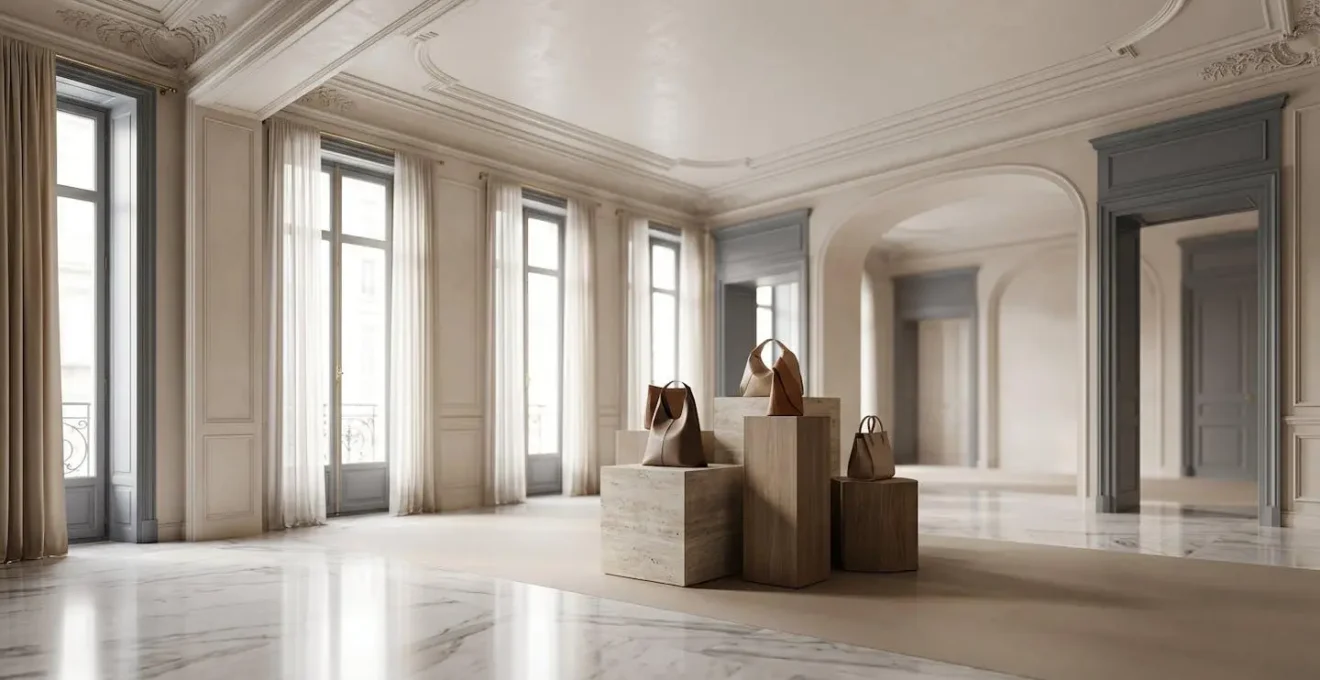
Securing a high-demand luxury bag in Paris is not about luck or connections; it’s a strategic game that anyone can master by understanding the unspoken rules of Parisian retail.
- The myth of the exclusive, unattainable « quota bag » is just that—a myth. Success depends on strategic timing, location choice, and a deep understanding of brand-specific protocols.
- Maximizing your investment involves more than the purchase; it requires a flawless VAT refund strategy and an eye for long-term value retention, where some bags outperform gold.
Recommendation: Shift your mindset from a hopeful tourist to a savvy strategist. Focus on non-flagship opportunities, understand the weekly stock cycles, and prioritize building a relationship, even a brief one, based on genuine interest rather than demanding a specific bag.
The very idea of securing a Hermès appointment in Paris without the ‘deus ex machina’ of a five-star hotel concierge feels like an insurmountable challenge for most luxury travelers. You’ve heard the stories: the impossible-to-win online lottery, the dismissive glances from perfectly-coiffed Sales Associates (SAs), the crushing feeling of leaving the city of lights empty-handed. The common wisdom dictates that you need a pre-existing relationship, a history of exorbitant spending, or the black book of a well-connected concierge. This belief perpetuates the myth that the world of Parisian high luxury is a closed circle, accessible only to a select few.
But what if this narrative is incomplete? What if the system, while opaque, is not entirely impenetrable? The truth, known only to insiders, is that the game has rules. Securing an investment piece like a Birkin, a Kelly, or even a highly sought-after Chanel Classic Flap is less about who you know and more about mastering a specific strategy—a kind of ‘Retail-Fu’ that combines timing, location intelligence, and psychological insight. It’s about understanding the operational rhythms of the boutiques, the subtle differences between shopping districts, and the financial mechanics of the VAT refund that can make your Paris purchase significantly more advantageous.
This is not another guide that tells you to « get lucky. » This is an insider’s playbook. We will deconstruct the entire process, from the financial endgame of claiming your tax refund at the airport to the subtle art of approaching an SA on a quiet Monday morning. We will analyze the strategic choice between a flagship boutique and a department store, learn to spot the details that separate a true luxury piece from a « superfake, » and ultimately, debunk the myth of the waitlist. Prepare to transform your approach from hopeful tourist to informed strategist, equipped with the knowledge to navigate the Parisian luxury landscape with confidence.
This comprehensive guide will walk you through every critical step and strategic consideration. To help you navigate this deep dive into the world of Parisian luxury shopping, the following summary outlines the key areas we will explore.
Summary: The Strategic Playbook for Acquiring a Hermès Bag in Paris
- How to Claim Your 12% VAT Refund at CDG Airport Without Missing Your Flight?
- Why Monday Morning is the Secret Time to Shop Luxury on Avenue Montaigne?
- Flagship Boutique vs. Department Store: Where to Buy Your First Chanel Bag?
- The « Superfake » Trap: 3 Details Counterfeiters Still Can’t Replicate
- Triangle d’Or or Saint-Germain: Which District Fits Your Shopping Style?
- The Waitlist Myth: How to Actually Walk Out with a Birkin?
- Lady Dior or Classic Flap: Which Bag Retains More Value After 5 Years?
- Why Faubourg-Saint-Honoré is the Safest Bet for Buying Timeless Jewelry?
How to Claim Your 12% VAT Refund at CDG Airport Without Missing Your Flight?
The final act of your successful shopping trip is not leaving the store with your orange box, but successfully reclaiming your Value-Added Tax (VAT), a process known in French as ‘détaxe’. A common mistake is underestimating the time and precision required at Charles de Gaulle (CDG) airport. For non-EU residents spending over €100 in a single store, this refund can be significant. While France’s VAT rate is 20%, after processing fees, you can expect to get back between 12-15% of your purchase price, a substantial saving that solidifies the value of buying in Paris.
The key to a stress-free experience is the PABLO kiosk system. These self-service machines are your gateway to an electronic validation, bypassing the need for a manual customs stamp in most cases. First, arrive at the airport with a generous time buffer—at least 30-45 minutes more than you normally would for check-in. Locate the PABLO kiosk in your terminal *before* you go through security and check your bags. You will need to scan the barcode on your tax-free form. A green screen with a « Validated » message is your goal. If the screen is red, or if your form is not PABLO-compatible, you must proceed to the customs desk for manual inspection. For this reason, always keep your purchased items accessible in your carry-on luggage, as officers may request to see them.
Once validated, you face a final choice: cash now or a higher refund later? The table below breaks down the trade-offs.
| Refund Method | Processing Time | Effective Rate | Best For |
|---|---|---|---|
| Instant Cash (at airport booth) | Immediate | ~10-12% (lower due to exchange fees & commissions) | Travelers needing immediate funds, small purchases |
| Credit Card Refund | 4-8 weeks | ~12-15% (higher, fewer fees) | Larger purchases, travelers willing to wait for maximum refund |
| E-wallet/Bank Transfer | 2-4 weeks | ~12-14% | Digital-savvy travelers seeking balance of speed and value |
For a significant investment piece, the credit card refund almost always offers the best financial return despite the wait. The lower rate on instant cash is the price you pay for immediacy, which can effectively eat into several percentage points of your savings.
Why Monday Morning is the Secret Time to Shop Luxury on Avenue Montaigne?
The common image of Parisian luxury shopping is a crowded boutique on a Saturday afternoon. This is precisely the environment you must avoid. The secret to gaining an advantage lies in mastering the « Chrono-Strategy »—understanding that *when* you shop is as critical as *where*. The unspoken rhythm of Parisian retail dictates that Monday morning is the golden hour, particularly on prestigious streets like Avenue Montaigne or Rue Cambon.
Why Monday? Weekends are for tourists and casual browsers, leaving boutiques depleted and staff fatigued. Monday, in contrast, is the reset. It’s when new stock that arrived over the weekend is often put out on the floor. The boutique is calmer, cleaner, and the SAs are fresher and more receptive. This is your opportunity to have a genuine conversation, not a rushed transaction. You are no longer competing with a throng of people; you are a focused client engaging on a professional level. This is the time to build a rapport, to discuss craftsmanship, and to express your interests without the pressure of a queue forming behind you.
This is when a well-dressed, knowledgeable, and polite visitor stands out. The boutique’s atmosphere is serene, allowing for a more personal and considered interaction, as depicted in the quiet elegance of an early morning shopping experience.
Interestingly, some insiders offer a counterpoint. As a guide from luxury expert PurseBop notes, while mornings are great for building relationships, the best time for a speculative walk-in appointment request might be later in the day. As they state in their 2024 guide to the Hermès appointment system:
Afternoon hours seem to be better for walk-in leather appointment requests, and if the morning fits your schedule, try to avoid the store opening.
– PurseBop luxury shopping guide, Updated Guide to the Hermès Leather Appointment System in Paris – 2024
This doesn’t contradict the Monday morning strategy; it refines it. Use the quiet of the morning to establish a presence and express interest. If you are unsuccessful, a polite return visit in the mid-afternoon, when appointment cancellations may have occurred, could be your second window of opportunity. The key is strategic presence, not passive hope.
Flagship Boutique vs. Department Store: Where to Buy Your First Chanel Bag?
For a first-time buyer, especially of an iconic piece like a Chanel Classic Flap, the allure of the flagship boutique on Rue Cambon is powerful. It promises the ultimate brand experience, steeped in history and exclusivity. However, from a strategic perspective, this is not always the smartest move. The « Architectural Advantage » principle dictates that you must choose your battleground wisely. Flagship stores, particularly for brands like Chanel and Hermès, attract the highest footfall and the most intense competition for popular items. SAs there are often overwhelmed and have little time for new clients without an established profile.
This is where the grand-magasins—the iconic Parisian department stores like Galeries Lafayette, Printemps, and Le Bon Marché—offer a distinct advantage. While they may lack the intimate historical ambiance of a standalone boutique, they provide several strategic benefits. Firstly, the SAs in department store concessions are often less besieged and can be more approachable. They work within a different sales structure and can sometimes be more motivated to help a new, serious client. Secondly, inventory is distributed across the city. A bag that is sold out at the flagship could very well be available in the Chanel corner of Le Bon Marché.
Most importantly, department stores offer a significant logistical benefit for the VAT refund process, a point often overlooked by novice shoppers. This is a perfect example of the « insider » knowledge that separates a smooth trip from a frustrating one.
Case Study: The Department Store VAT Advantage
A shopper’s experience, as documented by luxury shopping experts at PurseBlog, highlights a crucial point. While the VAT refund percentage is identical whether you buy from a flagship or a department store, the process is not. If you make purchases from multiple brands within the same department store (e.g., a Chanel bag, a Dior scarf, and a Celine belt from Galeries Lafayette), the store can consolidate all your purchases onto a single tax-free form. This is a game-changer at the airport. Instead of juggling and scanning multiple forms at the PABLO kiosk, you only have to process one, dramatically simplifying and speeding up your departure-day logistics. For a shopper planning to visit multiple brands, this consolidation is a powerful argument in favor of the department store.
The decision is a trade-off: the pure brand immersion of the flagship versus the pragmatic, and often more successful, approach of the department store. For a first-time buyer focused on securing their desired item, the grand-magasin is frequently the smarter strategic choice.
The « Superfake » Trap: 3 Details Counterfeiters Still Can’t Replicate
As you embark on a quest for an investment piece, another danger lurks, especially if you consider the secondary market: the « superfake. » These are not the cheap knock-offs sold on street corners; they are high-quality counterfeits designed to deceive even knowledgeable buyers. Securing a genuine article is paramount, as a fake has zero investment value. Your best protection is buying directly from the brand or a highly reputable department store. However, knowing what to look for builds your expertise and confidence. Technology has made authentication incredibly precise, with AI-driven services boasting an accuracy rate above 99.8%, but you can train your own eye to spot the critical tells.
Counterfeiters have become masters of imitation, but they operate on a different economic model. They cannot afford to replicate the no-expense-spared materials and micro-craftsmanship that define true luxury. There are three sensory areas where they consistently fail. The extreme precision required is often visible only under magnification, highlighting the difference between mass production and true artisanship.
These are the details that an expert appraiser—and a savvy buyer—focuses on. They are subtle but definitive markers of authenticity that counterfeiters, constrained by cost, simply cannot perfect. Mastering the art of identifying them is a crucial part of your journey as a luxury investor.
Your 5-Step Authenticity Audit Checklist
- Hardware Weight & Polish Audit: Close your eyes and feel the hardware. Does it feel substantial, cool, and dense? Authentic hardware has a satisfying heft; fakes often feel light, hollow, or plasticky.
- Acoustic Signature Test: Operate the clasp or zipper repeatedly. Listen for the sound. A genuine luxury closure produces a crisp, satisfying ‘click’ or a smooth, buttery ‘zzzip’. A tinny, grating, or weak sound is a major red flag.
- Olfactory Profile Analysis: This is a critical, often overlooked step. Bring the bag close and inhale deeply. Genuine, high-quality leather has a rich, slightly sweet, earthy scent. A superfake will betray itself with a sharp chemical or plastic odor from cheaper tanning agents and glues.
- Documentation & Font Forensics: Examine the authenticity card and any interior stamping. Are the fonts perfectly crisp? Is the spacing (kerning) between letters absolutely uniform? Counterfeiters almost always fail on typography, using slightly incorrect fonts or exhibiting uneven embossing.
- Overall Sensory Coherence: Assess all points together. Does the heavy, perfectly clicking hardware match the scent of expensive leather and the flawless typography? A superfake might get one or two details right, but it will fail on the holistic, sensory coherence of a genuine article.
By training your senses to recognize these subtle signatures of quality, you arm yourself against deception and ensure that your investment is sound. This is the practical application of connoisseurship as a defense mechanism.
Triangle d’Or or Saint-Germain: Which District Fits Your Shopping Style?
Choosing where to shop in Paris is not just a matter of logistics; it’s a statement of intent that aligns with your personal style. The city’s luxury landscape is broadly divided into two territories, each with a distinct personality: the Triangle d’Or and Saint-Germain-des-Prés. Understanding their differences is key to optimizing your strategy and, more importantly, enjoying the experience.
The Triangle d’Or (Golden Triangle), formed by Avenue Montaigne, Avenue George V, and the Champs-Élysées in the 8th arrondissement, is the heart of Parisian high fashion power. This is where you’ll find the grand flagships of Dior, Chanel, and Louis Vuitton. The atmosphere is one of opulent, international glamour. The clientele is a mix of global tourists, celebrities, and the ultra-wealthy. Shopping here is a high-energy, often competitive sport. If your style is bold, trend-focused, and you thrive on the buzz of the fashion world’s epicenter, this is your arena. It’s the place to see and be seen, but be prepared for crowds and the potential for a more transactional, less personal service style due to the sheer volume of traffic.
On the other side of the Seine, in the 6th arrondissement, lies Saint-Germain-des-Prés. This is the historic intellectual and artistic soul of Paris, and its luxury landscape reflects this. The vibe is one of discreet, understated chic. The boutiques, including the Hermès store on Rue de Sèvres (housed in a former swimming pool), are often smaller and integrated into the neighborhood’s elegant, historic architecture. The clientele is more local, artistic, and less ostentatious. Shopping here is a more relaxed, curated experience. If your style is classic, intellectual, and you value a more personal and intimate shopping environment, Saint-Germain is your spiritual home. It’s the place for discovery and quiet confidence, where the focus is on the object’s intrinsic beauty rather than the spectacle of its acquisition.
There is no « better » district; there is only the district that is better for *you*. The power-shopper will feel at home in the Triangle d’Or’s high-stakes environment, while the connoisseur will appreciate the more thoughtful pace of Saint-Germain. Choosing the right district puts you in your element, boosting your confidence and making the entire interaction with SAs more natural and effective. This is a form of psychological terroir; you are positioning yourself where you are most likely to flourish.
The Waitlist Myth: How to Actually Walk Out with a Birkin?
Here we arrive at the heart of the matter, the question that fuels a thousand forum posts: how does one actually acquire a « quota bag » like a Birkin or a Kelly? The first step is to discard the notion of a « waitlist. » It does not exist in the way most people imagine. You cannot simply walk in, add your name to a list, and receive a call two years later. This is the single biggest misconception, and freeing yourself from it is liberating.
The reality is a complex, real-time inventory and relationship management system. The online appointment lottery is famously difficult to win; insiders report that Hermès’ Faubourg Saint-Honoré flagship system often sees 6,000 applications for only 80 appointments daily across the main Paris stores. The odds are not in your favor. Therefore, the « walk-in » strategy, while challenging, becomes the primary alternative. Success hinges on a combination of all the principles we’ve discussed: strategic timing (Chrono-Strategy), location choice (Architectural Advantage), and most importantly, your approach.
You must understand that SAs are not guards at a gate; they are professionals looking to connect beautiful objects with appreciative clients. Your goal is to demonstrate that you are the latter. Do not walk in and ask, « Do you have a Birkin? » This is the fastest route to a polite « Non. » Instead, engage with the brand. Show interest in other departments—the silks, the ready-to-wear, the home goods. Have a genuine conversation. Ask about a specific scarf’s design or the craftsmanship of a piece of jewelry. This is the « Quota Game » in action: you are building a profile, however brief, as a true aficionado of the brand, not just a trophy hunter. Once you have established a rapport, you can then politely inquire: « I was also hoping to see if there might be any availability in leather goods today? » The key is the soft ask, the respectful inquiry, not the blunt demand.
Furthermore, it is crucial to manage expectations. You may not be offered a Birkin 30 in black Togo leather on your first try. But you may be offered another, perhaps even more interesting, bag. The experts at PurseBop confirm this reality, stating that even if you secure an appointment, the most coveted bags are off the table for new clients. As they put it:
SAs in Paris are not offering quota bags to walk-in leather appointment clients. You may be able to get the non-quota bag you desire, if available.
– PurseBop, Updated Guide to the Hermès Leather Appointment System in Paris – 2024
This is not a failure; it is an opportunity. Being open to other models, colors, and leathers dramatically increases your chances of walking out with a beautiful Hermès bag, and in doing so, you begin to build the very relationship that may lead to your « holy grail » bag on a future visit. The goal is to start the relationship, not to end the quest in a single transaction.
Lady Dior or Classic Flap: Which Bag Retains More Value After 5 Years?
An investment bag is, by definition, an asset. While you should love what you buy, a savvy shopper also considers its long-term financial performance. The two most iconic non-Hermès bags are arguably the Lady Dior and the Chanel Classic Flap. Both are timeless beauties, but they perform very differently on the resale market. Understanding this difference is crucial to making a sound investment.
The Chanel Classic Flap is the undisputed champion of value retention outside of Hermès. Chanel employs a strategy of aggressive, biannual price increases and tightly controlled supply, which constantly pushes up the value of bags already in circulation. It is not uncommon for a well-maintained Classic Flap to be resold for close to its original purchase price, or in some cases, even more, especially for rare colors or materials. The bag’s value is propped up by an intense, brand-managed perception of scarcity.
The Lady Dior, while an icon with a royal heritage thanks to Princess Diana, has a different investment profile. Dior does not manage its pricing and supply with the same ferocious strategy as Chanel. As a result, its value on the resale market is generally softer. While it is still a desirable bag that holds value well compared to most luxury goods, it does not typically see the same level of appreciation as a Classic Flap. However, there are exceptions. Data from luxury resale platforms shows that a classic Lady Dior in mint condition can retain up to 85% of its original retail value, and rare or limited editions can command significant premiums.
The following table, based on market analysis, provides a stark comparison of their investment trajectories:
| Metric | Chanel Classic Flap | Lady Dior |
|---|---|---|
| Current Retail Price | $8,800 | $6,100 |
| Typical Resale Range | $4,000 – $7,000 | $2,000 – $4,000 |
| Value Retention % | 45-80% | 33-66% |
| Investment Trajectory (2014-2024) | 100% retail price increase (doubled) | Steady but lower appreciation |
| Resale Market Strength | Ultra-high (quota system, brand exclusivity) | Good (iconic design, Princess Diana heritage) |
| Best Condition for Max Resale | Classic colors (black, beige) in lambskin or caviar | Classic cannage leather in neutral tones, mint condition retains 85% |
From a purely financial perspective, the Chanel Classic Flap is the more robust investment. However, the Lady Dior may offer a better value proposition at the point of entry and still represents a solid, blue-chip luxury asset. Your choice depends on your investment horizon and your personal aesthetic preference.
Key Takeaways
- Success in Parisian luxury shopping is a strategy, not a lottery. It relies on timing, location choice, and a sophisticated understanding of brand protocols.
- The financial aspect is twofold: maximizing the VAT refund at the airport and choosing a piece with proven long-term value retention.
- Authenticity is non-negotiable. Train your senses to recognize the micro-details of craftsmanship that separate a genuine investment from a worthless fake.
Why Faubourg-Saint-Honoré is the Safest Bet for Buying Timeless Jewelry?
While much of the focus is on handbags, we must not neglect the world of fine jewelry. For pieces intended to be true heirlooms—passed down through generations—the concept of « Provenance Power » becomes the single most important factor. Provenance is an item’s documented history, and nothing establishes stronger provenance than purchasing from a historic, flagship location. This is why, for timeless jewelry, the Rue du Faubourg-Saint-Honoré and the adjacent Place Vendôme are the safest bet in the world.
When you buy a Cartier Trinity ring from its historic boutique on the Rue de la Paix, or a Boucheron piece from its magnificent hôtel particulier on Place Vendôme, you are buying more than just gold and diamonds. You are buying a story. You receive documentation that is inextricably linked to the brand’s most sacred location. This piece of paper, this receipt, this certificate of authenticity from the mother ship, adds an intangible but very real layer of value to your investment. It guarantees authenticity in a way no third-party reseller ever could, and it becomes part of the object’s history forever.
This principle is perfectly illustrated, albeit in the world of handbags, by the record-breaking sale of Jane Birkin’s own Birkin bag. It sold for an astronomical sum not just because it was a Birkin, but because it was *her* Birkin. That provenance was everything. Purchasing from a historic Parisian flagship provides your item with its first, and most crucial, chapter of provenance.
The investment power of these top-tier luxury goods, secured with ironclad provenance, cannot be overstated. As James Firestein, founder of OpenLuxury, noted in an interview with Fortune, the performance of these assets has been extraordinary. Speaking on the value of iconic Hermès bags, he stated:
The resale value of particularly the Birkin and Kelly bags over the past 10 years has outpaced gold.
– James Firestein, founder of OpenLuxury, Fortune interview
This same logic applies to iconic jewelry pieces from historic Maisons. Buying from their home turf in Paris is not just a memorable experience; it’s the single best way to protect and enhance your long-term investment by embedding unimpeachable provenance into its very essence.
By shifting your perspective and adopting this strategic framework, you transform from a passive consumer into an active participant in the world of high luxury. You are no longer hoping for luck; you are making your own, armed with the insider knowledge to navigate the system with confidence and emerge with a beautiful, valuable asset that will bring you joy for years to come. Your successful acquisition is now just an application of the right strategy.