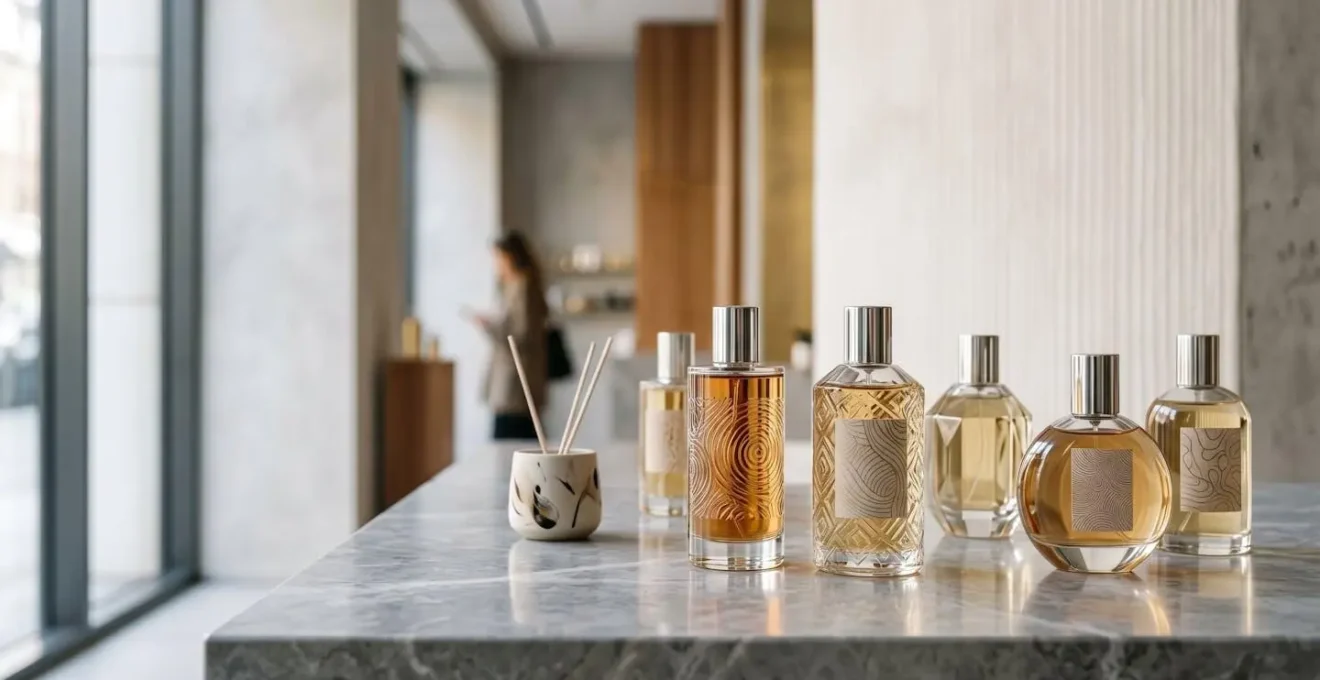
In summary:
- Stop searching for a single « perfect note » and start thinking like a fragrance architect by understanding a scent’s structure.
- Master the difference between Eau de Toilette, Eau de Parfum, and Extrait to control your fragrance’s longevity and projection.
- Explore niche and molecular perfumes, which use unique ingredients that interact with your personal skin chemistry for a truly one-of-a-kind result.
- Use strategic layering and application techniques to build a custom scent signature that is both distinctive and office-appropriate.
Walking down a corporate hallway can sometimes feel like an olfactory echo chamber. You catch a whiff of the same popular designer fragrance you smelled on three other colleagues, a pleasant but predictable scent that has become the unofficial uniform of the modern workplace. You want to express your personality, to have a signature that is uniquely yours, but the wall of fragrances at the department store is overwhelming. The fear of choosing something too loud, too generic, or simply « wrong » for a professional setting is real.
Most advice steers you toward the safe and sterile: light, citrusy, and inoffensive. While well-intentioned, this approach often leads you right back to the very uniformity you’re trying to escape. You end up with a fragrance that doesn’t offend, but it doesn’t inspire or represent you either. It’s a compromise that leaves your desire for a true signature scent unfulfilled, lost in a sea of mass-market appeal.
But what if the secret to finding a unique perfume wasn’t about finding a rare flower or an obscure note? What if it was about becoming a fragrance architect? The key isn’t just *what* you wear, but understanding *how* it’s built, *why* it behaves the way it does, and *where* you deploy it. True distinction lies in mastering the structure, technology, and philosophy behind a scent.
This guide will deconstruct the art of choosing a unique fragrance. We will move beyond simple notes to explore the science of concentration, the creative potential of layering, the cutting edge of molecular scents, and the strategic application that transforms a simple perfume into an unforgettable signature. Prepare to build your own olfactory identity, one that is both profoundly personal and perfectly professional.
To guide you on this journey of olfactory discovery, we have structured this article to cover every aspect of becoming a fragrance architect. From combining scents to understanding the value of rare ingredients, each section builds upon the last to give you a complete toolkit.
Summary: The Architect’s Guide to a Unique Signature Scent
- Scent Layering: Which Notes Can You Combine Without Creating a Disaster?
- Why Your Winter Oud Perfume Is Giving You a Headache in July?
- Eau de Toilette vs. Extrait: Which One Actually Lasts All Day?
- Niche Perfumery: Is It Worth the Extra Cost for a « Blind Buy »?
- Bedhead Hair: How to Achieve That « Undone » Look Without Looking Unkempt?
- Enfleurage vs. CO2 Extraction: How Technology Changed the Scent of Roses?
- Why Does a Jasmine from Grasse Cost 20 Times More Than One from Egypt?
- Pulse Points or Clothes: Where Should You Spray to Leave a Trail?
Scent Layering: Which Notes Can You Combine Without Creating a Disaster?
The first step in becoming a fragrance architect is realizing you don’t have to be limited to a single bottle. Scent layering, the art of combining two or more fragrances, is a powerful technique for creating a completely custom signature. While it may sound intimidating, the practice is deeply rooted in Middle Eastern tradition and is based on a few logical principles. The goal is not to create a chaotic clash of smells but a harmonious blend where the whole is greater than the sum of its parts.
The key to successful layering is understanding fragrance families and intensity. You can’t just mix any two scents and hope for the best. A good starting point is to combine fragrances from complementary families. For example, a light, zesty citrus scent can be beautifully deepened with a warm, woody base. Similarly, a simple floral can be given a sophisticated twist by adding a hint of spice. The idea is to create a dialogue between the scents, where one provides a foundation and the other adds a highlight or a surprising accent.
Think of it like building a chord in music. You need a base note (a simple, linear scent like vanilla or musk), a mid-note (a more complex floral or woody fragrance), and maybe a top note (a fleeting citrus or green scent) for brightness. By controlling which scents you combine and where you apply them, you can craft an olfactory narrative that is entirely your own and impossible to replicate. This is your first move away from the « scent uniform » and toward a true scent signature.
Action Plan: Your First Steps in Fragrance Layering
- Start with lighter scents as your base, allowing them to set the tone, then build up with richer, deeper notes.
- Match intensity by choosing fragrances of similar strength to ensure a harmonious blend and avoid overpowering one scent.
- Layer by fragrance families—pair florals with citrus or woods with spices for complementary combinations.
- Apply the strongest scent first to create a stable foundation, then add lighter fragrances on top.
- Stick to a maximum of two scents when starting, to better understand how the notes interact before attempting more complex combinations.
Why Your Winter Oud Perfume Is Giving You a Headache in July?
A fragrance architect must consider the environment in which their creation will exist. Temperature and humidity are not just weather conditions; they are active catalysts that dramatically alter how a perfume performs. Heat, in particular, accelerates the evaporation of fragrance oils, causing scents to project more intensely and evolve much faster. This is why your cozy, rich winter oud—a masterpiece in the cold—can become an overwhelming, headache-inducing cloud in the summer heat.
The molecules in warm, heavy fragrances like those with notes of oud, amber, vanilla, and heavy spices are large and slow to evaporate. In winter, this creates a beautiful, long-lasting cocoon of scent. In summer, however, your body heat and the ambient temperature put these molecules into overdrive. The top and middle notes burn off rapidly, leaving you with a dense, and often cloying, base that can feel suffocating. Lighter, fresher scents with smaller molecules (like citrus, green, or aquatic notes) are better suited for heat because they are designed to be volatile and refreshing, even if their longevity is shorter.
This doesn’t mean you have to abandon your favorite scent profiles entirely during warmer months. The solution lies in adaptation. You can look for « summer » versions of your favorite fragrances, which are often reformulated as an Eau de Toilette with brighter top notes. Alternatively, strategic application can make all the difference. Applying a heavy scent to cooler parts of the body, away from major pulse points, can temper its projection and make it perfectly wearable even on a warm day. Understanding this interplay between chemistry and climate is a mark of true fragrance sophistication.
As this image suggests, the same fragrance can have a dramatically different character depending on its environment. Mastering seasonal transitions is about controlling this interaction. Instead of fighting the heat, you can work with it, choosing application methods and concentrations that turn the temperature into an ally rather than an enemy. Consider spritzing your fragrance on your clothing instead of your skin, which acts as a more stable diffuser and slows the scent’s development.
Eau de Toilette vs. Extrait: Which One Actually Lasts All Day?
The concentration of perfume oil in a fragrance is the blueprint of its performance. It dictates not only its longevity but also its projection—the « sillage » or scent trail it leaves behind. Confusingly, a higher concentration doesn’t always mean a « better » perfume; it simply means a different architectural design for a different purpose. Understanding the distinction between Eau de Toilette (EDT), Eau de Parfum (EDP), and Parfum (or Extrait) is fundamental to building a versatile fragrance wardrobe.
An Eau de Toilette (EDT) contains a lower concentration of perfume oil (typically 5-15%). This higher alcohol content makes it project more intensely upon application, creating a bright, vibrant, and noticeable initial burst. However, it also evaporates more quickly, leading to shorter longevity. This makes EDTs ideal for office wear or daytime use, where you want a pleasant but not overpowering presence that may need reapplication. As noted by industry experts, this structure has a direct impact on its character. According to a study by Scento Fragrance Research on fragrance behavior:
Eau de Toilettes, with their higher alcohol concentration, generally have a stronger projection compared to more concentrated forms like Eau de Parfum or Pure Perfume scents.
– Scento Fragrance Research, Perfume Longevity Study
Conversely, an Extrait de Parfum sits at the opposite end of the spectrum with the highest concentration (20-40%). These fragrances are richer and deeper. Because there is less alcohol, they don’t « shout » upon application. Instead, they wear much closer to the skin, creating an intimate, personal scent bubble. Their longevity is exceptional, often lasting all day and well into the night. While an Extrait has a less expansive sillage, anyone who comes close to you will experience its full, complex beauty. The choice between EDT and Extrait is not about which one is superior, but about what you want your scent to do: Do you want it to announce your arrival, or be a discovery for those you allow into your personal space?
This table from a recent comparative analysis breaks down the key structural differences, helping you choose the right architecture for any occasion.
| Concentration Type | Oil Percentage | Longevity | Projection/Sillage | Best Use |
|---|---|---|---|---|
| Eau de Toilette (EDT) | 5-15% | 3-6 hours | High projection, short-lived | Daytime, office wear, warm weather |
| Eau de Parfum (EDP) | 15-20% | 6-10 hours | Balanced projection and longevity | All-day wear, versatile for most occasions |
| Parfum/Extrait | 20-40% | 8-24 hours | Intimate projection, stays close to skin | Special occasions, evening wear, cold weather |
Niche Perfumery: Is It Worth the Extra Cost for a « Blind Buy »?
Once you’ve mastered the basics of fragrance architecture, you may find yourself drawn to the world of niche perfumery. Unlike designer fragrances created for mass appeal, niche scents are the equivalent of haute couture. They are crafted by perfumers as works of art, often using higher-quality, rarer ingredients and prioritizing a unique creative vision over market trends. This is where you’ll find scents that smell of old books, summer rain, or a specific, cherished memory. But this artistry comes at a price, leading to the crucial question: is it worth it, especially for a « blind buy » online?
The value of niche perfumery lies in its uniqueness and quality. These fragrances are produced in smaller batches and don’t shy away from bold, unconventional notes. While a designer scent is engineered to be liked by millions, a niche scent is designed to be loved by a few. This focus on artistic integrity is resonating with consumers who are tired of smelling like everyone else. Market analysis shows a clear shift in consumer preference, where 60% of buyers now value brand narratives over traditional factors like celebrity endorsements. People are buying into a story, a concept, and a level of craftsmanship that mass-market brands can’t replicate.
However, the very individuality that makes niche perfumes so appealing also makes them a risky blind buy. A scent described as « a walk through a damp forest after a fire » could be your holy grail or an unwearable disaster. The best approach for a professional is to invest in discovery sets. Most niche brands offer small, affordable sample vials of their collections. This allows you to live with a fragrance for a few days, see how it evolves on your skin and in your office environment, and truly determine if it’s your signature before committing to a full, expensive bottle. It’s a small upfront investment that mitigates the risk and makes the exploration of niche perfumery an exciting journey rather than a costly gamble.
Bedhead Hair: How to Achieve That « Undone » Look Without Looking Unkempt?
Just as the perfect « bedhead » hairstyle creates an illusion of effortless, natural beauty, a certain class of modern perfumes achieves the same « undone » effect for your scent. This is the world of molecular perfumes, a revolutionary approach that moves away from traditional complex blends and focuses on single, synthetic aroma molecules. These scents are the ultimate secret weapon for crafting a signature that is profoundly personal, because they are designed to work with your unique skin chemistry, not cover it up.
The most famous of these is Iso E Super, the star ingredient in the cult classic Escentric Molecules’ Molecule 01. On its own, in the bottle, Iso E Super has a subtle, almost non-existent scent—a faint, clean, woody-amber whisper. When applied to the skin, however, it comes alive. It enhances your natural pheromones, creating a magnetic, radiant aura that doesn’t smell like « perfume. » People won’t ask you what you’re wearing; they’ll simply tell you that you smell amazing. It’s an intimate, skin-hugging scent that still possesses incredible sillage and longevity.
Other molecules like Ambroxan (a synthetic ambergris) or Cetalox offer similar effects with different nuances—from clean and crisp to warm and sensual. These fragrances are the antithesis of the loud, statement perfumes of the past. They represent a minimalist, modern philosophy of scent. For the professional seeking a unique but understated signature, molecular perfumes are a perfect choice. They are impossible to define and different on everyone, ensuring that your scent will be truly, authentically yours. They are the olfactory equivalent of your own skin, but better.
Enfleurage vs. CO2 Extraction: How Technology Changed the Scent of Roses?
The soul of a perfume lies in its raw materials, but the method used to extract their essence is what defines their voice. For centuries, traditional methods like enfleurage—a labor-intensive process of pressing petals into fat to capture their scent—produced fragrant oils that were rich, deep, and slightly altered by the process itself. Today, modern technology like CO2 extraction has revolutionized perfumery, allowing us to capture a scent that is hyper-realistic and truer to nature than ever before.
CO2 extraction uses pressurized carbon dioxide as a solvent to gently draw out the aromatic compounds from a plant. Because it operates at a low temperature, it doesn’t cook the material, preserving the delicate, fresh, and volatile top notes that are often lost in high-heat distillation. A rose absolute obtained through traditional methods might smell rich, jammy, and sweet. A rose CO2 extract, by contrast, will smell exactly like a living rose in a garden, complete with its green, dewy, and even peppery facets. It’s the difference between a photograph and a hologram.
This technological shift gives the fragrance architect an incredible palette to work with. A perfumer can now choose between different extractions of the same flower to achieve a specific effect. They can use a rose absolute for a classic, romantic feel, or a CO2 extract for a crisp, modern interpretation. As a discerning consumer, learning to recognize these terms in a perfume’s description gives you a powerful insight into its character before you even smell it. When a brand specifies « Rose de Mai CO2 Extract, » they are signaling a commitment to a high-fidelity, vibrant, and often more costly profile, promising a scent of unparalleled realism.
The difference is tangible. This level of detail, visible in the texture and oils of the raw material, is what modern extraction aims to preserve. It allows the perfumer to bottle not just the « idea » of a rose, but the living essence of it. For someone seeking uniqueness, choosing a perfume that highlights a specific, modern extraction method is a surefire way to find a scent that stands apart from more traditional interpretations.
Why Does a Jasmine from Grasse Cost 20 Times More Than One from Egypt?
Not all ingredients are created equal. Just as in wine, the « terroir »—the soil, climate, and specific location where an ingredient is grown—has a profound impact on its olfactory profile and its cost. A jasmine flower grown in the specific microclimate of Grasse, France, the historical heartland of perfumery, develops a uniquely complex and sought-after scent that simply cannot be replicated elsewhere. This, combined with labor-intensive harvesting methods, is why it can command a price many times higher than jasmine from other regions like Egypt or India.
The economics of perfumery are dictated by rarity and labor. Some of the most prized materials in a perfumer’s organ are astonishingly precious. For example, oud, a resin produced by an infected Aquilaria tree, can cost more than its weight in gold. Similarly, the yield of floral absolutes is incredibly low. According to perfumery experts, jasmine requires approximately 8,000 flowers to produce 1g of absolute. These flowers must often be hand-picked at dawn, the only time their scent is at its peak, adding immense labor costs to the final product.
When you invest in a high-quality niche perfume, you are not just paying for a brand name; you are paying for this terroir and craftsmanship. You are paying for the Grasse jasmine, the ethically sourced oud, or the iris butter that had to age for years to develop its signature aroma. This is why these perfumes have a depth, complexity, and evolution on the skin that mass-market fragrances, which often rely on cheaper synthetic alternatives, cannot match. While the price tag may be high, you are investing in a wearable piece of art derived from the finest materials the natural world has to offer. For a true signature, this commitment to quality makes all the difference.
Key Takeaways
- True fragrance uniqueness comes from understanding a scent’s architecture (concentration, ingredients, technology), not just its notes.
- Niche and molecular perfumes offer a path to a personal signature because they are designed for artistic expression and interaction with skin chemistry, rather than mass appeal.
- Strategic application and layering are advanced techniques that give you control over your scent’s projection and character, making even bold fragrances office-appropriate.
Pulse Points or Clothes: Where Should You Spray to Leave a Trail?
The final act of the fragrance architect is the application. Where you spray your perfume is as important as what you spray. The common advice to « apply to pulse points » is a good start, but it’s not the full story. Pulse points—like the wrists, neck, and behind the ears—are warmer areas that help to diffuse a fragrance, causing it to project and evolve throughout the day. This is ideal when you want your scent to develop its full, complex character. However, this same heat can cause a fragrance to burn off too quickly or become too loud for an office setting.
For greater control and longevity, consider alternative application points. Spraying perfume on your clothes, particularly on natural fibers like wool or cashmere, is an excellent strategy. Fabric doesn’t have the heat of your skin, so the fragrance evaporates much more slowly, holding onto its top and middle notes for longer. A scent sprayed on a scarf or the lining of a blazer can last for days, creating a subtle but persistent trail that follows you without ever being overwhelming. It becomes a passive diffuser, releasing gentle wafts of scent as you move.
For a truly discreet yet present signature in the office, consider applying perfume to the back of your neck or even your stomach. These areas generate less heat and are covered by clothing, creating a very subtle aura that is only detectable up close. The goal is to create intrigue, not an announcement. By mastering these strategic application techniques, you can tailor the performance of any fragrance to suit your specific needs. You can make a bold Extrait feel intimate or give a fleeting EDT the endurance it needs to last through a long workday. This is the final touch that elevates your fragrance from something you simply wear to a tool you expertly wield.
Your Action Plan for Strategic Scent Application
- For maximum scent development: Apply to pulse points like wrists, neck, and inner elbows where body heat will diffuse the scent.
- For longer-lasting fragrance: Moisturize pulse points with an unscented lotion first to give the fragrance oils something to cling to.
- For subtle office presence: Apply to the back of your neck or your torso for a very discreet scent that stays close to you.
- For extended longevity on fabric: Spray a scarf or the inside lining of a jacket, preferably made of natural fibers like wool.
- For a gentle trail: Apply right after a shower when clean skin with open pores absorbs fragrance more effectively.
Now, you are no longer just a consumer of perfumes; you are an architect of your own olfactory identity. Start exploring discovery sets, experimenting with layering, and paying attention to how different scents feel on your skin. Your unique signature scent is out there, waiting to be built.