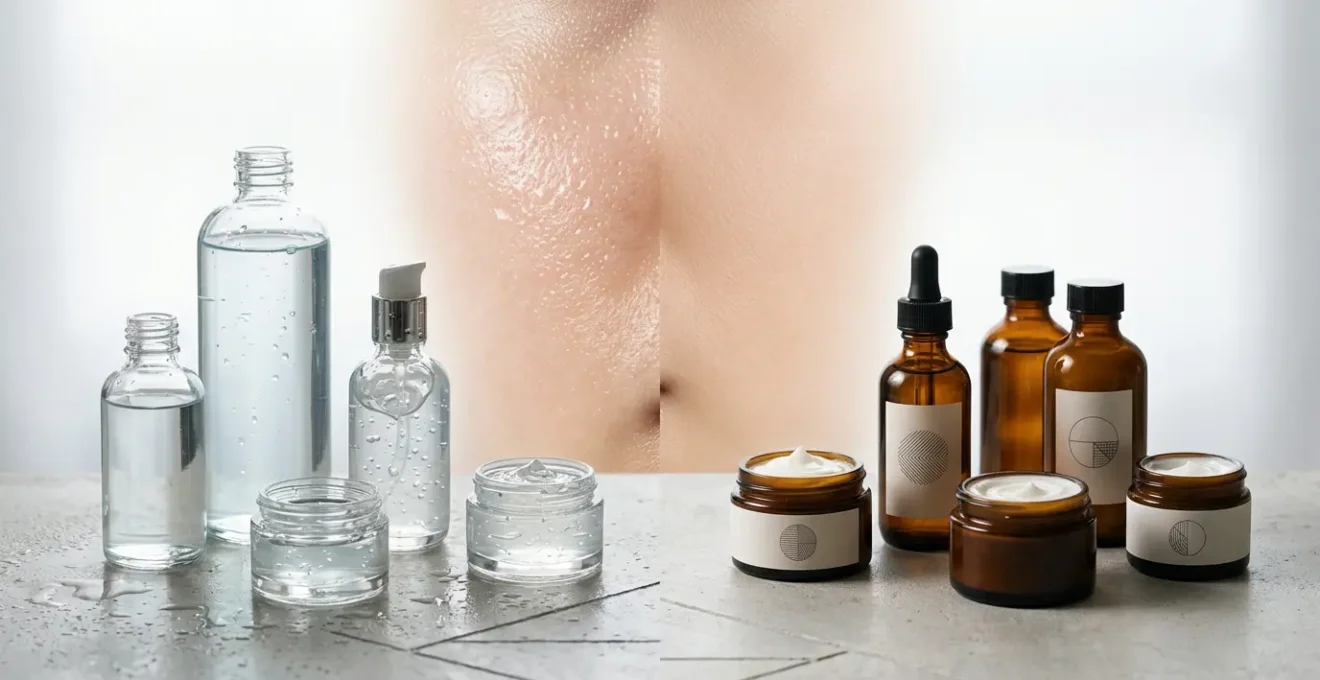
The real choice isn’t about products, but about aligning with a cultural philosophy on aging that resonates with you.
- Korean Beauty pursues flawless, perfected skin through meticulous prevention and an innovative, multi-layered ritual aiming for an idealized aesthetic like « glass skin. »
- French Pharmacy champions graceful aging and skin health with a minimalist routine built on science-backed, targeted essentials that enhance, rather than conceal.
Recommendation: Instead of choosing a side, build a hybrid « Skin Identity. » Use the French ‘less-is-more’ approach for your core routine and strategically integrate K-Beauty’s targeted innovations and preventative rituals where they serve you most.
The global beauty landscape often feels like a battleground of opposing ideologies. In one corner stands the intricate, multi-step ritual of Korean Beauty, promising poreless, luminous « glass skin. » In the other, the minimalist, science-driven elegance of the French Pharmacy, championing an effortless « je ne sais quoi » glow. For a woman in her 40s, this choice is more than just a preference; it’s a confusing crossroads of marketing promises and complex ingredient lists. Do you commit to a demanding 10-step regimen or trust in a few, potent pharmacy staples?
The common advice is to pick the routine that fits your lifestyle. But this overlooks the profound cultural philosophies driving these trends. K-Beauty’s focus on layering essences and meticulous sun protection isn’t just about hydration; it’s rooted in a cultural value of prevention and the pursuit of an ideal, perfected state of being. Conversely, the French approach of using a gentle cleanser, a powerful serum, and a chic red lipstick embraces the beauty of the present moment, accepting fine lines as part of a life well-lived, while using science to maintain skin health and vitality.
But what if the most effective anti-aging strategy wasn’t about choosing one philosophy over the other? What if the key lies in understanding the core principles of each to build a personalized, hybrid approach? This analysis moves beyond the surface-level comparison of routines. We will deconstruct the cultural drivers behind each aesthetic, from their views on sun protection and cosmetic procedures to the very definition of a « trend. » By understanding the ‘why’ behind the ‘what’, you can stop being a passive follower of trends and start becoming the architect of your own unique skin identity.
To navigate this complex choice, this article breaks down the fundamental differences between these two beauty superpowers. The following sections will explore their distinct aesthetic goals, their approaches to key practices like sun care and makeup, and their relationship with trends, providing a clear framework for building a routine that is truly yours.
Contents: A Global Beauty Analyst’s Guide
- Glass Skin vs. Healthy Glow: Why French Women Embrace Their Wrinkles?
- SPF 50 Obsession: Why Asian Markets Are 10 Years Ahead of Europe?
- Contouring vs. « Bonne Mine »: Why The US Loves Structure and France Loves Freshness?
- The « Touch-Up » vs. The Transformation: Cultural Views on Cosmetic Procedures?
- Scalp Care vs. Styling: How Japanese Hair Rituals Differ from French Ones?
- Vitamin C and Niacinamide: Can You Really Mix Them in the Morning?
- Core vs. Trend: How to Identify Styles That Will Last More Than 3 Months?
- How Social Media Micro-Trends Are Destroying Personal Style?
Glass Skin vs. Healthy Glow: Why French Women Embrace Their Wrinkles?
The ultimate goal of any skincare routine is revealed in its desired finish. Here lies the most fundamental difference between K-Beauty and the French Pharmacy approach. The Korean pursuit of « glass skin » is an aesthetic ambition that goes beyond simple health; it’s about achieving a surface so hydrated, smooth, and luminous that it appears poreless and reflective, like a pane of glass. This ideal, central to Korean beauty standards, represents skin at its most optimal, youthful, and perfected state. It is a visual testament to a diligent, preventative process.
This philosophy is perfectly captured by a core tenet of K-Beauty, which, as experts note, « emphasizes prevention over correction, viewing skincare as daily nourishment rather than a battle against imperfections. » The routine is a ritual of layering hydration to build that flawless canvas. To truly grasp this, one must visualize the textural difference between these two ideals.
In stark contrast, the French ideal is the « healthy glow » or « bonne mine. » This look doesn’t seek to erase texture or signs of aging but to enhance the skin’s natural vitality. It’s a radiance that looks earned, suggesting good health, adequate sleep, and a life enjoyed. It accepts fine lines as evidence of expression and character. Where glass skin is about achieving a state of perfection, the healthy glow is about authentically reflecting your best, real self. This is not a rejection of anti-aging; rather, it’s a reframing of the goal from « ageless » to « aging gracefully and vibrantly. »
SPF 50 Obsession: Why Asian Markets Are 10 Years Ahead of Europe?
If there is one practice that defines the preventative philosophy of Asian beauty, it is the unwavering dedication to sun protection. In markets like South Korea and Japan, sunscreen isn’t a seasonal product for beach days; it is a non-negotiable, final step of the daily morning skincare routine, 365 days a year. This cultural discipline is driven by a deep understanding that UV exposure is the primary accelerator of premature aging, responsible for everything from fine lines to hyperpigmentation. This is not just anecdotal; the economic data confirms this commitment.
The commercial drive for advanced sun protection is immense. For instance, the Asia-Pacific UV Filter Market was valued at USD 504.34 million in 2023 and is projected to grow significantly, reflecting a consumer base that demands and uses high-SPF, cosmetically elegant formulations daily. This has fueled incredible innovation, resulting in lightweight, non-greasy sunscreens with advanced filters that feel more like serums than traditional, thick creams common in the West.
This cultural gap in sunscreen usage is a key differentiator. As Dr. Xia Juntao, a leading expert at BASF Asia Pacific, explains, the difference in consumer behavior is stark:
European consumers normally prefer to use sunscreen more on sunny days or on beach during holidays, while most Chinese consumers apply sunscreen as a daily skin care product.
– Dr. Xia Juntao, Head of Development & Application Technology, Personal Care, BASF Asia Pacific
This « sunscreen as skincare » mindset positions Asian markets a decade ahead in terms of both consumer habits and product innovation. While the French Pharmacy certainly offers excellent sun protection, the cultural impetus for daily, preventative application is simply not as ingrained. For anyone serious about anti-aging, adopting the Asian approach to daily SPF 50 is one of the most impactful changes one can make, regardless of their chosen routine.
Contouring vs. « Bonne Mine »: Why The US Loves Structure and France Loves Freshness?
The philosophical divide between enhancement and transformation extends powerfully into the world of makeup. In the US, heavily influenced by social media and celebrity culture, makeup often serves to sculpt and redefine. The art of contouring—using shadow and light to create the illusion of higher cheekbones, a slimmer nose, or a more defined jawline—is a testament to a love for structure and transformation. The goal is often to achieve a camera-ready, perfected version of the face, emphasizing symmetry and dramatic angles.
This approach views the face as a canvas to be perfected, where makeup is a tool for architectural change. It aligns with a cultural appreciation for visible effort and glamorous results. The polished, « beat » face is a statement of skill and intention, aiming for high-impact drama rather than subtle approachability. This stands in stark contrast to the quintessential French makeup philosophy.
The French aim for « bonne mine, » the healthy-looking glow we discussed earlier. Makeup is not used to transform, but to enhance what is already there. Instead of heavy contour, a French woman might use a touch of cream blush on the apples of her cheeks to feign a brisk walk by the Seine. Instead of a full-coverage foundation, she’ll opt for a tinted moisturizer or even just a bit of concealer where needed. The focus is on looking fresh, rested, and alive. The « statement » is often a bold red lip, which serves as a confident accent against an otherwise minimal canvas, drawing attention to her natural features rather than the makeup itself.
The « Touch-Up » vs. The Transformation: Cultural Views on Cosmetic Procedures?
Nowhere is the cultural divergence in beauty philosophies more pronounced than in the attitude toward cosmetic procedures. South Korea, the epicenter of K-Beauty, is also widely regarded as the global capital of plastic surgery. The approach here is often transformative, viewing cosmetic intervention as a proactive step towards achieving an idealized standard of beauty. Features like a « V-shaped » jaw, larger eyes (blepharoplasty), and a higher nose bridge are common goals, reflecting a culture more accepting of significant surgical alteration to align with beauty norms.
The statistics are staggering. South Korea has one of the highest rates of cosmetic work in the world, with data showing 13.5 cosmetic procedures performed per 1,000 individuals. This has created a booming medical tourism industry, with around 114,000 foreign patients visiting plastic and cosmetic surgery departments in South Korea in 2023 alone. Some reports even suggest that as many as one in five Korean women have undergone a procedure, compared to roughly one in twenty in the United States, showcasing a profound cultural difference in acceptance and practice.
In contrast, the French approach to cosmetic procedures is characterized by subtlety and discretion—the « touch-up. » The goal is not to transform one’s face but to look like a well-rested version of oneself. Procedures like « baby Botox » (smaller doses for a more natural effect), subtle fillers to restore lost volume, and skin-rejuvenating lasers are preferred. The French dermatologist is an artist of imperceptibility. A successful procedure is one that nobody can detect; friends might simply remark that you look « rested » or « great for your age. » The ultimate fear is looking « done. » This philosophy prioritizes maintaining one’s unique facial identity while gently turning back the clock, rather than chasing a standardized ideal.
Scalp Care vs. Styling: How Japanese Hair Rituals Differ from French Ones?
The holistic view of beauty in Asian cultures extends beyond the face to the hair, but the focus is radically different from that of the West. In Japan and Korea, the scalp is treated as an extension of the facial skin. This concept, often called the « skinification of haircare, » prioritizes the health of the foundation—the scalp—to promote strong, healthy hair growth. Rituals often involve scalp scaling treatments to remove buildup, nourishing scalp serums, and gentle massages to improve circulation. The emphasis is on long-term health and prevention of hair issues like thinning and loss.
This approach treats the scalp with the same diligence as the face, using targeted ingredients to create an optimal environment for the hair follicles. As beauty analysts note, this is a growing frontier for K-Beauty, where « scalp serums, microbiome-supporting shampoos, and follicle-focused treatments are becoming standard. » It’s a patient, agricultural approach: tend to the soil, and the plant will thrive.
The French approach, on the other hand, is generally more focused on styling and the final look. While quality shampoos and conditioners are important, the cultural emphasis is on achieving an effortlessly chic, slightly undone style. The iconic « French girl hair » is not about heat-styled perfection but about a great haircut that works with the hair’s natural texture. French pharmacies are filled with texturizing sprays, dry shampoos for volume, and nourishing oils for the ends, all designed to achieve that perfect level of artful dishevelment. The health of the hair is important, but it is often addressed through the lens of how it contributes to the final style, rather than starting with a clinical focus on the scalp’s ecosystem.
Vitamin C and Niacinamide: Can You Really Mix Them in the Morning?
Amidst these broad philosophies are practical, scientific questions that plague anyone building a routine. One of the most persistent myths is that you cannot use two of the most powerful anti-aging actives, Vitamin C and Niacinamide, together. The short answer is: yes, you absolutely can. As dermatologist Dr. Samantha C. Shapiro confirms, « Combining these ingredients can help improve your skin’s tone and appearance, among other benefits. »
So where did this myth come from? According to experts like Dr. Meena Singh, it « stems from outdated research using pure forms of niacinamide with ascorbic acid. » When these unstabilized ingredients were combined at very high temperatures, they formed nicotinic acid, which can cause temporary redness and flushing. However, modern, stabilized skincare formulations do not have this issue. Today’s products are sophisticated enough to allow these two powerhouses to coexist peacefully and effectively in the same routine, working synergistically to brighten skin, reduce inflammation, and provide antioxidant protection.
The key is not *if* you can use them, but *how* you layer them for maximum benefit. Proper application ensures each ingredient can be absorbed effectively without interfering with the other. By following a simple, logical order, you can harness the full power of both for a brighter, more even complexion. The goal is to allow each product a moment to absorb before applying the next.
Action Plan: How to Layer Vitamin C and Niacinamide
- Apply Thinnest to Thickest: Start your routine with the product that has the lightest consistency, which is typically a water-based Vitamin C serum. Apply it to clean, dry skin.
- Wait for Absorption: Allow the Vitamin C serum to absorb for approximately one minute. The skin should feel tacky, not wet.
- Follow with Niacinamide: Apply your niacinamide product next. This could be in the form of a toner, essence, or another serum.
- Lock It in with Sunscreen: The final and most crucial step in any morning routine is sunscreen. Applying an SPF 50 will not only protect your skin but also maximize the antioxidant defense provided by your Vitamin C.
- Be Consistent: For best results, use both ingredients daily. It can take 4-6 weeks of consistent use to see visible improvements in skin tone and texture.
Core vs. Trend: How to Identify Styles That Will Last More Than 3 Months?
The K-Beauty market is a whirlwind of innovation, with new textures, ingredients, and aesthetic goals emerging at a dizzying pace. This is exciting, but it can also be exhausting and expensive. We’ve seen « glass skin » dominate for years, but now, as integrated facialist April Brodie notes, the next wave is « bloom skin, » a look focused on an « even-toned, strengthened and hydrated skin that looks healthy rather than glossy. » This constant cycle highlights the critical difference between a fleeting trend product and a timeless core product.
A trend product is designed to achieve a specific, often temporary, aesthetic goal. It might feature a novel ingredient like snail mucin or a unique texture that goes viral on social media. Its popularity is often short-lived, lasting a season or two before being replaced by the next big thing. In contrast, a core product, the bedrock of the French Pharmacy philosophy, is built around a fundamental skin need and a well-researched, proven active. Think of cleansers, moisturizers, and sunscreens featuring powerhouse ingredients like retinoids, vitamin C, or hyaluronic acid.
These core products are bestsellers for decades, not months, because they address the foundational health of the skin rather than a transient aesthetic. Building a sustainable, effective anti-aging routine for your 40s means learning to distinguish between these two categories and investing primarily in the core, while experimenting cautiously with trends. The following table breaks down the key differences to help you become a more discerning consumer.
| Criteria | Core Products (French Pharmacy Philosophy) | Trend Products (K-Beauty Innovation) |
|---|---|---|
| Longevity | Decades as bestsellers (e.g., La Roche-Posay Cicaplast) | 3-6 months viral popularity cycle |
| Primary Focus | Fundamental skin needs: cleansing, moisturizing, sun protection | Niche concerns or aesthetic goals (e.g., ‘glass skin’, ‘bloom skin’) |
| Ingredients | Well-researched actives: retinoids, vitamin C, niacinamide | Innovative or trending: snail mucin, centella, fermented extracts |
| Brand History | Dermatological research heritage (Vichy, Bioderma, Avène) | Social media-driven or K-pop influenced brands |
| Product Development | Clinical efficacy, safety studies, long-term testing | Rapid innovation, texture focus, packaging aesthetics |
| Consumer Approach | Investment in timeless quality, ‘less but better’ | Experimentation, multi-step rituals, sensorial experience |
Key Takeaways
- Philosophy Over Products: The K-Beauty vs. French Pharmacy debate is a choice between two cultural views on aging: perfection-driven prevention (Korea) versus graceful enhancement (France).
- Sunscreen is Non-Negotiable: The single most effective anti-aging habit to adopt is the Asian model of daily, high-SPF sunscreen application as a mandatory skincare step, not a seasonal extra.
- Build a Hybrid « Skin Identity »: The most intelligent approach is to create a core routine with timeless, science-backed French Pharmacy staples and strategically incorporate innovative K-Beauty products (like serums or essences) to address specific concerns.
How Social Media Micro-Trends Are Destroying Personal Style?
In the past, beauty trends evolved over seasons, guided by magazines and runway shows. Today, they explode and evaporate in weeks on platforms like TikTok and Instagram, creating a chaotic cycle of micro-trends. The immense influence of social media is undeniable; the hashtag #koreanskincare, for instance, has billions of views, creating a powerful echo chamber where specific products and aesthetics are amplified to a global audience. This constant barrage of « must-have » products and « life-changing » techniques pressures consumers into a frantic chase for the next new thing.
This rapid cycle can be destructive to developing a true personal style. Instead of listening to our own skin’s needs, we start chasing an algorithm-defined ideal. One month it’s « slugging » with petroleum jelly, the next it’s an eight-step hydration routine for « glass skin. » This fosters a culture of overconsumption and can be actively harmful to skin health by encouraging constant experimentation with new actives, which can lead to irritation and a compromised skin barrier.
This pressure to conform to a fleeting digital standard erodes self-trust. As some critics argue, trends like « glass skin » can function as « a mere marketing gimmick » that convinces consumers to spend more money, fueling an endless cycle of consumerism. It creates a feeling that our current routine is never good enough, and that perfection is just one more product away.
The antidote to this chaos is to step back and define your own « skin identity. » This means shifting from a reactive consumer to a conscious architect of your routine. It involves understanding your skin’s baseline needs, identifying your long-term goals (e.g., managing rosacea, softening fine lines), and committing to a core set of products that work for you. Trends can then be viewed as an à la carte menu from which you can choose to experiment if, and only if, a product genuinely aligns with your established goals.
Ultimately, the most powerful anti-aging strategy is not found in a bottle from Seoul or a tube from Paris, but in the confidence to create a personal philosophy that serves your skin and your life. Start today by auditing your bathroom shelf: distinguish your core, science-backed essentials from the trend-driven impulse buys. This is the first step toward building a routine that brings you joy and results, not anxiety.