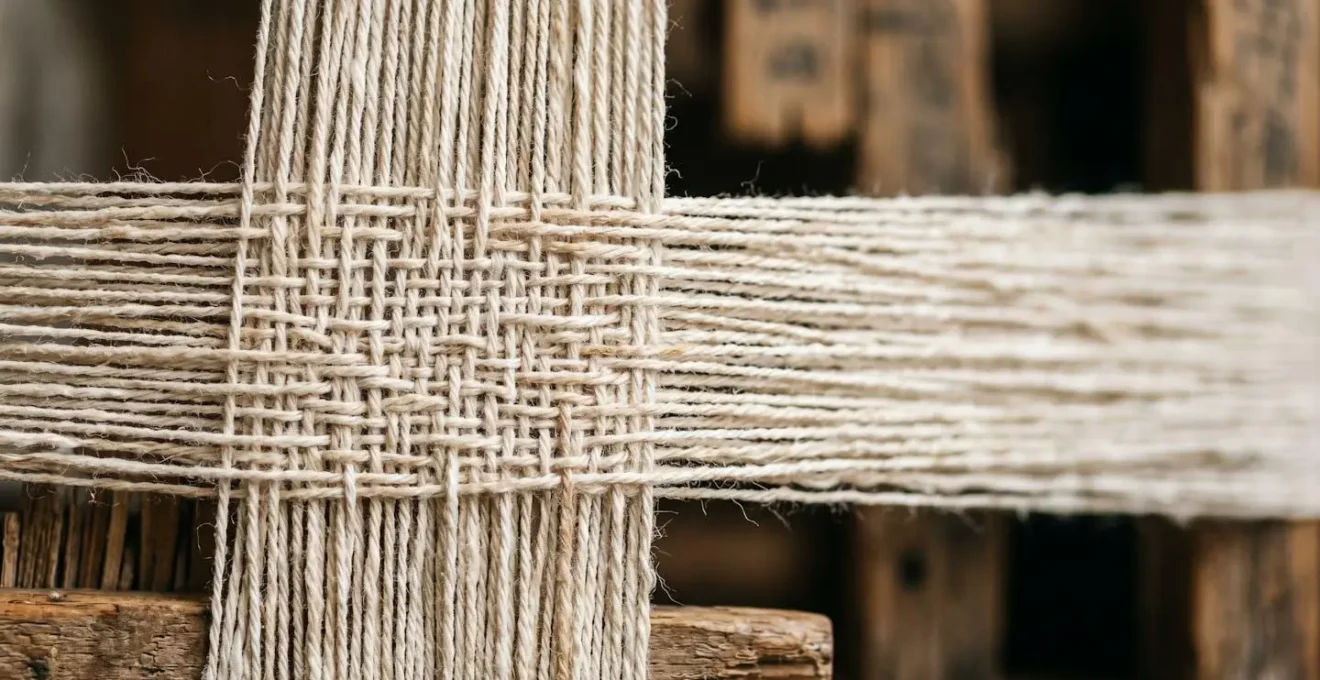
Contrary to the belief that a snag or uneven dye is a defect, these ‘imperfections’ are the very signature of a textile’s authenticity and value.
- They act as forensic markers, proving an object was made by a human hand, not a machine.
- Each variation tells a story of the material’s dialogue with its environment and the artisan’s unique touch.
Recommendation: Learn to see these details not as flaws, but as a guarantee of provenance and a deeper connection to the global heritage of craft.
You’ve found it: a beautiful, hand-woven scarf. As you run your fingers over the fabric, you feel a small, raised thread—a snag. Or perhaps you notice the deep indigo dye is slightly less saturated in one corner. Your heart sinks. Is this a defect? Have you found a second-rate piece? This moment of doubt is common for collectors and enthusiasts alike. We are conditioned by a world of industrial perfection to see any deviation from uniformity as an error. We look for the flawless finish of a machine, a sterile and predictable consistency that has become the default standard for quality.
But what if this perspective is fundamentally flawed? What if those tiny inconsistencies are not mistakes to be lamented, but rather a language to be read? The truth is, the soul of a handmade textile lies precisely in these variations. They are the verifiable evidence of a human touch, the kinetic signature of an artisan’s rhythm, and the trace of a natural process. This article reframes these « imperfections » through the lens of wabi-sabi aesthetics—the Japanese worldview centered on the acceptance of transience and imperfection. We will explore how these unique characteristics are not only beautiful but are also forensic markers of authenticity that a machine, in its rigid perfection, is physically incapable of replicating.
By dissecting the processes behind different textile traditions, from block printing to mud cloth, you will learn to distinguish the mark of a master’s hand from a mechanical error. This guide will equip you with a curator’s eye, transforming your appreciation of textiles from a search for sterile perfection to a celebration of authentic, human artistry. You will no longer see a snag; you will see a story.
Table of Contents: A Curator’s Guide to Textile Authenticity
- Block Print vs. Screen Print: How to Tell the Difference by Looking at the Back?
- Fair Trade Fashion: How to Ensure the Weaver Actually Gets Paid?
- Washing Ikat or Indigo: How to Prevent Colors from Bleeding?
- How to Wear a Traditional Kimono Jacket with Jeans?
- Why Does Authentic Mud Cloth Take 2 Weeks to Make One Yard?
- Silk vs. Polyester: Which Material Actually Breeds Bacteria in Summer?
- Direct-to-Consumer: Does Buying from Co-ops Really Help the Community?
- Who Made My Clothes: How to Check Factory Conditions from Your Phone?
Block Print vs. Screen Print: How to Tell the Difference by Looking at the Back?
The first step in developing a curator’s eye is learning to spot the artist’s « handwriting. » In printed textiles, the clearest evidence is found not on the front, but on the reverse. A screen-printed fabric, a mechanical process, pushes a uniform layer of ink that sits on top of the fibers. When you turn it over, the back is often stark white or significantly lighter, with no trace of the pattern. The machine’s goal is efficiency and perfection, leaving no room for a kinetic signature.
Hand block printing is a completely different dialogue between artisan, woodblock, and cloth. The carved block is dipped in dye and pressed firmly onto the fabric. This manual pressure forces the dye to penetrate deep into the fibers, creating a soft, « ghost » impression of the design on the back. This bleed-through is never perfectly uniform. It reveals the subtle variations in pressure applied by the artisan’s hand and the unique way the dye was absorbed. This beautiful imperfection is a forensic marker of authenticity. It’s a detail so fundamental to the value that, garments with hand block prints can retail for four to five times more than their screen-printed counterparts.
As you can see in the detail above, the dye penetration is organic and irregular. This is the story of the process, a visual confirmation that a human, not a machine, created this pattern. Look for these subtle variations and the gentle echo of the design on the reverse; it is your guarantee of a true, handcrafted piece.
Fair Trade Fashion: How to Ensure the Weaver Actually Gets Paid?
Appreciating the artistry of a textile inevitably leads to a crucial question: is the person who created this beauty being treated with dignity and paid fairly? The term « fair trade » is often used, but verifying its true meaning can be difficult. Traditional certifications from organizations like Fair Trade USA or the World Fair Trade Organization are a strong starting point. These labels certify that producers receive fair prices, have safe working conditions, and follow environmental standards. This is a crucial step away from the exploitative practices of fast fashion and a move toward an industry where the ethical fashion market is valued at over USD 8 billion.
However, the future of transparency goes even further, leveraging technology to connect the consumer directly to the maker’s story. The most innovative systems are now using blockchain to create an immutable record of a garment’s journey. This move toward radical transparency offers a level of assurance that goes beyond a simple tag.
Case Study: Martine Jarlgaard’s Blockchain-Tracked Collection
In a pioneering 2017 project, designer Martine Jarlgaard collaborated with the company Provenance to track alpaca wool from a Peruvian farm all the way to a finished garment in a London store. Each item was assigned a unique digital « token » on the blockchain. By scanning a QR code or NFC tag on the clothing, customers could see every step of the supply chain, verifying the origin of the raw material, the location of the weaver, and the details of its journey. This system makes it virtually impossible to falsify the provenance or the ethical claims tied to the product.
While this technology is still emerging, it represents the next frontier in ethical consumerism. For now, look for brands that are not just certified but are also vocal about their supply chain, naming their artisan partners and sharing their stories. True fair trade is about partnership, not just a transaction, and transparency is its greatest indicator.
Washing Ikat or Indigo: How to Prevent Colors from Bleeding?
Owning a piece dyed with natural indigo or a complex ikat weave is like having a living piece of art. These textiles are not inert; their colors are the result of organic chemistry, and they require mindful care. The most common concern is « crocking, » the tendency for natural dyes, especially indigo, to release excess pigment. While many collectors see this as a sign of authenticity, you can take steps to set the dye and preserve the vibrancy of your garment for years to come.
The key is to complete the oxidation and bonding process that the artisan began. Indigo, for example, only becomes colorfast when fully exposed to oxygen. A post-purchase vinegar soak is a time-honored method to help lock the dye molecules to the fibers. Remember, the first few washes are critical. Always wash these items alone in cold water to prevent any bleeding from transferring to other clothes. And crucially, avoid direct sunlight when drying, as harsh UV rays are the primary enemy of natural dyes, causing them to fade over time.
Action Plan: Setting Natural Dyes and Minimizing Bleed
- Initial Soak: For your first wash, use cold water and add 1/4 cup of white vinegar. Let the garment soak for 40-60 minutes to help fully bond the dye molecules to the fiber.
- Isolate for First Washes: Wash the item completely alone for the first two to three launderings. This prevents any residual, unbonded dye from staining other garments.
- Rinse Thoroughly: After the final dip or first wash, rinse the fabric in clean, cold water until the water runs clear. This removes loose pigment particles from the surface.
- Allow Full Oxidation: If you’re working with freshly dyed fabric, ensure it turns from its wet, greenish-yellow state completely to blue. This shows oxygen has bonded the indigo to the fibers.
- Air Dry in Shade: Always air dry your naturally dyed textiles away from direct sunlight. UV radiation chemically breaks down dye molecules, leading to fading.
Interestingly, this « flaw » of crocking is viewed very differently across cultures. As textile expert Duncan Clarke notes, it can be a prized characteristic:
Certain cultures attribute indigo crocking to its authenticity and prize the way that excess indigo comes off on the hands or body.
– Duncan Clarke, Adire African Textiles
This perspective perfectly embodies the wabi-sabi spirit. By understanding and properly caring for your textile, you participate in its life cycle, appreciating its nature rather than fighting it.
How to Wear a Traditional Kimono Jacket with Jeans?
Integrating a piece of traditional clothing, like a haori (a kimono-style jacket), into a modern, casual wardrobe is a beautiful way to honor its artistry. The key to making it work with something as ubiquitous as jeans is a focus on balance and respect. A haori is not just a cardigan; it’s a structured garment with a rich history. Pairing it successfully is a matter of creating a dialogue between the traditional and the contemporary.
First, consider proportion. Haori often have wide sleeves and a straight silhouette. To balance this, opt for a more streamlined jean, such as a straight-leg or slim-fit cut. A baggy or overly distressed jean can compete with the elegance of the jacket, creating a disjointed look. The goal is to let the haori be the statement piece. A simple, well-fitting top underneath, like a plain white t-shirt or a black silk camisole, provides a quiet canvas that allows the jacket’s pattern and texture to shine.
Next, think about the conversation between fabrics. The luxurious feel of a silk haori creates a wonderful contrast with the rugged texture of denim. Lean into this by keeping other accessories minimal. A simple leather belt, elegant flats or boots, and understated jewelry will complement the ensemble without overwhelming it. The look should feel intentional, not like a costume. It’s about taking a piece of history and weaving it into your own personal story, demonstrating that great design is timeless and transcends cultural boundaries.
Why Does Authentic Mud Cloth Take 2 Weeks to Make One Yard?
The story of Bògòlanfini, or mud cloth, is perhaps the ultimate lesson in wabi-sabi aesthetics and the dialogue between artisan and environment. The fact that it can take weeks to produce a single yard is not a sign of inefficiency; it is the very essence of its creation. Unlike synthetic dyes applied in a controlled factory, mud cloth is born from a slow, natural, and multi-stage chemical reaction that cannot be rushed.
The process begins with handwoven cotton fabric being soaked in a bath of mashed leaves from the N’gallama tree. This tannin-rich bath dyes the cloth a deep yellow and prepares it for the next stage. Then, the artisan painstakingly paints designs onto the cloth using fermented, iron-rich mud collected from riverbeds. This is where the magic, and the time, truly begins. The iron in the mud reacts chemically with the tannins in the leaf dye. The cloth is then laid out in the sun to dry and oxidize.
After the first painting, the excess mud is washed off, leaving a dark brown or black stain where it was applied. This entire process—painting with mud, sun-drying, washing—is repeated multiple times to achieve a deep, permanent color. Finally, parts of the yellow background may be bleached with a caustic soap, creating the characteristic white patterns against the dark mud design. Each step is dependent on the sun, the specific mineral content of the mud, and the patience of the maker. It is a true collaboration with nature, and the two-week timeline is a testament to an authentic process that honors time as a key ingredient.
Silk vs. Polyester: Which Material Actually Breeds Bacteria in Summer?
In our quest for perfect, low-maintenance fabrics, we often turn to synthetics like polyester. It’s durable, wrinkle-resistant, and cheap. But when it comes to wearing it in the heat of summer, its « perfection » reveals a significant flaw. The material that actually encourages bacteria to thrive is polyester, and the reason lies in its fundamental structure.
Polyester is, essentially, a form of plastic. Its fibers are non-absorbent and non-breathable. When you sweat in a polyester shirt, the moisture has nowhere to go. It gets trapped between the fabric and your skin, creating a warm, humid microclimate. This environment is the ideal breeding ground for bacteria, particularly Micrococcus, the type associated with body odor. The bacteria feed on the lipids and proteins in your sweat, producing the unpleasant smell we try to avoid.
Silk, on the other hand, is a natural protein fiber. It is highly breathable and has remarkable moisture-wicking properties. When you sweat while wearing silk, the fabric absorbs the moisture and pulls it away from your skin to the outer surface, where it can evaporate. This process keeps your skin drier and cooler, disrupting the humid environment that bacteria need to multiply. Furthermore, silk has natural antimicrobial properties that actively inhibit the growth of bacteria and fungi. So while a machine can produce a flawless bolt of polyester, it cannot replicate the intelligent, breathable structure that nature perfected in the silkworm’s cocoon. This makes silk not just more comfortable, but also significantly more hygienic in warm weather.
Direct-to-Consumer: Does Buying from Co-ops Really Help the Community?
Buying directly from an artisan cooperative seems like the most direct way to support creators, but does it truly foster community well-being? The answer, overwhelmingly, is yes. When structured ethically, cooperatives are powerful engines for economic empowerment and social development, creating a ripple effect that extends far beyond a single artisan’s income.
Unlike a top-down factory model, a cooperative is owned and operated by its members. This democratic structure ensures that profits are distributed equitably among the weavers, dyers, and artisans who perform the work. It eliminates the layers of middlemen who often absorb the majority of the profit in a conventional supply chain. This model provides artisans with not just a fair wage, but also a stake in their collective success and the autonomy to set their own prices and working conditions. The scale of this impact is significant, with the formal Fair Trade system alone working with over 1.65 million producers in more than 70 countries.
Crucially, the benefits don’t stop at individual paychecks. As the ethical brand Passion Lilie explains, the impact is communal:
Many fair trade cooperatives and artisan groups reinvest a percentage of their earnings into shared community resources like clean water systems, schools, and infrastructure, improving overall quality of life and making communities more self-sufficient.
– Passion Lilie, Fair Trade Fashion Impact Analysis
By purchasing from a reputable cooperative, you are not just buying a beautiful object. You are investing in a system that promotes sustainable livelihoods, preserves cultural traditions, and builds stronger, more resilient communities from the ground up. It is a conscious choice to participate in a more equitable global economy.
Key Takeaways
- Imperfections as Proof: Variations in dye, weave, and texture are not defects but the verifiable signature of human craftsmanship, impossible for machines to replicate.
- Look at the Back: The reverse side of a textile often tells the truest story, with dye bleed-through on block prints being a key indicator of authenticity.
- Care is Connection: Mindful washing and care for natural dyes like indigo is a way to participate in the textile’s life, not a chore to correct a flaw.
Who Made My Clothes: How to Check Factory Conditions from Your Phone?
In the final step of becoming a conscious collector, we move from appreciating the object to investigating its entire journey. The « Who Made My Clothes? » movement, spearheaded by Fashion Revolution, has pushed for greater transparency in the fashion industry. Yet, getting a clear answer remains a challenge. Shockingly, the average transparency score among top fashion brands is just 21%, revealing a vast, hidden supply chain.
However, technology is placing powerful investigative tools directly in our hands. Several apps and platforms are dedicated to rating brands on their ethical and environmental performance. Apps like Good On You provide comprehensive ratings for thousands of brands based on their impact on people, the planet, and animals. You can simply search for a brand on your phone before you buy and get an instant, easy-to-understand score based on publicly available data, including certifications and brand reports.
Using the Fashion Revolution Transparency Index
The Fashion Revolution Transparency Index is an annual report that ranks major brands on how much they disclose about their social and environmental policies, practices, and impacts. While a good score doesn’t guarantee ethical behavior, it measures a brand’s willingness to be held accountable. The 2021 Index, for example, found that while brands like H&M were making strides in disclosure, many luxury brands like Max Mara and Tory Burch scored very low. Consumers can use the index’s findings, freely available online, to cross-reference brand claims and reward those who are genuinely committed to transparency.
By using these resources, you shift from a passive consumer to an active participant in the push for a better industry. You can check a brand’s score while standing in the store, rewarding transparency and penalizing opacity with your purchasing power. This simple act, done on your phone, is a powerful vote for a world where the conditions of every factory are known and every artisan is seen.
Begin today to look at the textiles in your own collection with this new curator’s eye. Find the variations, celebrate their story, and transform your relationship with the beautiful, imperfect, and flawlessly human objects we wear.