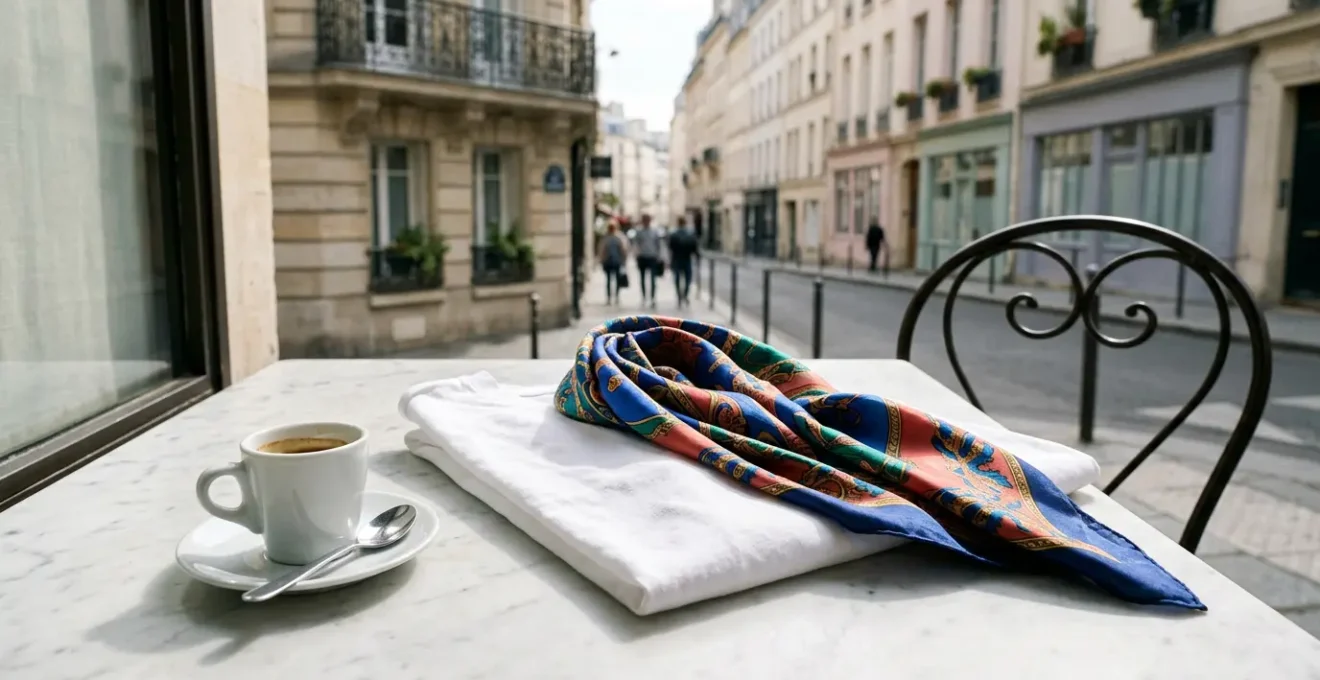
Mastering a luxury silk scarf is less about complex knots and more about understanding the core principles of elegance that transform your entire look.
- Color and light can be strategically used to brighten your complexion and diminish tired eyes.
- Structural contrast—pairing soft silk with a structured blazer or metallic cuff—creates a polished, high-fashion finish.
Recommendation: Stop seeing your scarf as a simple neck accessory and start using it as a versatile styling tool to unlock its full, sophisticated potential.
That beautiful Hermès scarf, a treasured gift or a personal investment, likely sits in its iconic orange box. You love it, but wearing it feels intimidating. The fear of tying it incorrectly, of looking clumsy rather than chic, is real. Many guides offer a dizzying array of knots, but they often miss the point. The secret to unlocking the power of a luxury scarf isn’t just learning a few ties; it’s about understanding the art of intentional styling.
Most advice focuses on the basic neck loop or a simple ponytail tie, but these can feel uninspired. A true ‘carré’ is a piece of wearable art, designed with principles of color, balance, and texture. To do it justice requires moving beyond the « how » and embracing the « why. » Why does a certain color make you look more radiant? Why does one knot look effortlessly chic while another looks forced? The key lies in mastering the subtle interplay between the scarf and your personal style.
But what if the true key to elegance wasn’t in the complexity of the knot, but in the confidence with which you wear it? This guide moves beyond basic instructions. We will explore five sophisticated ways to style your silk scarf, but more importantly, we will deconstruct the styling principles behind each one. You will learn not just to cover a bad hair day, but to frame your face with a chic turban. You won’t just protect your handbag; you’ll create a lesson in textural contrast. This is your masterclass in transforming a simple white t-shirt and a silk square into a statement of timeless elegance.
This article will guide you through the fundamental principles and practical applications that turn a silk scarf from a static object into a dynamic part of your wardrobe. Below, you will find a summary of the key styling concepts we will explore.
Summary: 5 Ways to Tie a Silk Scarf That Upgrade a White T-Shirt Instantly
- The Silk Turban: How to Cover Bad Hair Days Chicly?
- Which Scarf Colors Make Tired Eyes Look Brighter?
- The Handle Wrap: How to Protect Your Bag Handles from Hand Cream?
- Top or Skirt: Can You Really Wear a 90cm Scarf as a Top Securely?
- Dry Clean Only? When Can You Hand Wash Silk Scarves at Home?
- Bedhead Hair: How to Achieve That « Undone » Look Without Looking Unkempt?
- Hermès at 24 Faubourg: Why Is This Specific Address Mythical?
- Why a Gold Cuff is the Only Accessory You Need for a Capsule Wardrobe?
The Silk Turban: How to Cover Bad Hair Days Chicly?
A silk turban is far more than a practical fix for an uncooperative hair day; it’s a powerful statement in proportional balance and facial framing. When styled correctly, it draws attention upward, elongates the neck, and adds an air of sophisticated glamour to even the simplest white t-shirt. The secret to a non-slip, elegant turban lies in creating a secure base and understanding how knot placement can flatter your specific face shape. Forgetting the base is the most common mistake, leading to constant slipping and adjustment.
The true artistry, as shown in the image, is in the details. A high knot on the crown can visually lengthen a round face, while a knot tied low at the nape of the neck softens a square jawline. Follow these steps for a secure and stylish result:
- Create a Grip Base: The most crucial step for security. Apply a velvet headband or a specialized scarf gripper underneath. The fabric’s texture ‘grabs’ the silk, preventing it from slipping on your hair throughout the day.
- Fold and Position: Fold your 90cm square scarf into a large triangle. Place the long, folded edge at the nape of your neck, allowing the main point of the triangle to fall forward over your forehead.
- Wrap and Twist: Bring the two long ends up and cross them over your forehead. Twist them around each other once or twice for a more defined knot, then wrap them back around to the nape of your neck and tie them securely.
- Final Tuck and Styling: Tuck the loose triangle point that was on your forehead neatly into the twisted fold to create a clean, finished turban shape. For a softer, more romantic look, especially for an evening out, allow a few small wisps of hair to frame your face.
By focusing on a secure base and intentional knot placement, the turban transforms from a convenient solution into a deliberate, chic styling choice.
Which Scarf Colors Make Tired Eyes Look Brighter?
Choosing a scarf color is not merely a matter of matching your outfit; it’s a strategic application of color theory that can directly enhance your complexion and bring life to tired eyes. The fabric’s proximity to your face means its hue and finish have a powerful effect, acting like a photographer’s reflector to bounce flattering light onto your skin. The key is to understand your skin’s undertones and use complementary colors to your advantage.
The principle is based on color harmony and reflection. For instance, color theory shows that bluish or purple undereye circles are visually neutralized by colors containing their opposites on the color wheel. This is why scarves with notes of apricot, soft peach, or warm orange can work wonders. These warm tones actively counteract the cool tones of fatigue, creating an illusion of brightness and vitality. The fabric’s finish also plays a critical role. A silk satin or charmeuse with a high luster will physically reflect more light onto your face than a matte silk twill, amplifying the brightening effect.
While personal preference is always important, understanding your color season provides a reliable framework. Warm skin tones with yellow or golden undertones are harmonized by earthy colors like camel, olive, and rich mustard. Cool skin tones with pink or blue undertones are illuminated by jewel tones like sapphire blue, deep plum, and vibrant cobalt. As noted by styling experts, even for darker skin tones, saturated shades and strong patterns enhance natural vibrancy, adding a dynamic energy to your overall look.
The Handle Wrap: How to Protect Your Bag Handles from Hand Cream?
Wrapping a silk scarf or a ’twilly’ around the handles of a luxury handbag is a classic styling move, but its function goes far beyond aesthetics. It is a practical act of preservation, protecting the delicate leather from the oils, lotions, and daily friction that can cause discoloration and wear over time. This technique is an exercise in appreciating artisanal integrity—both of the bag you are protecting and the scarf you are using. For owners of investment pieces, this is a non-negotiable habit.
The smooth, natural fibers of silk create a gentle yet effective barrier. However, the technique requires a delicate touch. Wrapping the scarf too tightly can stretch its delicate weave, while wrapping it too loosely will cause it to unravel. The goal is to find a tension that is secure but not constricting. One expert highlights the dual purpose of this practice:
Silk scarves serve multiple protective functions beyond fashion. The smooth, natural fiber of silk creates a gentle barrier that prevents hand cream, oils, and daily wear from damaging expensive leather bag handles. The key is wrapping with correct tension – tight enough to be secure, but loose enough not to permanently stretch the silk’s delicate weave over time. Many fashion enthusiasts advise rotating scarves to let the fibers ‘rest’ and using more affordable vintage pieces for daily handle-wrapping duty, thus preserving investment pieces for wearing.
– Aýana Lage
This approach demonstrates a thoughtful relationship with one’s accessories. By using a beautiful object to protect another, you create a layered, interesting look that signals a deep appreciation for craftsmanship. It adds a personal touch and a pop of color, all while performing an essential protective role.
Top or Skirt: Can You Really Wear a 90cm Scarf as a Top Securely?
The idea of transforming a silk scarf into a top is alluring, evoking images of breezy, sun-drenched European holidays. However, for the novice, the primary concern is a practical one: security. The fear of a wardrobe malfunction can overshadow the stylish potential. The answer to whether a standard 90cm ‘carré’ can be worn securely as a top is: yes, but with caveats. Success depends heavily on the tying method, your body type, and, crucially, the use of proper underpinnings and layering.
A simple halter or bandeau style is achievable with a 90cm scarf, but it offers minimal coverage and is best suited for those with smaller busts. For more security and versatility, a larger scarf is recommended. The key to elevating this look from beachwear to chic urban style lies in structural contrast. As seen in the image, layering a fluid silk scarf top under a tailored, structured blazer creates a sophisticated and balanced silhouette. The rigidity of the blazer not only provides a sense of security but also frames the soft drape of the silk, creating a high-fashion look. A comparative analysis of scarf sizes offers a clear guide:
| Scarf Size | Best Use | Coverage Level | Recommended Body Type |
|---|---|---|---|
| 90cm Square (Carré) | Simple halter or bandeau top | Minimal – requires secure underpinnings | Smaller bust, petite frames |
| 120cm+ Square | Complex knots, wraparound styles | Moderate – more fabric for coverage | All body types, more versatile |
| Oblong/Rectangular | Layered tops, sash-style wraps | Maximum – length provides security | All body types, ideal for city styling |
| Twilly (Narrow) | Accent only – bag, wrist, neck | Decorative – not for tops | N/A – accessory use |
To ensure security, always wear appropriate undergarments like a strapless bra or adhesive cups. Using fashion tape at the edges can also provide extra peace of mind, allowing you to wear the style with confidence.
Dry Clean Only? When Can You Hand Wash Silk Scarves at Home?
The « Dry Clean Only » tag on a luxury silk scarf is often seen as an unbreachable command, instilling a fear of ruining the precious item with a single drop of water. However, for seasoned collectors and care experts, this is one of the biggest myths in silk care. Not only can you hand wash most silk scarves, but it is often the *preferred* method for preserving their long-term health and beauty. The harsh chemicals used in some dry cleaning processes can be detrimental to the natural fibers.
An esteemed Hermès scarf care expert, Jerrine, from the renowned blog MaiTai’s Picture Book, offers a compelling, counter-intuitive perspective on the matter. Her advice challenges conventional wisdom and empowers owners to take control of their scarf’s care:
Dry cleaning chemicals will yellow white and pale backgrounds, diminish the natural luster of the silk, and weaken the fibers over time
– Jerrine (Hermès scarf care expert), MaiTai’s Picture Book
Hand washing, when done correctly, gently cleanses the silk, helps maintain its natural sheen, and preserves the plumpness of the hand-rolled edges (‘roulotté’). The process is delicate but straightforward, requiring cool water, a silk-specific detergent, and a gentle touch. It is an act of care that connects you more deeply with the object, reinforcing its value and extending its life. Following a professional method ensures you do so without risk.
Action Plan: The Professional Hand Washing Method
- Colorfastness Test: Before submerging the whole scarf, test a small, inconspicuous corner. Wet it with a cotton swab and press it on a white cloth. If any color transfers, it is not colorfast and must be taken to a trusted professional dry cleaner.
- Prepare the Wash: Fill a clean basin with cool water (never warm or hot). Add a very small amount of a pH-neutral, silk-specific detergent and swirl to dissolve.
- Gentle Submersion: Submerge the scarf and gently swirl it in the water for no more than 3-5 minutes. Never rub, scrub, or twist the fabric, as this can damage the delicate fibers.
- Rinse Thoroughly: Drain the soapy water and rinse the scarf several times in fresh, cool water until all soap residue is gone. For the final rinse, add a capful of white vinegar to help dissolve any remaining alkali traces and restore the silk’s natural luster.
- Remove Excess Water: Never wring out a silk scarf. Lay it flat on a clean, thick towel, and gently roll the towel up to absorb the majority of the moisture.
- Air-Dry and Iron: Unroll and air-dry the scarf flat, away from direct sunlight or heat. For silk twill, iron on the reverse side while still slightly damp to restore its body. For silk satin, wait until it’s almost dry to maximize sheen. Always avoid ironing directly over the hand-rolled edges to preserve their characteristic plumpness.
Bedhead Hair: How to Achieve That « Undone » Look Without Looking Unkempt?
The « undone » or « bedhead » hairstyle is a cornerstone of effortless French chic, but there is a fine line between looking artfully tousled and simply looking messy. The secret is that this look is never accidental; it is intentionally crafted. One of the most effective tools for achieving the perfect foundation for this style is, paradoxically, a neatly tied silk scarf worn overnight. This technique leverages the properties of silk to control frizz and preserve texture, making morning styling minimal.
The principle at play is the elimination of friction. Cotton pillowcases can snag and rough up the hair cuticle, leading to frizz and tangles. A silk scarf provides a smooth, friction-free environment. By loosely gathering your hair on top of your head in a « pineapple » style and wrapping it in a silk scarf, you protect your hair’s natural wave pattern and prevent breakage overnight. You wake up with hair that is smooth, preserved, and has natural volume at the root—the ideal starting point for an « undone » look.
The styling genius comes into play the next day through textural contrast. After removing the scarf, you can use your fingers to lightly style your hair, perhaps adding a touch of texture spray. Then, you reintroduce the scarf into your daytime look. Pairing the intentionally relaxed, textured hair with a very crisp, polished scarf knot—like a sharp ascot at the neck or a cleanly tied knot on a handbag—creates a dynamic and high-fashion contrast. It tells the world that your messy hair is a deliberate choice, balanced by the polish of the silk accessory.
Hermès at 24 Faubourg: Why Is This Specific Address Mythical?
To truly understand the value of an Hermès scarf, one must understand the mythos of its birthplace: 24 Rue du Faubourg Saint-Honoré in Paris. This address is more than a flagship store; it is the heart and soul of the brand, a symbol of its unwavering commitment to craftsmanship and artistry. The building itself is a historical landmark, having housed the company’s workshops and boutique for over a century. This legacy infuses every product that originates from it with a sense of history and authenticity.
The history of the location is central to its legend. According to the flagship store’s documented history, the workshop was established at this address in 1880, with the boutique opening its doors to the public in 1889. Now spanning over 1,700 square meters, it remains the largest Hermès store in the world. But its mythical status comes from the experience within. Collette, the General Manager, describes the store’s unique atmosphere perfectly:
The magic of 24 Faubourg is its dedication to artistry – it’s a place designed to let you enjoy the sensation of becoming lost
– Collette (General Manager, Hermès Paris Faubourg), LA LANTERNE D’HERMÈS
This dedication to artisanal integrity is tangible in the products themselves. The hand-rolled and hand-stitched edges of an Hermès scarf, a detail so fine it is best appreciated up close, are a direct link to the artisans working in the ateliers above the store. Owning and wearing a piece from Hermès is not just about fashion; it’s about participating in a legacy of craftsmanship that has been nurtured at this very address for generations.
Key Takeaways
- Scarf styling is about mastering principles like color, texture, and proportion, not just learning knots.
- Protect your investment: hand-washing is often better for silk than dry cleaning, and a scarf can protect other luxury items like handbag handles.
- Create a sophisticated, balanced look by combining the soft fluidity of silk with structured elements like a tailored blazer or a metallic cuff.
Why a Gold Cuff is the Only Accessory You Need for a Capsule Wardrobe?
In a well-curated capsule wardrobe, every item should be versatile and impactful. While a silk scarf provides color and softness, a simple gold cuff offers the perfect counterpoint: structure, weight, and a touch of metallic warmth. The combination of these two elements—the fluid silk and the rigid metal—is a masterclass in structural contrast, often referred to by stylists as the « Hard & Soft » power dynamic. This pairing creates a look that feels complete, balanced, and effortlessly sophisticated.
The harmony between gold and silk scarves is also rooted in color theory. Gold, as a warm metal, naturally complements the rich jewel tones (emerald, sapphire, ruby) and deep earthy hues (terracotta, olive, chocolate) that are commonly found in classic silk scarf designs. This inherent color synergy, as demonstrated by color analysis experts, ensures an instantly cohesive and luxurious palette without any effort. The cuff doesn’t compete with the scarf; it grounds it.
Worn on the wrist, a gold cuff peeking out from under a sleeve or sitting next to a scarf-wrapped handbag handle adds a point of interest and a feeling of intention. It elevates a simple white t-shirt and scarf from a casual combination to a considered outfit. The cuff acts as a visual anchor, its clean lines and metallic sheen providing a beautiful contrast to the intricate patterns and soft drape of the silk. It is the single accessory that bridges the gap between casual and chic, making it an indispensable component for anyone looking to maximize the elegance of their scarf and their wardrobe as a whole.
Now that you are equipped with these principles, the next logical step is to stop treating your scarf as a precious object to be hidden away. Take it out of its box, feel the quality of the silk, and experiment with one of these elegant styles today. True style is born from confident wear, not cautious preservation.